What does anxious attachment anger look like?
6 min read
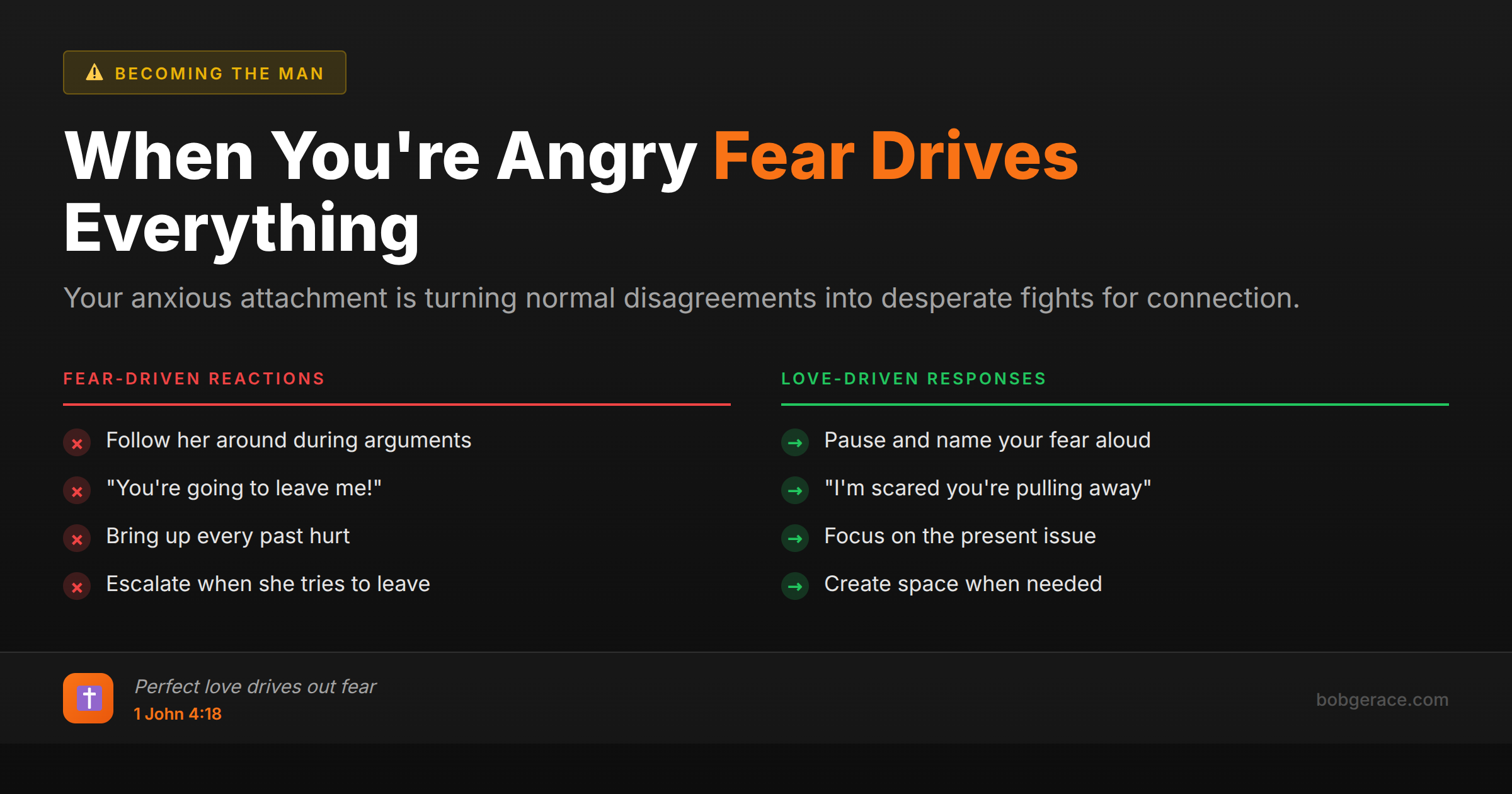
Anxious attachment anger looks different from other types of anger because it's rooted in fear of abandonment rather than just frustration. You'll see explosive reactions to perceived disconnection, desperate attempts to force closeness through conflict, and intense emotional highs and lows. This anger often includes pursuing behaviors like following your spouse around during arguments, bringing up past hurts repeatedly, or escalating conflicts when they try to walk away. The key identifier is that this anger intensifies when your spouse pulls back or seems distant. It's not really about the dishes or money - it's about feeling like you're losing them. You might notice yourself saying things like 'You don't care about me' or 'You're going to leave me' even during minor disagreements.
The Full Picture
Anxious attachment anger is fear wearing a rage costume. When someone with anxious attachment feels their connection threatened, their nervous system goes into overdrive, and anger becomes their desperate attempt to restore closeness.
Here's what it typically looks like:
The Explosion Pattern: Minor disconnections trigger major reactions. Your spouse comes home quiet from work, and suddenly you're in a screaming match about how they 'never talk to you anymore.' The anger feels huge and immediate because your attachment system is screaming 'danger.'
Pursuing Through Conflict: Instead of walking away when angry, you follow them room to room. You keep talking, keep explaining, keep trying to 'resolve' things right now. You can't let it go because letting go feels like losing them.
Historical Ammunition: You bring up everything - last month's argument, last year's disappointment, that thing they said three years ago. It's not because you're vindictive; it's because each hurt feels fresh when your attachment system is activated.
The Panic Behind the Rage: After the anger, you often feel terrified. 'Did I push them away?' 'Are they going to leave me now?' The anger was actually your attempt to prevent abandonment, but now you fear you've caused it.
Testing Behaviors: Sometimes the anger is unconsciously testing their commitment. 'If I push hard enough, will they stay and fight for us, or will they leave?' It's a painful way of seeking reassurance.
This isn't character deficiency - it's a nervous system response developed early in life when inconsistent caregiving taught you that love was unpredictable and required fighting for.
What's Really Happening
Neurologically, anxious attachment anger involves hyperactivation of the attachment system combined with an overactive amygdala. When someone with anxious attachment perceives relationship threat, their brain essentially sounds a 'relationship emergency' alarm.
The anger serves three unconscious functions: protest (demanding attention), pursuit (preventing distance), and paradoxically, connection-seeking (engaging the partner even through conflict). This is why logic rarely works in these moments - the person isn't operating from their prefrontal cortex but from their survival brain.
What makes this particularly challenging is the 'double bind' it creates. The anxiously attached person desperately wants closeness, but their intense emotional expression often pushes their partner away, confirming their deepest fear of abandonment. This creates a negative cycle where their solution becomes their problem.
The key therapeutic insight is that this anger is actually an attachment cry - it's the adult equivalent of a child's tantrum when separated from their caregiver. Understanding this reframes the anger from 'bad behavior' to 'dysregulated attachment need.'
Healing involves learning to recognize the fear beneath the fury, developing self-soothing skills, and finding healthier ways to communicate attachment needs. The goal isn't eliminating the attachment system's sensitivity but learning to work with it rather than being hijacked by it.
What Scripture Says
Scripture addresses both our fear-driven reactions and God's design for secure relationship patterns.
Fear and Love: *'There is no fear in love. But perfect love drives out fear, because fear has to do with punishment. The one who fears is not made perfect in love.'* (1 John 4:18) Anxious attachment anger often stems from fear of losing love, but God's perfect love casts out that fear.
Slow to Anger: *'In your anger do not sin: Do not let the sun go down while you are still angry.'* (Ephesians 4:26) God doesn't condemn anger itself but calls us to handle it without sinning against our spouse.
Self-Control: *'Like a city whose walls are broken through is a person who lacks self-control.'* (Proverbs 25:28) Our attachment fears don't excuse losing control, but God provides strength to manage our responses.
Perfect Security: *'The Lord your God is with you, the Mighty Warrior who saves. He will take great delight in you; in his love he will no longer rebuke you, but will rejoice over you with singing.'* (Zephaniah 3:17) Our ultimate security comes from God's unchanging love, not human relationships.
Gentle Restoration: *'Brothers and sisters, if someone is caught in a sin, you who live by the Spirit should restore that person gently.'* (Galatians 6:1) This applies to how we should approach our spouse's attachment struggles and how they should approach ours.
New Heart: *'I will give you a new heart and put a new spirit in you; I will remove from you your heart of stone and give you a heart of flesh.'* (Ezekiel 36:26) God can heal our attachment wounds and give us new patterns of relating.
What To Do Right Now
-
1
Pause and breathe when you feel the anger surge - ask yourself 'What am I really afraid of right now?' before reacting
-
2
Name the fear out loud to your spouse - 'I'm feeling scared that you're pulling away from me' instead of 'You never care about me'
-
3
Create a signal system with your spouse so they can recognize when your attachment system is activated and respond with reassurance
-
4
Practice self-soothing - take 10 deep breaths, pray, or step outside before continuing difficult conversations
-
5
Schedule connection time daily so your attachment system doesn't have to create emergencies to get attention
-
6
Seek professional help if the anger is damaging your marriage - attachment patterns can be healed with proper guidance
Related Questions
Ready to Heal Your Attachment Patterns?
Anxious attachment anger doesn't have to control your marriage. Let's work together to understand your triggers and develop healthier ways to connect.
Get Help Now →