What medication might actually help vs. avoid?
6 min read
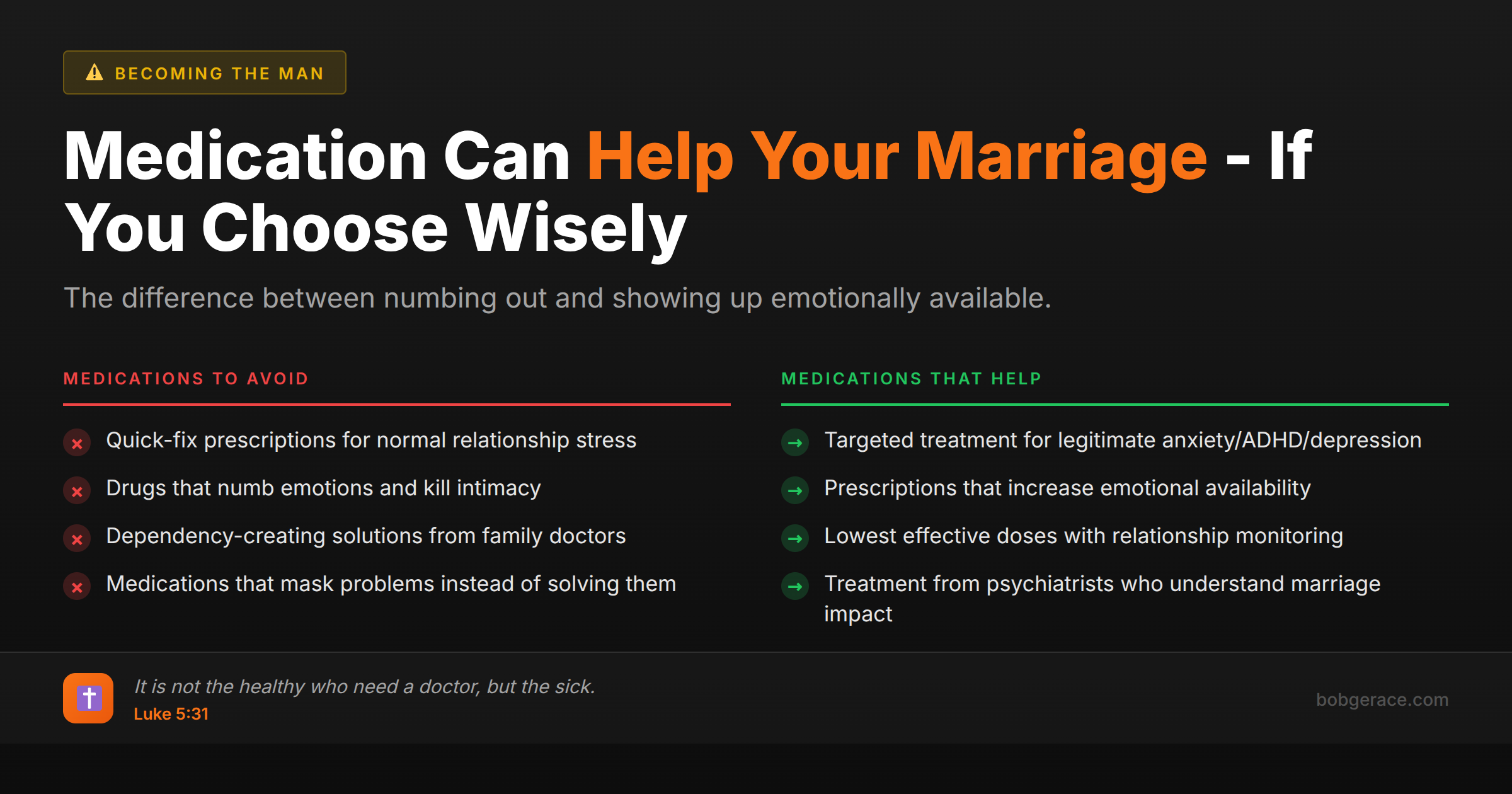
When it comes to medication and marriage, the goal is addressing underlying mental health issues that genuinely interfere with your ability to connect, while avoiding medications that numb you emotionally or create dependency. Medications that treat legitimate anxiety disorders, ADHD, or severe depression can actually improve your marriage by helping you show up more present and stable. However, be cautious of quick-fix prescriptions for normal life stress or relationship difficulties that should be addressed through counseling and personal growth. The key is working with a psychiatrist who understands that healthy relationships require emotional availability, not emotional numbness.
The Full Picture
Let me be straight with you: medication isn't a marriage fix, but it can remove barriers that prevent you from doing the real work. I've seen couples where untreated ADHD, severe anxiety, or clinical depression created chaos that no amount of marriage counseling could overcome. I've also seen people medicated into emotional zombies who couldn't feel anything - including love for their spouse.
Medications that often help marriages: - Properly prescribed antidepressants for clinical depression (not situational sadness) - ADHD medications for diagnosed attention disorders - Anti-anxiety medications for panic disorders (short-term use) - Mood stabilizers for bipolar disorder - Sleep medications for severe insomnia affecting daily function
Medications to approach with extreme caution: - Benzodiazepines for general life stress - Heavy sedatives that flatten all emotions - Pain medications that create dependency - Multiple psychiatric medications without clear diagnoses - Any medication prescribed without therapy support
The difference comes down to this: Are you treating a legitimate medical condition that prevents you from being present in your marriage, or are you medicating away the discomfort of growth and change? One builds your capacity for love; the other diminishes it.
I always tell my clients: if you can't feel your pain, you probably can't feel your spouse's love either.
What's Really Happening
From a clinical perspective, the relationship between psychiatric medication and marital health is complex and highly individual. Research shows that untreated mental health conditions - particularly major depression, anxiety disorders, and ADHD - significantly impair relationship satisfaction and stability. However, the type and dosage of medication matters enormously.
SSRIs and SNRIs, when properly prescribed for clinical depression, often improve marital outcomes by restoring emotional regulation and reducing irritability. However, these same medications can cause sexual side effects in 30-60% of patients, which creates different marital challenges. The key is finding the right medication at the lowest effective dose with a psychiatrist who monitors relationship impacts, not just symptom reduction.
Benzodiazepines present particular concerns for marriages. While effective for acute anxiety, they can create emotional blunting and dependency that undermines the vulnerability required for intimate connection. I've observed that clients on long-term benzodiazepines often struggle with emotional availability and conflict resolution skills.
ADHD medications, conversely, frequently improve marriages dramatically when the diagnosis is accurate. Partners report feeling 'seen and heard' for the first time when their spouse's attention and emotional regulation improve through proper treatment.
The critical factor is ensuring medication supports psychological growth rather than replacing it. Effective psychiatric treatment combines medication with therapy to address both neurochemical imbalances and behavioral patterns.
What Scripture Says
God cares about our physical and mental health as much as our spiritual health. The Bible doesn't condemn medical treatment - it actually supports using wisdom and available resources for healing.
Luke 5:31 - "Jesus answered them, 'It is not the healthy who need a doctor, but the sick.'" Christ himself acknowledged the value of medical intervention for those who truly need it.
1 Corinthians 6:19-20 - "Do you not know that your bodies are temples of the Holy Spirit... Therefore honor God with your bodies." Taking care of legitimate mental health conditions honors God by stewarding the mind He gave you.
Philippians 4:19 - "And my God will meet all your needs according to the riches of his glory in Christ Jesus." Sometimes God meets our needs through medical professionals and proper treatment.
Proverbs 27:6 - "Wounds from a friend can be trusted, but an enemy multiplies kisses." True healing often requires facing difficult truths about our mental health, not medicating away all discomfort.
1 Thessalonians 5:23 - "May your whole spirit, soul and body be kept blameless." God wants wholeness in every area - spiritual, emotional, and physical.
The biblical principle is this: use medical intervention to restore your capacity to love God and others well, not to avoid the sanctifying work God wants to do in your life through normal struggles and growth.
What To Do Right Now
-
1
Get a comprehensive psychiatric evaluation from a psychiatrist (not just your family doctor) who specifically asks about relationship impacts
-
2
List specific symptoms that interfere with your marriage versus general life dissatisfaction or normal relationship challenges
-
3
Ask your prescribing doctor directly: 'How might this medication affect my emotional availability and intimacy with my spouse?'
-
4
Start with the lowest effective dose and monitor relationship changes, not just symptom reduction
-
5
Insist on therapy alongside any psychiatric medication - medication should support growth, not replace it
-
6
Schedule a medication review with your spouse present so they can share their observations about changes in your emotional connection
Related Questions
Get Clarity on Your Next Steps
Navigating mental health and marriage requires wisdom and experience. Let's create a plan that addresses your real needs without compromising your capacity for intimacy.
Work With Me →