What questions should I ask about his process?
6 min read
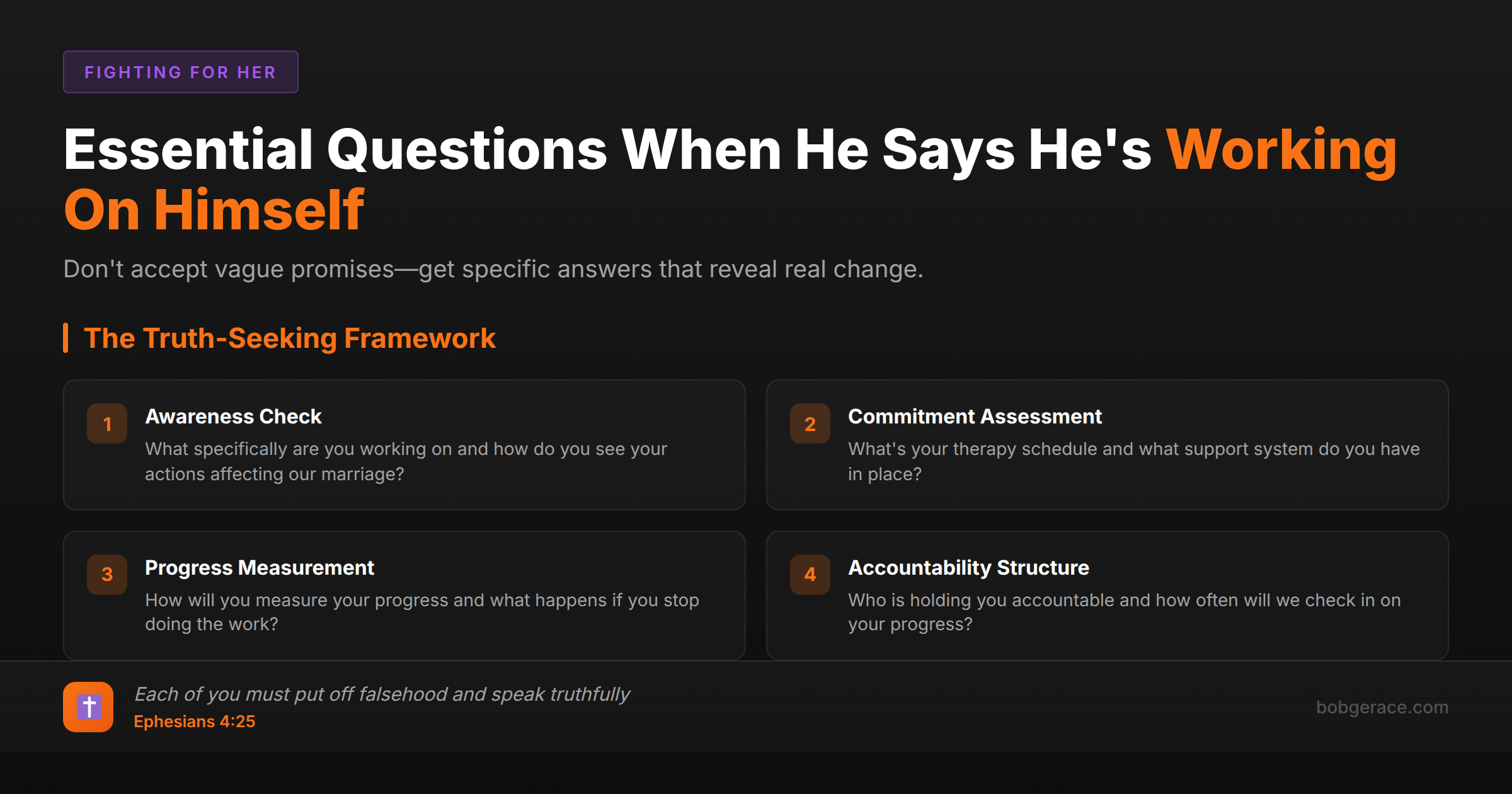
When your husband is working on himself, you need specific information to make informed decisions about your marriage. The key questions focus on three areas: his understanding of the problem, his commitment to change, and measurable progress indicators. Start with questions that reveal his level of awareness: "What specifically are you working on?" and "How do you see your actions affecting our marriage?" Then assess his commitment by asking about his support system, therapy schedule, and what he's doing daily. Finally, establish accountability by asking how he'll measure progress and what happens if he stops doing the work. These aren't interrogation questions—they're essential information you need to rebuild trust and make wise decisions about your future together.
The Full Picture
You're not being controlling when you ask questions about his process—you're being wise. After trust has been broken, you need concrete information to make informed decisions about your marriage and your future.
Questions About His Understanding: - What specific behaviors or patterns are you addressing? - How do you see your actions affecting me and our marriage? - What triggers have you identified? - What lies or beliefs are you working to change?
Questions About His Commitment: - Who is helping you with this process (therapist, coach, accountability partner)? - How often are you meeting with them? - What does your daily/weekly commitment look like? - What resources are you using (books, programs, groups)? - How long do you expect this process to take?
Questions About Accountability: - How will we both know you're making progress? - What measurable changes should I expect to see? - What happens if you stop doing the work? - How will you handle setbacks or relapses? - What access will I have to your process and progress?
These questions aren't meant to micromanage—they're meant to help you understand whether he's truly committed to change or just managing the immediate crisis. A man who's genuinely working on himself will welcome these questions and provide clear, specific answers. Vague responses or defensiveness are red flags that need attention.
What's Really Happening
From a clinical perspective, these questions serve as both assessment tools and accountability measures. When trust has been damaged, the injured partner needs transparency to begin the healing process. This isn't about control—it's about creating the conditions necessary for trust to be rebuilt.
Research shows that successful recovery from betrayal requires what we call "earned security." This means the offending partner must demonstrate consistent, measurable change over time. Your questions help establish the framework for this process.
Pay attention to how he responds to your questions. A defensive reaction often indicates he's not truly ready for change. Someone genuinely committed to healing will understand your need for information and provide it willingly. They'll also take initiative to keep you informed about their progress.
The quality of his answers matters as much as the content. Specific, detailed responses indicate genuine engagement with the process. Vague or minimal answers suggest surface-level commitment. Also notice whether his actions align with his words over time—consistency between what he says and what he does is crucial for rebuilding trust.
Remember, you have the right to ask these questions, and he has the responsibility to provide honest, complete answers. This dynamic is essential for creating the safety and transparency needed for marriage restoration.
What Scripture Says
Scripture supports your right and responsibility to seek truth and wisdom in this situation. God values both truth and accountability in relationships.
Truth and Transparency: "Therefore each of you must put off falsehood and speak truthfully to your neighbor, for we are all members of one body" (Ephesians 4:25). In marriage, you have the right to expect honesty and transparency, especially when trust has been broken.
Wisdom in Decision-Making: "The simple believe anything, but the prudent give thought to their steps" (Proverbs 14:15). God calls you to be wise and discerning, not naive. Asking questions about his process is biblical wisdom in action.
Accountability in Community: "Brothers and sisters, if someone is caught in a sin, you who live by the Spirit should restore that person gently. But watch yourselves, or you also may be tempted" (Galatians 6:1). Restoration requires accountability, and as his wife, you're part of that accountability structure.
Testing and Proving: "Test everything; hold fast what is good" (1 Thessalonians 5:21). You're called to test whether his commitment to change is genuine and lasting.
Bearing Fruit: "By their fruit you will recognize them" (Matthew 7:16). Jesus taught us to evaluate people by their actions, not just their words. Your questions help you assess the fruit of his efforts.
God doesn't call you to blind trust after betrayal—He calls you to seek truth, exercise wisdom, and make decisions based on evidence of genuine repentance and change.
What To Do Right Now
-
1
Write down your specific questions before the conversation to stay focused and ensure you cover everything important
-
2
Schedule a dedicated time to discuss his process when you're both calm and can focus without distractions
-
3
Ask for specific details and timelines—avoid accepting vague or general responses about his commitment
-
4
Request regular check-ins to discuss his progress and any challenges he's facing in the process
-
5
Document his answers and track whether his actions align with his commitments over time
-
6
Establish clear consequences if he stops doing the work or becomes dishonest about his progress
Related Questions
- What does 'the work' actually mean?
- What is he doing with his coach?
- Is his program legitimate?
- What should he be learning?
- How do I evaluate his program quality?
- What are red flags in coaching/therapy?
- How do I know if he's really changing?
- What are the markers of genuine behavior change?
- What does real transformation look like?
- What makes change sustainable vs. temporary?
Also find Bob on
Subscribe for weekly videos on Christian marriage.
Not Sure What His Answers Mean?
A coach who knows your specific situation can help you interpret what he's saying, spot what matters, and decide what to do next.
Talk to Bob →