What should his relationship with accountability look like?
6 min read
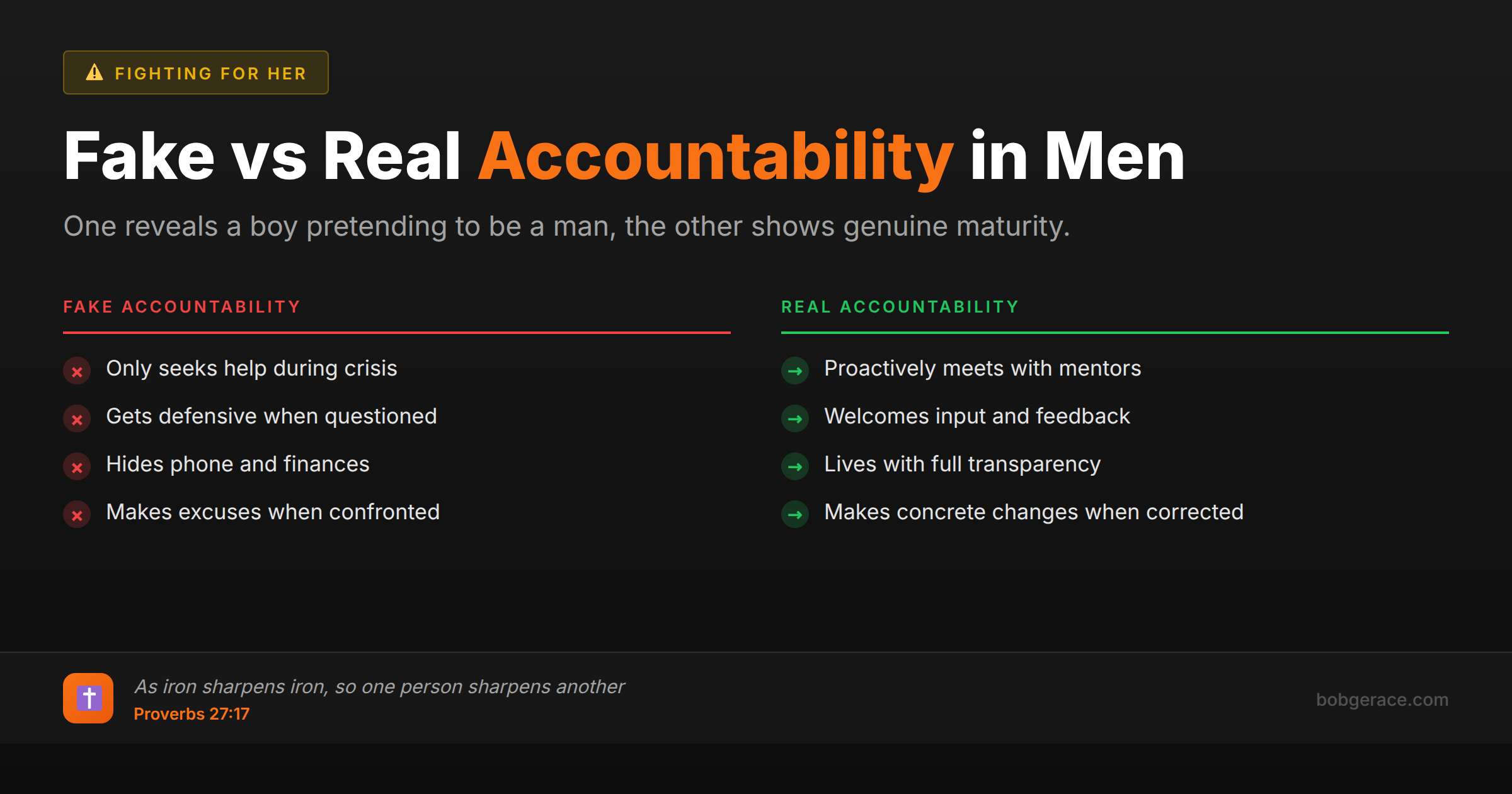
A healthy man's relationship with accountability should be proactive, not reactive. He should actively seek out trusted men who can speak truth into his life, not wait until crisis forces it. You should see him regularly meeting with mentors, counselors, or accountability partners who know the real him - his struggles, his goals, and his blind spots. Genuine accountability looks like transparency about his actions, finances, time, and inner life. He doesn't hide his phone, gets defensive when questioned, or make excuses when confronted. Instead, he welcomes input, asks for feedback, and makes concrete changes when areas for growth are identified. He understands that accountability isn't about control - it's about becoming the man God called him to be.
The Full Picture
True accountability goes far beyond surface-level check-ins. A man with a healthy relationship to accountability understands that iron sharpens iron, and he actively positions himself to be sharpened. This means he doesn't just tolerate accountability - he pursues it.
You should see him with trusted male relationships where real conversation happens. These aren't casual friendships built around sports and hobbies, though those have their place. These are relationships where he can be vulnerable about his struggles with anger, lust, pride, or whatever his particular battles might be. He should be able to name these men and tell you how they're helping him grow.
Financial transparency is non-negotiable. A man walking in accountability doesn't hide purchases, secretly accumulate debt, or make major financial decisions without input from his wife and trusted advisors. He understands that secrecy breeds shame, and shame is the enemy of intimacy in marriage.
His relationship with technology and social media should be open. This doesn't mean you police his every click, but it does mean there's nothing he needs to hide. Phones aren't password-protected from spouses, browser histories aren't cleared compulsively, and he's willing to install filtering software if needed.
Professional accountability matters too. Whether it's a counselor, pastor, or coach, he should have someone outside his immediate circle who can provide objective perspective on his growth areas. This person should know about his marriage, his goals, and his struggles.
Most importantly, he should be growing. Accountability without change is just confession. You should see evidence over time that he's actually becoming more patient, more selfless, more emotionally available, or whatever areas he's working on.
What's Really Happening
From a psychological perspective, healthy accountability reflects secure attachment and emotional maturity. Men who embrace accountability have moved beyond the adolescent need to prove their independence and recognize that interdependence actually strengthens their sense of self.
Research shows that men often struggle with emotional vulnerability due to socialization patterns that equate openness with weakness. However, men who develop healthy accountability relationships demonstrate what we call 'differentiation' - the ability to maintain their sense of self while being influenced by others. This is a key marker of emotional maturity.
Neurologically, accountability relationships help regulate the stress response system. When men have safe relationships where they can process challenges and receive support, it actually rewires their brain's threat detection system. They become less defensive and more receptive to feedback.
The resistance many men show toward accountability often stems from shame-based thinking patterns developed in childhood. Men who had critical fathers or emotionally unavailable parents may interpret accountability as judgment rather than support. Therapeutic work can help reframe these patterns.
It's crucial to understand that accountability isn't the same as reporting to authority. Healthy accountability is collaborative and growth-oriented. When a man views accountability as punishment or control, it indicates underlying issues with trust and emotional safety that may require professional intervention.
What Scripture Says
Scripture is crystal clear about the importance of accountability and wise counsel in a man's life. Proverbs 27:17 tells us that "As iron sharpens iron, so one person sharpens another." This isn't optional - it's how God designed us to grow.
Proverbs 19:20 instructs us to "Listen to advice and accept discipline, and at the end you will be counted among the wise." A godly man doesn't just tolerate correction; he actively seeks it out because he knows it leads to wisdom.
Ecclesiastes 4:12 reminds us that "though one may be overpowered, two can defend themselves. A cord of three strands is not quickly broken." This speaks to the strength that comes from accountable relationships. A man trying to fight life's battles alone is vulnerable in ways that a man surrounded by godly counsel is not.
James 5:16 calls us to "confess your sins to each other and pray for each other so that you may be healed." Notice that healing comes through confession to others, not just to God. This requires the kind of transparent, accountable relationships where real struggles can be shared.
Galatians 6:1-2 shows us what biblical accountability looks like: "Brothers and sisters, if someone is caught in a sin, you who live by the Spirit should restore that person gently. But watch yourselves, or you also may be tempted. Carry each other's burdens, and in this way you will fulfill the law of Christ." This is gentle, restorative, and mutual - not harsh or one-sided.
A man who embraces biblical accountability understands that wisdom comes from multiple counselors (Proverbs 15:22) and that he needs the body of Christ to become who God called him to be.
What To Do Right Now
-
1
Observe his current relationships - Does he have men in his life who know his real struggles and can speak truth to him?
-
2
Notice his response to feedback - When you or others point out areas for growth, does he get defensive or does he listen?
-
3
Look for transparency patterns - Is he open about his schedule, finances, and online activity, or are there areas of secrecy?
-
4
Assess his growth trajectory - Over the past year, can you identify specific ways he's grown or changed?
-
5
Have a direct conversation - Ask him who he's accountable to and what that relationship looks like practically
-
6
Encourage professional support - If he lacks healthy accountability, suggest he find a counselor, coach, or mentor who can fill this role
Related Questions
- What daily practices indicate commitment?
- What should change in his communication?
- What should change in his conflict behavior?
- What should change in his emotional regulation?
- What does proactive repair look like?
- What does humility in process look like?
- What is accountability and what isn't it?
- What does effective accountability require?
- What makes accountability relationships work?
- Why do I need other men?
Also find Bob on
Subscribe for weekly videos on Christian marriage.
Not Sure How to Ask for This?
Coaching helps you figure out what accountability actually looks like in your specific marriage—and how to bring it up without triggering defensiveness or another fight.
Talk to Bob →