What are the Four Theaters he keeps mentioning?
6 min read
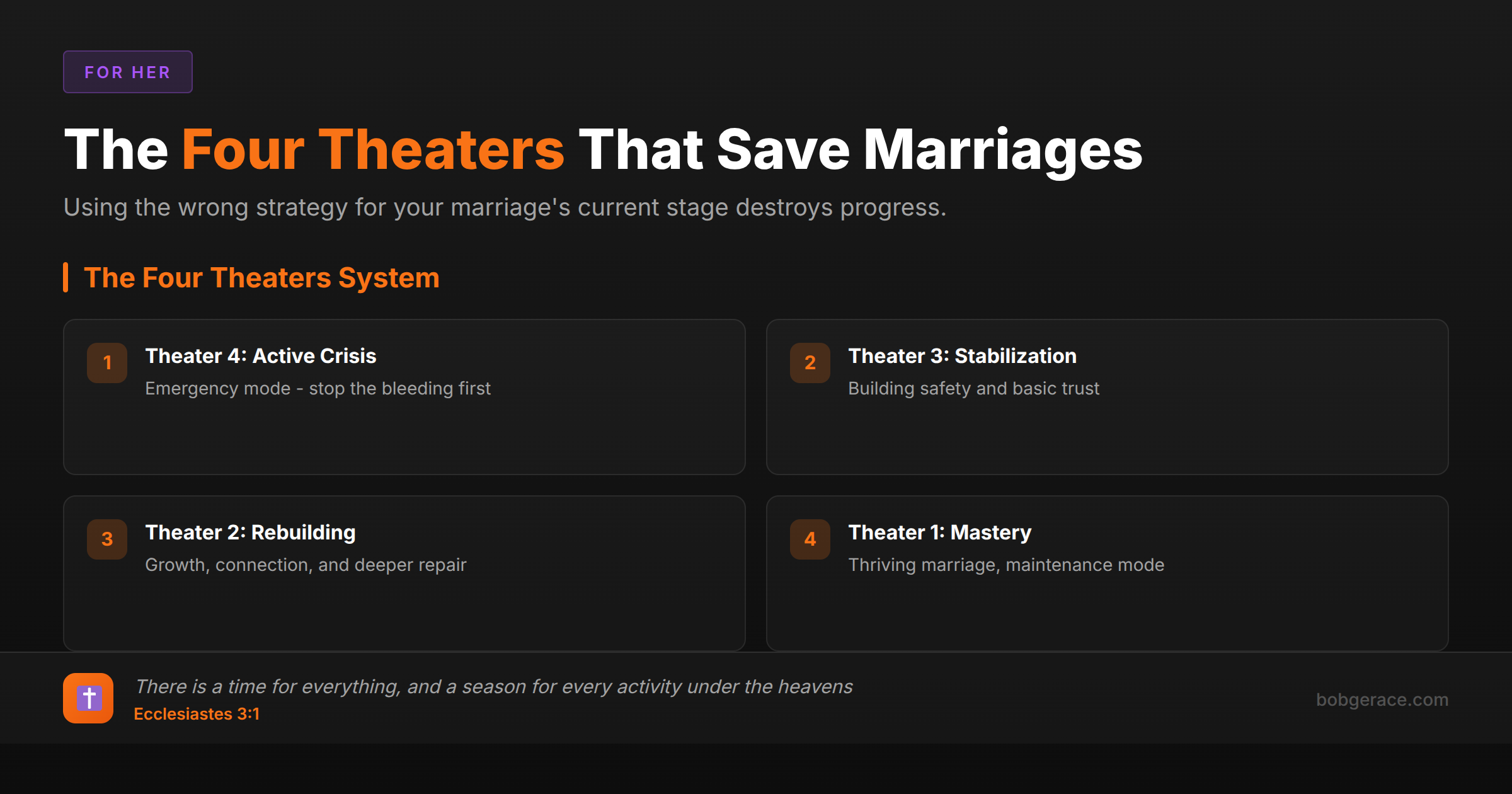
The Four Theaters is a staging system that identifies where your marriage actually stands—not where you hope it is or fear it is, but where the evidence says it is. Theater 4 is active crisis. Theater 3 is stabilization. Theater 2 is rebuilding and growth. Theater 1 is mastery and maintenance. This matters because the strategy that works in one theater can destroy progress in another. A man in Theater 4 crisis who tries Theater 2 romance tactics will push you further away. A man in Theater 3 who thinks he's in Theater 1 will miss critical repair work. The system prevents the kind of miscalculation that has probably sabotaged previous attempts at change.
The Full Picture
You've probably experienced this: he reads something or hears advice and suddenly tries a new approach. Maybe he plans a romantic dinner when what you actually need is space. Maybe he tries to have deep conversations when you can barely look at him. The intentions might be good, but the timing is catastrophically wrong.
The Four Theaters exist to solve this problem. They're based on how marriages actually heal—in predictable stages that require different approaches at each level.
Theater 4: Crisis This is active emergency. You're considering divorce, there's been a major betrayal, or the marriage is in immediate danger. At this stage, the only goal is stopping the bleeding. No romance. No deep conversations. No trying to fix everything at once. Just creating enough stability to prevent total collapse.
The man in Theater 4 learns to regulate his emotions, stop destructive behaviors immediately, and create basic safety. If he tries to skip this stage with grand gestures, he'll make things worse.
Theater 3: Stabilization The immediate crisis has passed, but trust is fragile and the relationship is still wounded. This is the rebuilding foundation stage. He's working on consistent daily behaviors, establishing patterns of reliability, and proving through sustained action that he's different.
Most men want to rush through this stage. They feel like they've 'done the work' after a few weeks and want to move to romance and reconnection. But premature advancement is why most recovery attempts fail. This stage typically takes 3-6 months of consistent behavior.
Theater 2: Growth Trust is being rebuilt. Connection is returning. Now there's room for active relationship building—deeper conversations, rebuilding intimacy, addressing root issues, and creating shared vision for the future.
This is where most marriage programs start, which is why they fail. You can't do Theater 2 work when you're actually in Theater 4 or 3.
Theater 1: Mastery The marriage is healthy and the work becomes maintenance and multiplication. Protecting what's been built, continuing growth, and potentially helping other couples navigate what you've overcome.
The system gives both of you a shared language for where things actually stand and what's appropriate for this stage.
What's Really Happening
The Four Theater system aligns with established research on relationship repair and trauma recovery. Clinically, we know that safety must precede connection, and connection must precede intimacy. Attempting to build intimacy without first establishing safety creates retraumatization, not healing.
This maps directly to the theater progression: Theater 4 establishes basic safety. Theater 3 builds reliable connection. Theater 2 develops deeper intimacy. Theater 1 maintains and protects all three.
The system also prevents a common clinical phenomenon called premature reconciliation—where couples attempt to 'move on' before adequately processing the rupture. Research consistently shows that premature reconciliation predicts relapse into //blog.bobgerace.com/christian-marriage-crisis-desperation-weakness/:crisis. The theater system builds in the time and stage-appropriate work that prevents this.
From a nervous system perspective, your body keeps score of betrayal and hurt. It doesn't care about his words or intentions—it responds to sustained patterns of safety over time. The extended stabilization period in Theater 3 allows your nervous system to gather enough evidence of safety to begin relaxing its protective vigilance.
The staging approach also addresses what therapists call the pursuer-distancer dynamic. When he's in crisis and pursues connection aggressively, you naturally distance for self-protection. This increases his anxiety and pursuit, which increases your distance. The theater system breaks this cycle by teaching him stage-appropriate responses.
What Scripture Says
The staged approach to restoration reflects biblical wisdom about timing, patience, and appropriate action.
"There is a time for everything, and a season for every activity under the heavens" (Ecclesiastes 3:1). Just as there's a time to mourn and a time to dance, there's a time for crisis management and a time for romance. Wisdom knows the difference.
"The prudent see danger and take refuge, but the simple keep going and pay the penalty" (Proverbs 22:3). Accurate assessment of your current reality—your actual theater—is prudence. Pretending things are better than they are is the simplicity that leads to repeated failure.
The extended stabilization period reflects Jesus' teaching that "Whoever can be trusted with very little can also be trusted with much" (Luke 16:10). Trust is rebuilt in small increments over time, not through grand gestures. Theater 3's focus on daily consistency honors this principle.
"Do not despise these small beginnings, for the Lord rejoices to see the work begin" (Zechariah 4:10). The early stages of recovery don't look impressive. There's no dramatic transformation to celebrate—just daily, mundane faithfulness. But this is exactly where genuine change takes root.
The progression also reflects the biblical pattern of restoration seen in the Prodigal Son. The father didn't pretend the rupture hadn't happened or rush to restore full privileges. There was acknowledgment, repentance, and then graduated restoration of relationship and responsibility.
What This Means for You Right Now
-
1
Ask him what theater he's in - If he can't clearly articulate where your marriage stands according to this system, he may not be engaged with the process as deeply as needed.
-
2
Assess whether his actions match his stated theater - A man who claims Theater 3 stability but still has emotional explosions isn't actually there yet. Watch actions, not claims.
-
3
Understand stage-appropriate expectations - If you're in Theater 4 or 3, don't expect—or allow yourself to be pressured into—Theater 2 intimacy or romance.
-
4
Recognize that 'going slow' is actually progress - A man who understands the theater system and intentionally paces his approach is showing more wisdom than one who rushes.
-
5
Give yourself permission to verify - You don't have to take his word for what theater you're in. Your experience matters. If you feel like you're in crisis, you're in crisis.
-
6
Know that accurate staging protects you both - When he correctly identifies your theater and acts accordingly, it shows he understands that your healing matters, not just his timeline.
Related Questions
- What is this program actually teaching him?
- Why is this approach different from other things we've tried?
- What does he hear about me in your coaching?
- How long does real change actually take?
- What should I expect during this process?
- What does 'the work' actually mean?
- What is he doing with his coach?
- What should he be learning?
- What are the stages of change work?
Also find Bob on
Subscribe for weekly videos on Christian marriage.
Think This Could Help Your Husband?
If you believe your husband could benefit from the structured transformation process we offer, share this with him. Real change is possible when men commit to the work.
Learn About the Program →