Did I retraumatize her without knowing?
6 min read
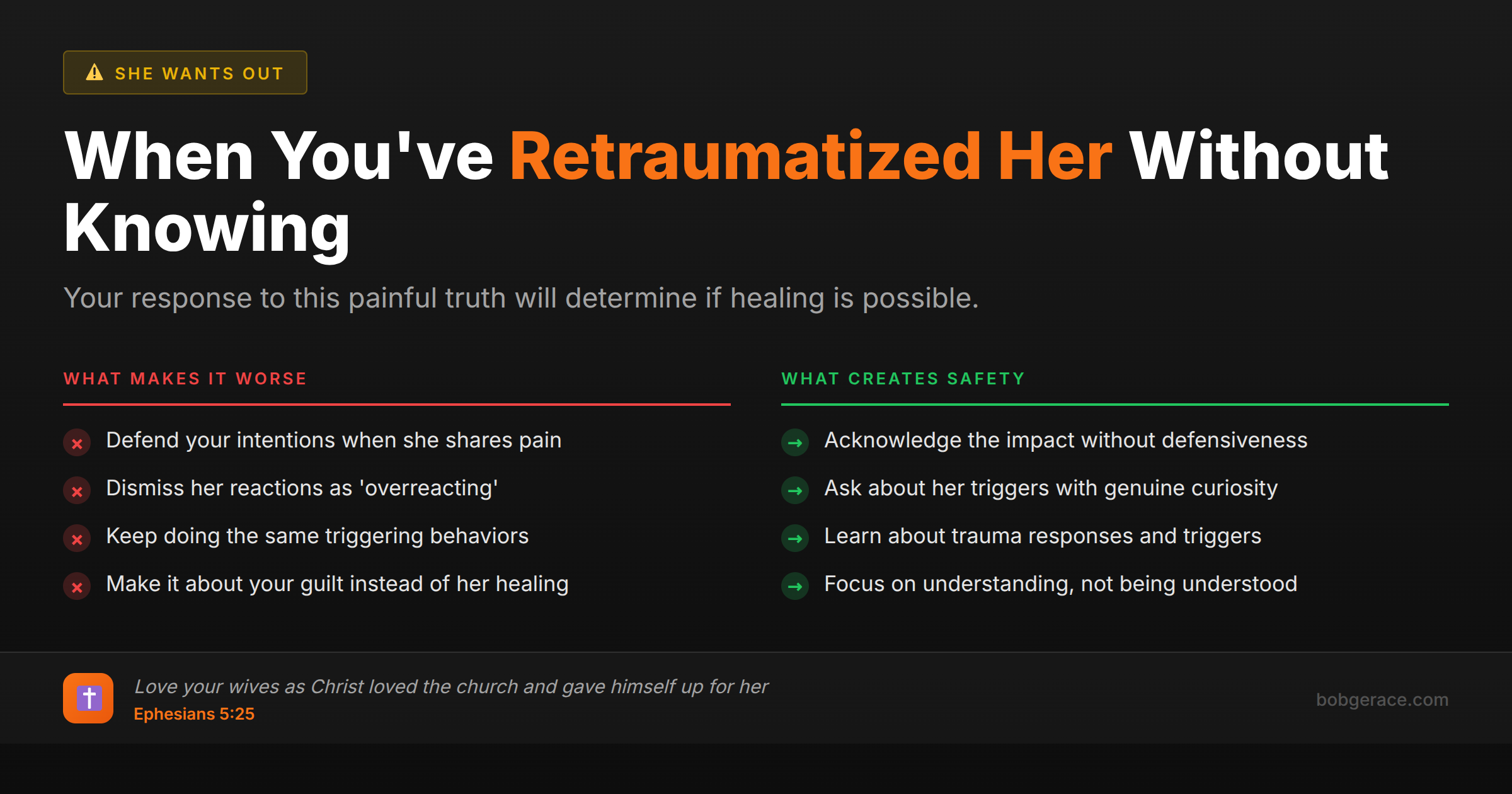
The painful truth is that yes, you may have unknowingly retraumatized her, especially if she carried wounds from her past that you didn't fully understand or address. This doesn't make you a monster—it makes you human. Most men have no idea how their words, actions, or even silence can trigger past trauma in their wives. Retraumatization happens when current experiences echo past wounds. If she experienced abandonment, betrayal, abuse, or neglect before you, certain behaviors—even ones you consider normal—can feel threatening to her nervous system. The key isn't drowning in guilt but understanding what happened so you can create genuine safety moving forward.
The Full Picture
Retraumatization occurs when present experiences activate old wounds, sending someone back into survival mode. Your wife's trauma history creates a lens through which she interprets your actions, often in ways you never intended.
Common ways husbands unknowingly retraumatize:
• Raising your voice during conflict - If she experienced verbal abuse, your frustrated tone can feel like attack mode to her nervous system • Withdrawing or giving silent treatment - This can trigger abandonment wounds, making her feel invisible or rejected • Making decisions without her input - Can echo past experiences of powerlessness or control • Minimizing her emotions - Phrases like "you're overreacting" can mirror past invalidation • Broken promises or inconsistency - Even small ones can shatter trust when betrayal wounds exist • Sexual pressure or persistence - Can trigger sexual trauma responses • Criticism or corrections - May activate shame from past emotional abuse
Here's what's crucial to understand: her reactions often seem disproportionate to the trigger because they're not really about you. They're about the original wound being reopened. When someone is retraumatized, their brain literally cannot distinguish between past and present threat.
The tragedy is that most men are completely unaware this is happening. You see her "overreaction" and respond defensively, which often escalates the situation and deepens the retraumatization. It becomes a cycle where your attempts to defend yourself actually prove to her nervous system that you're unsafe.
This doesn't excuse everything or mean you must walk on eggshells forever. But understanding this dynamic is essential for breaking the cycle and creating genuine safety in your marriage.
What's Really Happening
From a clinical perspective, retraumatization occurs when current experiences activate the same neurobiological responses as the original trauma. The amygdala—our brain's alarm system—cannot distinguish between past and present threats, so it responds as if the original danger is happening now.
When someone has unresolved trauma, they develop what we call "trauma triggers"—specific situations, behaviors, or dynamics that activate their survival response. Research shows that approximately 70% of adults have experienced at least one traumatic event, and many carry these wounds into marriage without full awareness of how they impact the relationship.
The challenge in marriage is that intimate relationships naturally create vulnerability, which can feel dangerous to a traumatized nervous system. Your wife may experience hypervigilance (constantly scanning for threats), emotional flooding (overwhelming feelings that shut down rational thinking), or dissociation (mentally checking out during conflict).
What makes this particularly complex is that retraumatization often happens through seemingly normal marital interactions. A husband's frustrated sigh might trigger childhood memories of an angry father. A forgotten anniversary could activate deep abandonment wounds. The husband sees these as minor issues; the wife experiences them as existential threats to her safety.
Neuroplasticity research shows that with consistent safety and understanding, these trauma responses can heal. However, this requires the non-traumatized partner to understand trauma dynamics and commit to creating an environment where the nervous system can begin to trust again. This means learning to regulate your own emotions, respond rather than react, and prioritize emotional safety even when it feels unfair or excessive.
What Scripture Says
Scripture calls us to a higher standard of love that prioritizes the wounded and vulnerable. Ephesians 5:25 commands husbands to "love your wives as Christ loved the church and gave himself up for her." This sacrificial love means understanding her wounds and choosing gentleness over defensiveness.
1 Thessalonians 5:14 instructs us to "encourage the fainthearted, help the weak, be patient with them all." If your wife carries trauma, she needs your patience and strength, not your frustration at her "weakness." Her triggers aren't character flaws—they're wounds that need healing.
Proverbs 27:6 reminds us that "faithful are the wounds of a friend, but deceitful are the kisses of an enemy." Sometimes loving correction requires acknowledging the pain we've caused, even unintentionally. Taking responsibility for retraumatization isn't self-condemnation—it's faithful love.
Isaiah 42:3 describes the Messiah: "A bruised reed he will not break, and a faintly burning wick he will not quench." This is your model for loving a traumatized wife. She may be bruised and her flame may be flickering, but your role is to protect and nurture, not to demand strength she doesn't have.
Galatians 6:2 calls us to "bear one another's burdens." Your wife's trauma isn't just her problem to solve—it's a burden you're called to help carry. This means learning about trauma, adjusting your approach, and creating safety even when it requires sacrifice.
God's design for marriage includes being wounded healers for each other, not perfect people who never cause harm.
What To Do Right Now
-
1
Acknowledge the possibility without defensiveness - say "I'm learning that I may have hurt you in ways I didn't understand"
-
2
Ask specific questions about her triggers - "What happens inside you when I raise my voice?" or "How does it feel when I withdraw?"
-
3
Stop defending your intentions when she shares pain - focus on the impact rather than your intent
-
4
Learn about trauma responses - read books like 'The Body Keeps the Score' to understand what she's experiencing
-
5
Practice emotional regulation techniques - deep breathing, pausing before responding, prayer before difficult conversations
-
6
Commit to consistent, predictable behavior - reliability helps rebuild trust in traumatized individuals
Related Questions
- Is her leaving connected to past trauma?
- What is 'stacked trauma' and does she have it?
- How does PTSD affect her perception of our marriage?
- Is she triggered or is this a rational decision?
- What does 'survival brain' look like in her right now?
- How do I know if this is trauma response or true clarity?
- What is 'betrayal trauma' and do I have it?
- What are 'attachment injuries' and how many did I cause?
- What does chronic stress do to her capacity for connection?
- What happened to her attachment to me?
Also find Bob on
Subscribe for weekly videos on Christian marriage.
Don't Keep Guessing What She Needs
A coach who knows your specific history can help you see what's actually triggering her—and how to create safety she can feel. You don't have to figure this out alone.
Talk to Bob →