How does PTSD affect her perception of our marriage?
6 min read
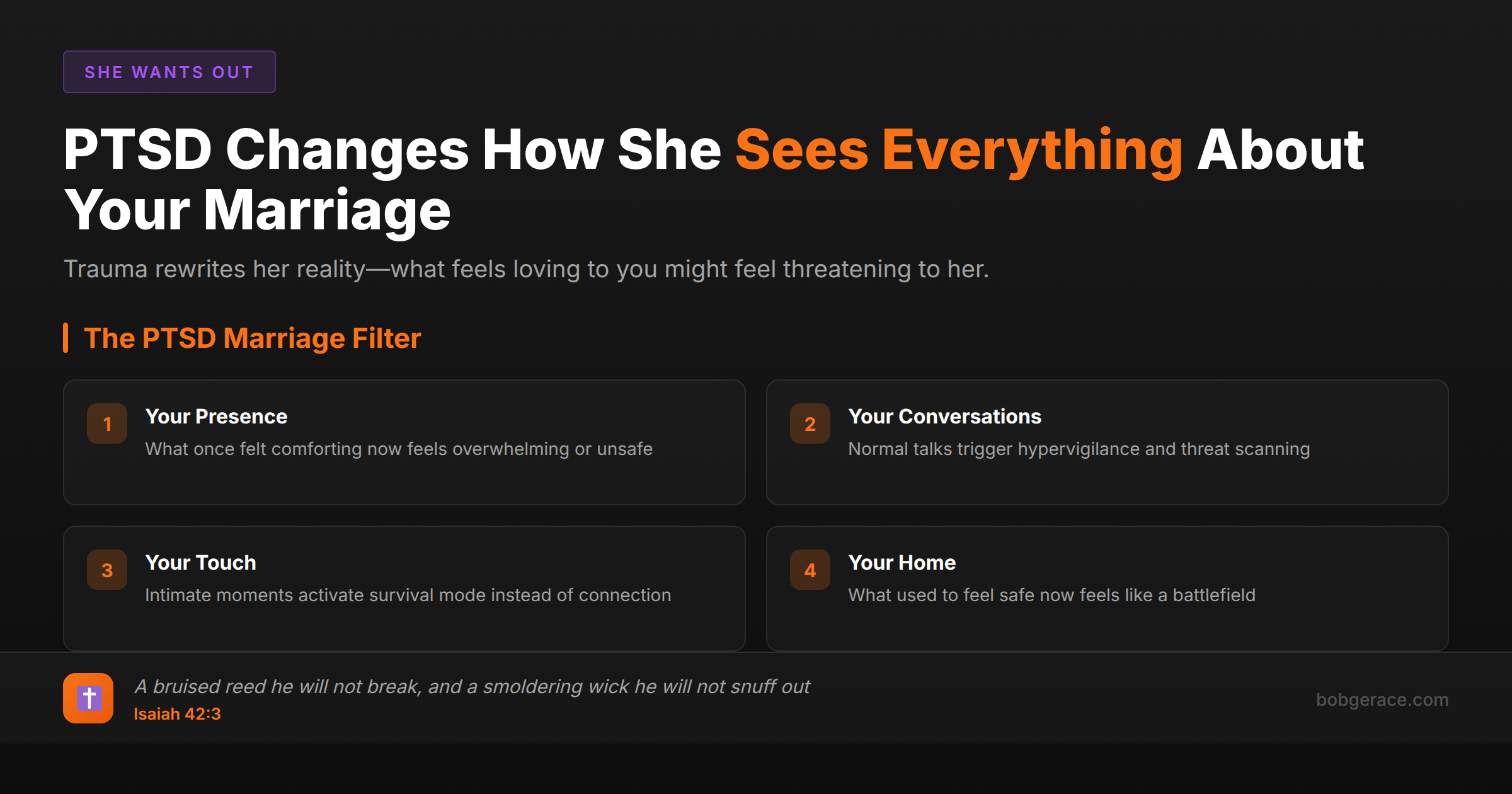
PTSD doesn't just affect your wife—it rewrites how she experiences your entire marriage. Through the lens of trauma, moments you remember as loving might feel threatening to her. Conversations you thought were normal might trigger hypervigilance. Even your presence, once comforting, might now feel overwhelming or unsafe. This isn't about you personally, but PTSD makes everything feel more intense and unpredictable. Her nervous system is stuck in survival mode, scanning for danger even in intimate moments. What used to feel like home might now feel like a battlefield. Understanding this shift is crucial because you can't address marital issues effectively until you recognize how trauma is filtering every interaction between you.
The Full Picture
PTSD fundamentally alters how your wife processes reality, and your marriage gets filtered through this traumatized lens. Her brain, stuck in survival mode, interprets neutral situations as potentially threatening. That discussion about finances? It might trigger feelings of being trapped. Your attempt to be physically affectionate? It could activate her fight-or-flight response.
The three main ways PTSD distorts marital perception:
• Hypervigilance - She's constantly scanning for signs of danger, criticism, or abandonment in your words and actions • Emotional numbing - She may feel disconnected from positive memories and unable to access warm feelings about your relationship • Intrusive thoughts - Trauma memories can intrude during intimate moments, making connection feel impossible
Many men make the mistake of trying to logic their way through this. "But I've never hurt you!" you might say. Her logical brain knows this, but her traumatized nervous system doesn't care about logic. It's operating from a place of survival, not reason.
The cruel irony is that marriage—which should be her safest space—can become where she feels most vulnerable. Intimacy requires letting your guard down, but PTSD makes that feel dangerous. She may pull away not because she doesn't love you, but because getting close activates every alarm bell in her system.
This creates a vicious cycle. The more she pulls away, the more rejected you feel. The more you pursue connection, the more trapped she feels. Without understanding trauma's role, both of you end up feeling misunderstood and alone.
What's Really Happening
From a clinical perspective, PTSD creates what we call 'cognitive distortions' that specifically impact intimate relationships. The amygdala, your wife's alarm system, becomes hyperactive while the prefrontal cortex—responsible for rational thinking—goes offline during triggered states.
Research shows that trauma survivors often experience 'negative cognitive bias,' meaning they're more likely to interpret ambiguous situations as threatening. In marriage, this translates to assuming the worst about their partner's intentions, even when evidence suggests otherwise.
The phenomenon of 'emotional numbing' is particularly devastating for marriages. Post-traumatic stress can literally shut down the neural pathways associated with positive emotions and connection. Your wife may feel like she's watching your marriage through glass—she can see it, but she can't feel it.
Attachment theory helps us understand why marriage becomes so complicated with PTSD. Trauma often creates 'disorganized attachment,' where the person simultaneously craves and fears closeness. Your wife needs you but also needs to protect herself from you, creating an impossible internal conflict.
Trigger responses in marriage often involve 'time collapse'—where past trauma feels present and immediate. During these moments, you're not just her husband; you might unconsciously represent every person who ever hurt her. This isn't conscious or intentional; it's how traumatized brains protect themselves.
The good news is that understanding creates space for healing. When couples learn to recognize trauma responses rather than taking them personally, they can begin working with the nervous system rather than against it.
What Scripture Says
Scripture acknowledges the deep impact of wounds on our hearts and minds. Psalm 147:3 reminds us that "He heals the brokenhearted and binds up their wounds." God understands that trauma creates real wounds that need time and care to heal.
Isaiah 42:3 says, "A bruised reed he will not break, and a smoldering wick he will not snuff out." Your wife's spirit may be bruised by trauma, and Christ calls you to handle her with the same gentleness He shows. This means not pushing for connection when she's in survival mode, but creating safety instead.
Galatians 6:2 instructs us to "carry each other's burdens, and in this way you will fulfill the law of Christ." PTSD creates invisible burdens that your wife carries daily. Part of loving her well means helping bear the weight of her healing journey, not adding to it by taking her trauma responses personally.
1 Peter 3:7 calls husbands to "be considerate as you live with your wives, and treat them with respect as the weaker partner." This isn't about inferiority—it's about recognizing vulnerability. Trauma creates areas of genuine fragility that require extra care and understanding.
Ephesians 4:32 encourages us to "be kind and compassionate to one another, forgiving each other, just as in Christ God forgave you." When PTSD distorts her perception of your marriage, responding with patience and compassion rather than defensiveness reflects Christ's heart for both of you.
God's design for marriage includes walking through valleys together. Your wife's trauma is part of the valley you're called to navigate as a team, with Christ as your guide.
What To Do Right Now
-
1
Educate yourself about PTSD and trauma responses through reputable resources and books
-
2
Stop taking her trauma responses personally and start recognizing them as symptoms
-
3
Create predictable routines and safe spaces that help regulate her nervous system
-
4
Ask her directly what makes her feel safe versus triggered in your interactions
-
5
Seek trauma-informed couples therapy with a qualified professional
-
6
Practice patience during her healing process without putting pressure on timelines
Related Questions
- Is her leaving connected to past trauma?
- What is 'stacked trauma' and does she have it?
- Is she triggered or is this a rational decision?
- What does 'survival brain' look like in her right now?
- How do I know if this is trauma response or true clarity?
- Did I retraumatize her without knowing?
- What is 'betrayal trauma' and do I have it?
- What does chronic stress do to her capacity for connection?
- What does trauma recovery look like?
- What is triggered vs. legitimately upset?
Also find Bob on
Subscribe for weekly videos on Christian marriage.
Your Marriage Isn't a Textbook Case
PTSD shows up differently in every relationship. A coach who knows your specific story can help you read what's actually happening between you two—not just what the research says.
Talk to Bob →