How do I pursue without pressuring?
6 min read
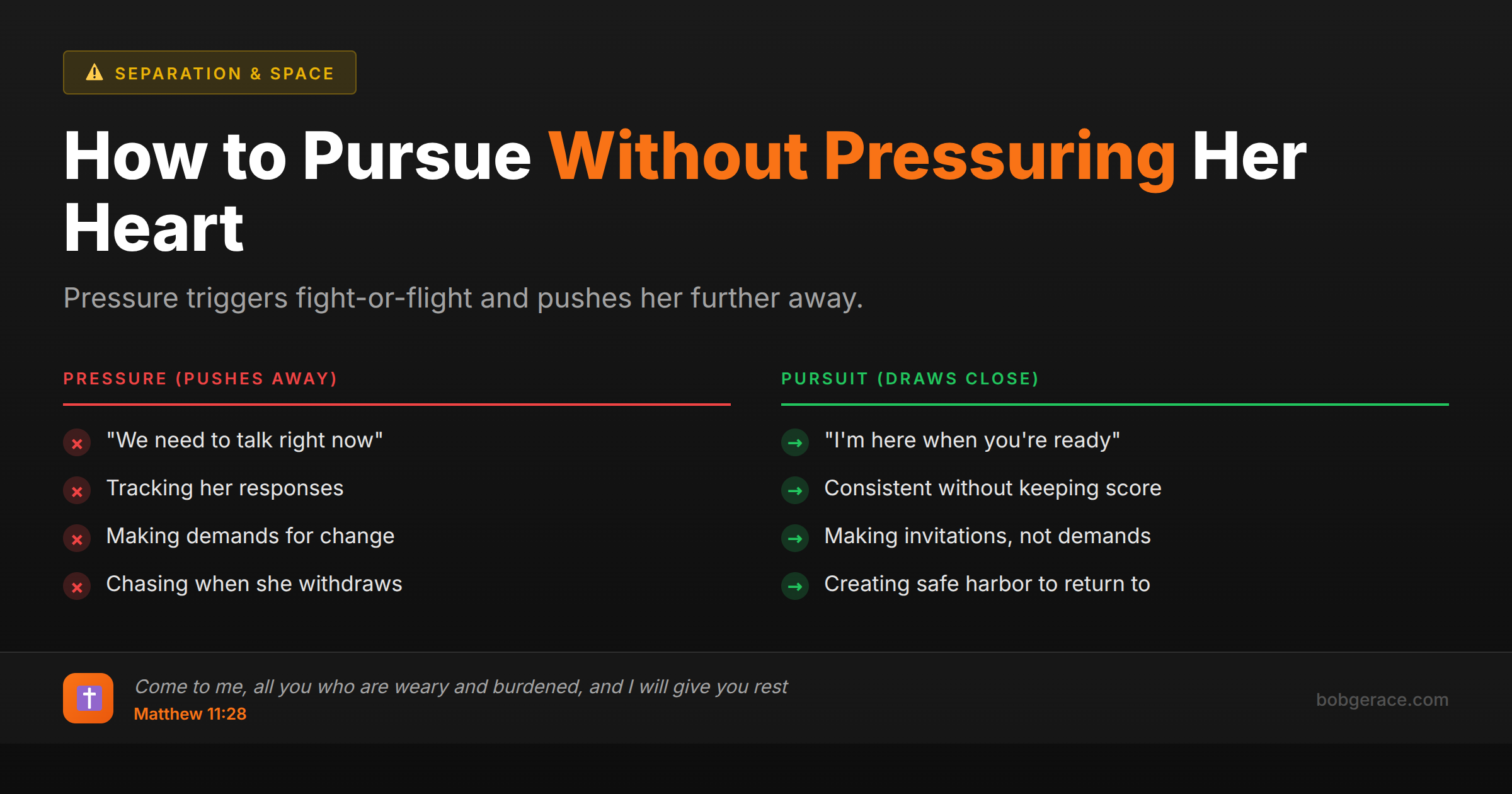
Pursuing without pressuring means showing up consistently while respecting her emotional boundaries. It's presence without demand, invitation without insistence. When trauma is involved, pressure triggers her fight-or-flight response, pushing her further away. Instead, pursue through predictable kindness, emotional safety, and patient consistency. This means being reliably present without requiring immediate response or reciprocation. Think of it as creating a safe harbor she can return to when ready, rather than chasing a ship that's already sailed. Your pursuit becomes about demonstrating trustworthiness and emotional regulation, not about getting something from her.
The Full Picture
When your wife has checked out, especially with trauma in the mix, traditional pursuit tactics backfire spectacularly. The more you chase, the faster she runs. The more you demand connection, the deeper she retreats. This isn't personal rejection - it's survival mode.
Trauma changes everything about how she experiences pursuit. What feels like love to you can feel like threat to her nervous system. Your desire for closeness can trigger her need for safety through distance. This creates a maddening cycle: you pursue harder because you're losing her, but the harder pursuit confirms to her traumatized system that she's right to keep running.
The key shift is understanding that pursuit without pressure isn't about backing off completely - it's about changing the entire energy behind your approach. Instead of pursuit that says "I need you to respond," it becomes pursuit that says "I'm here when you're ready." Instead of pursuit that demands immediate reciprocation, it becomes pursuit that can wait indefinitely while still showing up consistently.
This requires a fundamental rewiring of how you think about marriage. You're not pursuing to get something from her - you're pursuing to give something to her. Safety. Predictability. Evidence that you can be trusted with her fragile heart. This type of pursuit actually becomes more attractive over time because it doesn't trigger her defenses. It creates space for her to choose connection rather than feeling cornered into it. The irony is that pursuing without pressure often leads to deeper intimacy than pressure ever could.
What's Really Happening
From a trauma-informed perspective, a checked-out wife often exists in a chronic state of nervous system dysregulation. Her brain has learned that relationships equal danger, so pursuit triggers her sympathetic nervous system - the fight, flight, or freeze response. When you pursue with pressure, you're essentially confirming her brain's assessment that she needs protection from you.
The trauma response hijacks rational thinking. Even if she logically knows you love her, her nervous system is operating from a place of perceived threat. Pressure - whether emotional, physical, or relational - activates her amygdala and shuts down her prefrontal cortex where rational decision-making happens. This is why reasoning with her or explaining your intentions often fails.
Healing happens in safety, not pressure. For her nervous system to recalibrate, she needs consistent experiences of safety without demand. This means your pursuit must be filtered through the lens of: "Will this help her nervous system feel safer or more threatened?" Pursuit without pressure involves co-regulating with her - your calm, regulated nervous system helps regulate hers over time.
The goal isn't just to avoid triggering her - it's to actively create experiences that help her nervous system learn that connection can be safe. This happens through predictable kindness, emotional consistency, and most importantly, your ability to remain regulated even when she's dysregulated. Your nervous system becomes a safe harbor for hers.
What Scripture Says
Scripture provides a beautiful framework for pursuit without pressure, modeled perfectly in how Christ pursues us. "Come to me, all you who are weary and burdened, and I will give you rest" (Matthew 11:28). Notice this is invitation, not demand. Christ pursues us with open arms, not grabbing hands.
"Love is patient, love is kind... it is not self-seeking" (1 Corinthians 13:4-5). Patient love doesn't pressure for immediate response. Kind love considers what the other person actually needs, not just what we want to give. Non-self-seeking love pursues for the other's benefit, not our own gratification.
"Above all else, guard her heart, for everything she does flows from it" (Proverbs 4:23, adapted). When trauma is involved, guarding her heart means protecting it from pressure, even pressure that comes from love. Sometimes the most loving thing is to pursue more slowly.
"Be still and know that I am God" (Psalm 46:10). There's profound power in stillness - in being present without agenda. Your wife needs to experience you as a refuge, not a requirement. "The Lord your God is with you, the Mighty Warrior who saves. He will take great delight in you; in his love he will no longer rebuke you, but will rejoice over you with singing" (Zephaniah 3:17). This is pursuit that delights without demanding, presence that celebrates without controlling. God's pursuit of us is persistent but never pressuring - the perfect model for how to love a wounded heart back to wholeness.
What To Do Right Now
-
1
Regulate yourself first - Practice deep breathing, prayer, or other calming techniques before any interaction with her. Your regulated nervous system is your greatest tool.
-
2
Make invitations, not demands - Replace 'We need to talk' with 'I'm here if you'd like to talk.' Replace 'You never...' with 'I'd love to...' when you're ready.
-
3
Show up consistently without keeping score - Be predictably kind without tracking her responses. Consistency builds safety over time.
-
4
Create emotional safety through your responses - When she does share or engage, receive it with gratitude rather than immediately asking for more.
-
5
Honor her no's completely - When she says no to connection, accept it gracefully. This teaches her that her boundaries are safe with you.
-
6
Pursue through service, not words - Let your actions demonstrate care without requiring acknowledgment or appreciation in return.
Related Questions
- Should I give her space or fight for her?
- What's the difference between pursuing and chasing?
- How do I show love without activating her withdrawal?
- What's the difference between presence and pressure?
- What is 'anxious protest behavior' and am I doing it?
- Why does my instinct to pursue backfire?
- What is the '180' approach and does it work?
- How do I stay connected while enforcing boundaries?
- How do I not pursue while also not abandoning?
- What does 'detach with love' actually mean?
Also find Bob on
Subscribe for weekly videos on Christian marriage.
Your Marriage Isn't Generic
Pursuing without pressuring looks different depending on her specific trauma history and where your marriage is today. A coach who knows your story can calibrate what 'safe pursuit' actually means for you two.
Talk to Bob →