Could her sexual shutdown be trauma-related?
6 min read
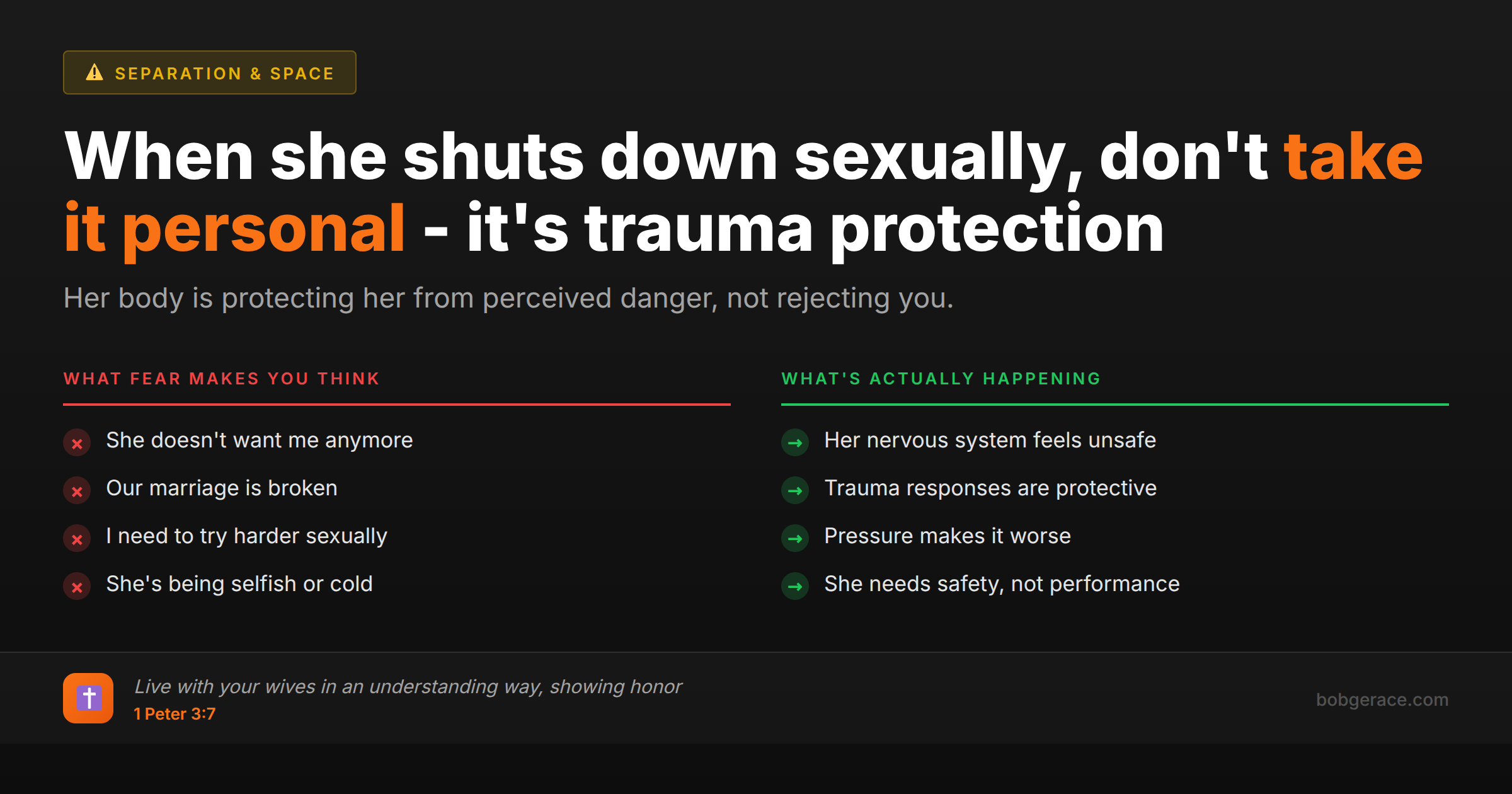
Yes, sexual shutdown is frequently connected to past trauma - whether sexual, emotional, or physical. Trauma creates protective responses that can make intimacy feel threatening rather than loving. Her body and mind may be responding to triggers you can't see, activating survival mechanisms that shut down sexual desire and responsiveness. This isn't about you or your marriage necessarily - it's about her nervous system protecting her from perceived danger. Trauma responses often emerge or intensify during vulnerable seasons like childbirth, stress, or even positive changes in your relationship. Understanding this helps you respond with patience rather than taking it personally.
The Full Picture
Sexual trauma affects 1 in 4 women, but trauma-induced sexual shutdown extends far beyond sexual abuse. Physical abuse, emotional neglect, medical trauma, difficult births, betrayal trauma, or even growing up in a chaotic household can all impact sexual intimacy. The connection isn't always obvious - even to her.
Trauma creates lasting changes in the nervous system. Her body may perceive intimacy as dangerous, triggering fight, flight, freeze, or fawn responses. What looks like rejection or disinterest is actually her nervous system trying to keep her safe. This can manifest as:
- Physical symptoms: Pain during sex, inability to become aroused, feeling disconnected from her body - Emotional responses: Anxiety around intimacy, feeling overwhelmed by touch, sudden mood changes - Mental patterns: Racing thoughts during intimacy, hypervigilance, dissociation or "checking out" - Behavioral changes: Avoiding situations that might lead to sex, creating distance, focusing excessively on other activities
Here's what many husbands don't understand: trauma responses aren't logical or controllable. She may want to be intimate but find her body won't cooperate. She might feel frustrated with herself, leading to shame that compounds the problem. The harder you both try to "fix" it through willpower, the more her nervous system may resist.
Timing matters too. Trauma responses often surface during vulnerable life seasons - after having children, during stress, or ironically, when she feels safer in your marriage. What seems like progress followed by regression is actually her nervous system processing at its own pace.
What's Really Happening
From a clinical perspective, sexual shutdown often represents a dysregulated nervous system rather than a relationship problem. Trauma literally rewires the brain, particularly areas responsible for safety assessment and sexual response. The vagus nerve, which controls our rest-and-digest state necessary for intimacy, becomes hyperactive.
Understanding her window of tolerance is crucial. This is the zone where she can experience arousal and connection without becoming overwhelmed. Trauma narrows this window dramatically. What feels like normal foreplay to you might push her into hyperarousal (anxiety, panic) or hypoarousal (numbness, disconnection).
Somatic symptoms are real and involuntary. Her body may tense up, her breathing may become shallow, or she may experience pain - all without conscious control. These aren't choices she's making; they're automatic protective responses.
Healing requires safety and co-regulation - her nervous system learning to feel safe through your consistent, patient presence. This process can't be rushed or negotiated. Pressure to perform sexually, even gentle pressure, can reinforce the trauma response by confirming her nervous system's assessment that intimacy equals danger.
Professional trauma therapy, particularly approaches like EMDR, somatic experiencing, or trauma-informed sex therapy, can be transformative. However, your role as her husband in creating emotional and physical safety is equally important to her healing process.
What Scripture Says
Scripture calls us to approach our wounded spouses with the same gentleness Christ shows us. 1 Peter 3:7 instructs husbands to "live with your wives in an understanding way, showing honor to the woman as the weaker vessel, since they are heirs with you of the grace of life." This doesn't mean women are inferior, but that we must recognize their vulnerabilities and respond with protective care.
Isaiah 42:3 describes God's gentle approach: "A bruised reed he will not break, and a faintly burning wick he will not quench." When trauma has left your wife feeling broken or barely hanging on, your response should mirror Christ's tender care for the wounded.
Psalm 147:3 reminds us that "He heals the brokenhearted and binds up their wounds." God is actively working to heal trauma, but this process takes time. Our role is to create space for His healing work, not to rush or force it.
1 Corinthians 13:4-7 defines love as patient and kind, not self-seeking or easily angered. When trauma affects your marriage bed, love means putting her healing above your desires. Ephesians 5:25-29 calls husbands to love their wives as Christ loved the church - with sacrificial, nurturing care that promotes healing and growth.
Romans 8:1 declares there is "no condemnation for those who are in Christ Jesus." This applies to both of you - she shouldn't feel condemned for her trauma responses, and you shouldn't feel condemned for having needs. God's grace covers this journey as you both seek healing and restoration together.
What To Do Right Now
-
1
Stop taking her sexual shutdown personally - it's about her nervous system, not your desirability or your marriage quality
-
2
Create predictable safety by eliminating sexual pressure and focusing on non-sexual physical affection she can control
-
3
Learn about trauma responses together - read books like 'The Body Keeps the Score' or 'Come As You Are' to understand what's happening
-
4
Encourage professional help with a trauma-informed therapist or certified sex therapist who understands religious values
-
5
Practice co-regulation by staying calm and present when she's triggered, becoming her safe harbor rather than another source of stress
-
6
Focus on rebuilding intimacy through emotional connection, shared activities, and gradual physical touch she initiates or welcomes
Related Questions
- What is 'sexual aversion' and does she have it?
- What is 'sexual trauma' and how does it affect marriage?
- Did something I did create sexual fear?
- What does coercion do to sexual desire long-term?
- What does 'body keeps the score' mean for our sex life?
- What if her withdrawal is protection not rejection?
- What is 'betrayal trauma' and do I have it?
- What does trauma recovery look like?
- What is 'complex trauma' and do I have it?
- What is EMDR and could it help?
Also find Bob on
Subscribe for weekly videos on Christian marriage.
Your Marriage Isn't a Textbook Case
Trauma shows up differently in every relationship. A coach who knows your specific story can help you create the conditions she needs without you guessing in the dark.
Talk to Bob →