Did something I did create sexual fear?
6 min read
This question takes tremendous courage to ask, and the fact that you're asking it shows you care deeply about your wife's wellbeing. The truth is, sexual fear can develop from many sources - past trauma, negative experiences, medical issues, or yes, sometimes from interactions within marriage that felt unsafe or overwhelming. Rather than getting lost in guilt or blame, focus on understanding what creates safety for your wife now. Sexual fear isn't usually about one incident but about feeling emotionally and physically safe. Whether or not you contributed to her fear, you can absolutely contribute to her healing by creating an environment of patience, understanding, and unconditional love.
The Full Picture
Sexual fear in marriage is more common than most couples realize, and it rarely has a simple cause or solution. When a wife experiences sexual fear, it can stem from childhood trauma, past relationships, medical issues, hormonal changes, or experiences within the marriage itself. The important thing to understand is that fear is never a choice - it's an involuntary response designed to protect.
If you're wondering whether something you did contributed to this fear, consider these possibilities: Was there a time when she seemed uncomfortable but you continued? Have there been moments when sex felt rushed or disconnected from emotional intimacy? Did you ever express frustration about frequency or her responses in ways that created pressure?
Here's what's crucial to understand: intent doesn't always match impact. You may have never intended to create fear, but if your wife's nervous system perceived threat or pressure, it can trigger protective responses. This isn't about blame - it's about understanding how trauma and fear actually work in the body and mind.
The good news is that fear can heal. When safety is consistently demonstrated over time, the nervous system can learn to relax again. This requires patience, understanding, and often professional help. Your wife needs to know that her pace will be honored, her 'no' will be respected, and that your love for her isn't dependent on sexual availability.
Remember, healing isn't linear. There will be good days and difficult days. Your consistent, patient presence through this process can actually strengthen your marriage in ways you never expected.
What's Really Happening
When we examine sexual fear from a clinical perspective, we're looking at how the nervous system responds to perceived threat. The brain doesn't distinguish between physical danger and emotional overwhelm - it simply activates protective mechanisms. For many women, sexual fear develops when their nervous system associates intimacy with some form of threat, whether real or perceived.
Trauma-informed care teaches us that healing happens in the context of safety, not pressure. If your wife is experiencing sexual fear, her nervous system needs consistent evidence that she's safe with you. This means her boundaries are respected, her pace is honored, and emotional connection precedes physical intimacy.
It's important to understand that sexual fear often involves shame, which compounds the problem. Your wife may feel broken, abnormal, or like she's failing you. These feelings create additional stress that maintains the fear response. Creating an environment free of pressure and full of understanding allows her nervous system to gradually downregulate.
Healing also requires addressing the whole person, not just the sexual aspect. Trauma affects sleep, mood, concentration, and general anxiety levels. Supporting your wife's overall wellbeing - encouraging therapy, reducing her stress load, providing emotional safety - creates the foundation for healing. Remember, you can't love her out of trauma, but you can love her through healing.
What Scripture Says
Scripture calls husbands to an incredibly high standard of love and care for their wives. Ephesians 5:25-28 commands husbands to "love your wives, just as Christ loved the church and gave himself up for her... husbands ought to love their wives as their own bodies." This isn't just about affection - it's about sacrificial care that puts her wellbeing above your own desires.
1 Peter 3:7 specifically addresses how husbands should treat their wives: "Husbands, in the same way be considerate as you live with your wives, and treat them with respect as the weaker partner and as heirs with you of the gracious gift of life, so that nothing will hinder your prayers." The word "considerate" here means understanding, patient, and thoughtful.
1 Corinthians 13:4-7 defines love in ways that directly apply to sexual intimacy: "Love is patient, love is kind... it is not self-seeking, it is not easily angered, it keeps no record of wrongs... It always protects, always trusts, always hopes, always perseveres." This is how we're called to love our wives, especially in their most vulnerable moments.
Isaiah 42:3 gives us a beautiful picture of gentleness: "A bruised reed he will not break, and a smoldering wick he will not snuff out." When your wife is struggling with fear, she needs this kind of tender care - not pressure that could cause more damage, but gentle patience that allows healing.
Galatians 6:2 reminds us to "carry each other's burdens," which means your wife's healing becomes something you support together, not something you wait impatiently for her to fix.
What To Do Right Now
-
1
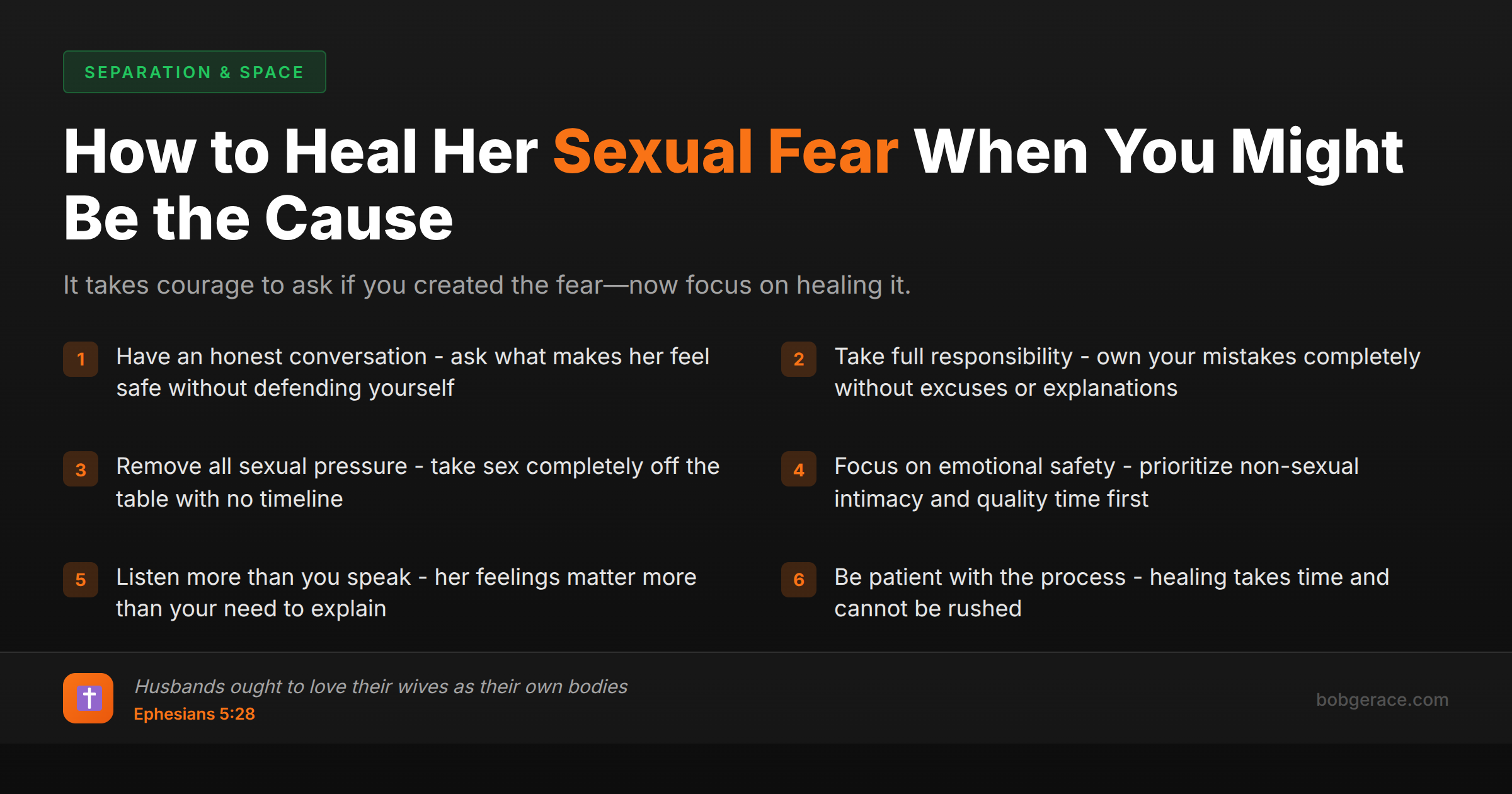
Have an honest conversation - Ask your wife directly but gently what makes her feel safe and unsafe, and listen without defending
-
2
Take full responsibility - If she identifies things you've done that created fear, own them completely without excuses or explanations
-
3
Remove all sexual pressure - Let her know that sex is completely off the table until she feels ready, with no timeline or expectations
-
4
Focus on emotional safety - Prioritize non-sexual intimacy, quality time, and making her feel cherished outside the bedroom
-
5
Support professional help - Encourage and financially support therapy for her, and consider couples counseling with a trauma-informed therapist
-
6
Be consistently patient - Understand that healing takes time, often months or years, and your consistency matters more than quick progress
Related Questions
- What is 'sexual aversion' and does she have it?
- What does coercion do to sexual desire long-term?
- Could her sexual shutdown be trauma-related?
- What is 'sexual trauma' and how does it affect marriage?
- What if her withdrawal is protection not rejection?
- What does 'body keeps the score' mean for our sex life?
- I don't hit her but I still scare her
- She's scared of my anger
- What did I do that made vulnerability feel unsafe?
- What have I done that made connection feel unsafe?
Also find Bob on
Subscribe for weekly videos on Christian marriage.
This Needs a Human Coach
Sexual fear in your marriage isn't something you figure out from articles. A coach who knows your specific story can help you create actual safety—not just avoid more damage.
Talk to Bob →