How do I rebuild emotional intimacy first?
6 min read
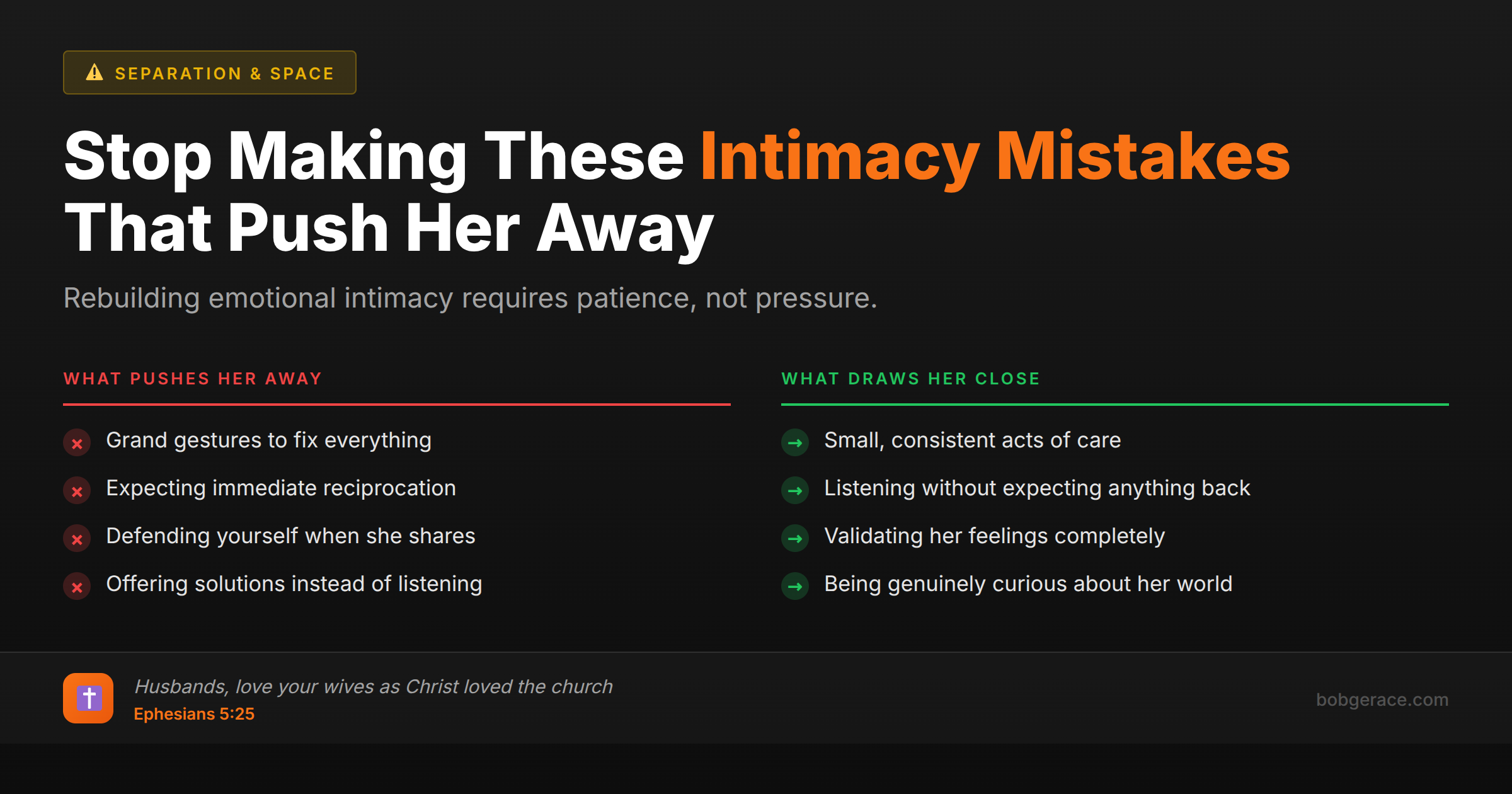
Rebuilding emotional intimacy starts with consistent, small acts of genuine care and attention without expecting immediate reciprocation. Focus on becoming emotionally safe through active listening, validating her feelings, and demonstrating reliability in your words and actions. This isn't about grand gestures—it's about showing up consistently as a trustworthy presence she can count on. The key is patience and persistence. Emotional intimacy rebuilds slowly through daily interactions where you prove you're genuinely interested in her thoughts, feelings, and experiences. Stop trying to fix everything and start simply being present. Ask questions, listen without defending yourself, and show genuine curiosity about her inner world. This foundation of safety and trust must come before any other form of intimacy can be restored.
The Full Picture
When your wife has emotionally checked out, the path back to intimacy isn't through romantic dinners or love letters—it's through rebuilding the fundamental sense of safety and connection that's been broken. Emotional intimacy is the foundation of everything else in marriage, and it can't be rushed or manipulated back into existence.
Understanding the Emotional Wall
That wall she's built isn't there to hurt you—it's there to protect her. Something has happened over time that made emotional vulnerability feel unsafe. Maybe it was criticism, dismissiveness, broken promises, or simply the slow erosion of feeling truly seen and valued. Before that wall can come down, she needs to believe that opening her heart won't result in more pain.
The Rebuilding Process
Rebuilding emotional intimacy requires a complete shift in approach. Instead of focusing on what you're not getting from her, focus entirely on what you can give. This means becoming genuinely curious about her thoughts, feelings, and experiences without any agenda other than understanding her better.
Start with the basics: daily check-ins where you ask how she's doing and actually listen to the answer. Validate her feelings even when you don't understand them. Follow through on every commitment, no matter how small. Show interest in things that matter to her, even if they don't naturally interest you.
What Not to Do
Don't confuse emotional intimacy with physical touch or romantic gestures. Don't keep score of your efforts. Don't get frustrated when progress seems slow. And absolutely don't use your new attentiveness as leverage to negotiate for other forms of intimacy. These behaviors will only reinforce why she checked out in the first place.
Emotional intimacy rebuilds one conversation, one moment of understanding, one kept promise at a time.
What's Really Happening
From a clinical perspective, when a spouse emotionally checks out, we're dealing with what attachment theory calls a 'protective deactivation strategy.' Her emotional withdrawal isn't personal rejection—it's a psychological defense mechanism triggered by repeated experiences of emotional unsafety or disconnection.
The Neuroscience of Emotional Safety
When someone feels emotionally unsafe in a relationship, their nervous system shifts into a protective state. The part of the brain responsible for connection and vulnerability essentially goes offline, replaced by hypervigilance for potential threats. This is why logic and reasoning often don't work—her brain is literally protecting her from further emotional injury.
Rebuilding Secure Attachment
Rebuilding emotional intimacy is essentially about moving from insecure attachment patterns back to secure attachment. This requires what we call 'earned security'—consistent experiences of emotional responsiveness, accessibility, and engagement from you as her partner.
The key elements are: Attunement (accurately reading and responding to her emotional states), Responsiveness (consistently showing that her feelings matter to you), and Accessibility (being emotionally present and available when she needs you).
The Timeline Reality
Research shows that rebuilding secure attachment patterns typically takes 6-12 months of consistent new experiences. This isn't about perfection—it's about demonstrating a genuine change in how you show up emotionally. Every positive interaction deposits into what Dr. John Gottman calls the 'emotional bank account,' slowly rebuilding the trust necessary for vulnerability.
Understand that her initial responses may test your commitment to change. This is normal—her protective system needs to verify that this transformation is real and lasting before allowing her heart to open again.
What Scripture Says
Scripture provides clear guidance on rebuilding emotional intimacy through love, understanding, and sacrificial service to one another. God's design for marriage reflects the intimate relationship between Christ and the church, built on unconditional love and faithful commitment.
Love as Foundation
*"Husbands, love your wives as Christ loved the church and gave himself up for her"* (Ephesians 5:25). This sacrificial love isn't dependent on what you receive in return—it's about consistently giving of yourself for her wellbeing. Christ didn't wait for the church to be emotionally available; He pursued relationship through consistent, loving action.
Understanding and Honor
*"Husbands, in the same way be considerate as you live with your wives, and treat them with respect as the weaker partner and as heirs with you of the gracious gift of life, so that nothing will hinder your prayers"* (1 Peter 3:7). The word 'considerate' here means to dwell with understanding—to genuinely know and care about her inner world. This isn't about weakness but about honoring the differences in how she processes emotions and relationships.
Patient Love
*"Love is patient, love is kind. It does not envy, it does not boast, it is not proud. It does not dishonor others, it is not self-seeking, it is not easily angered, it keeps no record of wrongs"* (1 Corinthians 13:4-5). Rebuilding emotional intimacy requires this kind of patient, selfless love that doesn't keep score or demand immediate results.
Gentle Restoration
*"Be completely humble and gentle; be patient, bearing with one another in love"* (Ephesians 4:2). The restoration of emotional connection requires gentleness and patience, understanding that healing takes time. *"A gentle answer turns away wrath, but a harsh word stirs up anger"* (Proverbs 15:1). Your consistent gentleness creates the safety needed for her heart to soften.
Faithful Commitment
*"Let us hold unswervingly to the hope we profess, for he who promised is faithful"* (Hebrews 10:23). Just as God's faithfulness enables us to trust Him, your unwavering commitment to loving her well—regardless of her response—creates the security necessary for emotional intimacy to return.
What To Do Right Now
-
1
Create a daily check-in ritual: Ask 'How are you doing?' and listen to her complete answer without offering solutions or shifting the focus to yourself.
-
2
Practice the 24-hour rule: When she shares something emotional, wait 24 hours before asking any follow-up questions, allowing her space to process.
-
3
Validate her feelings: Use phrases like 'That makes sense' or 'I can see why you'd feel that way' even when you don't fully understand her perspective.
-
4
Follow through on every commitment: If you say you'll do something, do it. If you can't, communicate immediately and reschedule—never just let things slide.
-
5
Show genuine interest in her world: Ask about her friends, interests, and concerns with authentic curiosity, not just obligation or politeness.
-
6
Remove all expectations: For the next 30 days, give emotionally without any expectation of reciprocation, romance, or physical intimacy—focus solely on her emotional wellbeing.
Related Questions
- What does emotional attunement look like?
- How do I become a safe emotional presence?
- What does 'holding space' actually mean?
- How do I listen without fixing?
- What would help her nervous system feel safe again?
- How do I become a safe person again?
- How do I become emotionally intelligent?
- How do I identify what I'm feeling?
- What does genuine repair look like for old wounds?
- What is 'felt understanding' and how do I give it?
Also find Bob on
Subscribe for weekly videos on Christian marriage.
You Don't Have to Guess Your Way Through This
Rebuilding emotional intimacy in your marriage—not some theoretical one—requires seeing what's actually happening between you two. A coach who knows your story can help you stop spinning and start connecting.
Talk to Bob →