What about abandonment?
6 min read
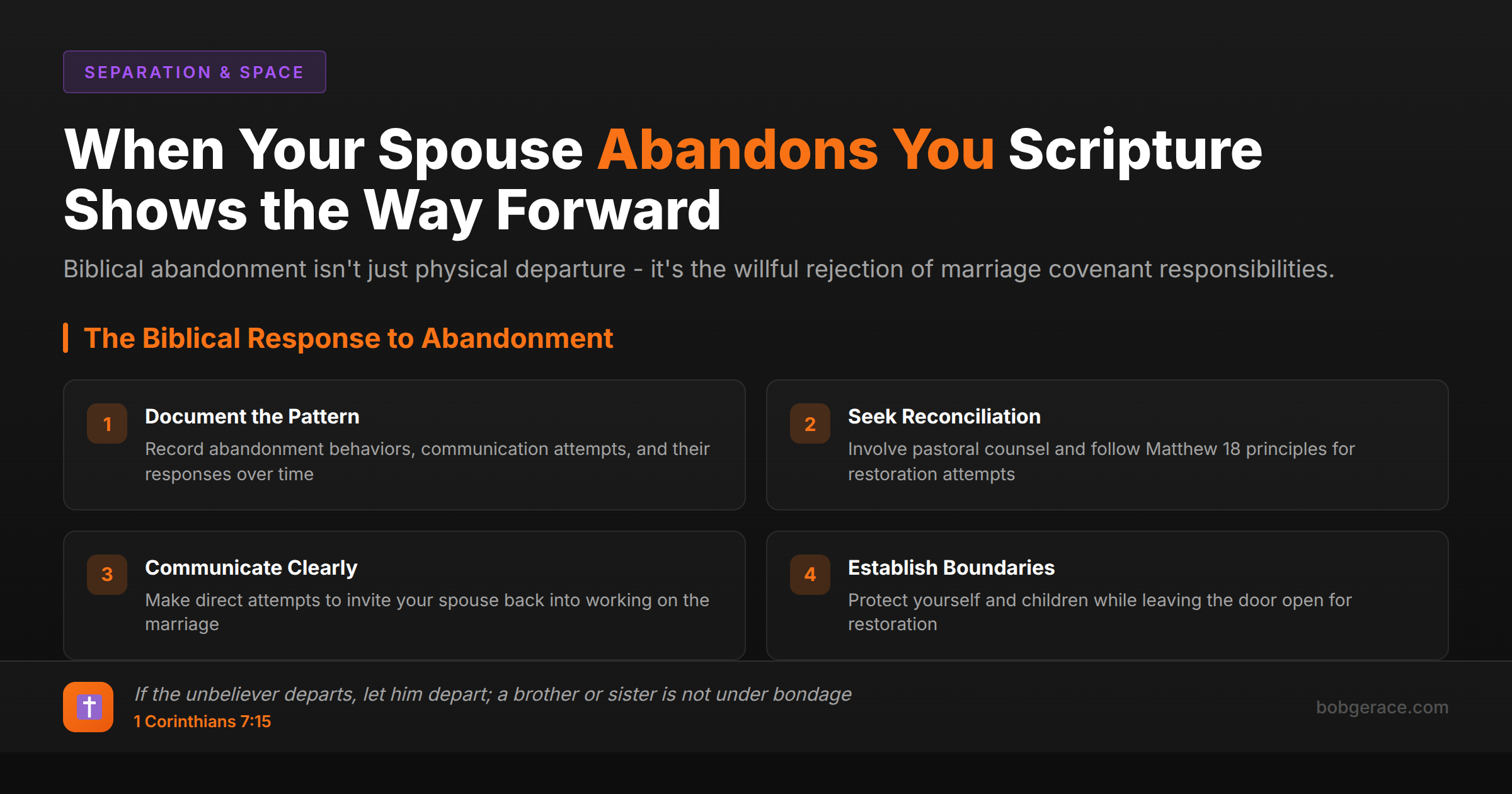
Abandonment in marriage is addressed in Scripture as a legitimate ground for divorce in specific circumstances. In 1 Corinthians 7:15, Paul teaches that if an unbelieving spouse departs and refuses reconciliation, the believing spouse is 'not bound' to the marriage. This principle extends beyond just unbelievers leaving - it applies when any spouse permanently abandons their marriage covenant through desertion, whether physical, emotional, or relational. However, abandonment isn't just about physical absence. Biblical abandonment occurs when a spouse willfully and permanently rejects their marriage responsibilities and refuses to fulfill their covenant obligations. This requires a pattern of behavior, not just temporary difficulties. The abandoned spouse should seek restoration first, but when genuine abandonment persists despite efforts at reconciliation, Scripture provides freedom from the marriage bond.
The Full Picture
Abandonment in marriage is more complex than physical departure. While we often think of abandonment as someone packing their bags and leaving, biblical abandonment encompasses any willful, permanent rejection of the marriage covenant and its responsibilities.
Physical abandonment is the most obvious form - when a spouse literally leaves the home and refuses to return or engage in the marriage relationship. But emotional abandonment can be equally destructive, where a spouse remains physically present but completely withdraws from all marital intimacy, communication, and responsibility.
The key elements of biblical abandonment include: - Willful choice - not circumstances beyond their control - Permanent rejection - not temporary struggles or difficulties - Refusal of reconciliation - rejecting all attempts to restore the relationship - Covenant violation - abandoning the fundamental promises of marriage
Scripture distinguishes between temporary separation and permanent abandonment. Even Paul acknowledges that spouses may sometimes separate temporarily (1 Corinthians 7:11), but they should remain unmarried and work toward reconciliation. Abandonment crosses the line when reconciliation is permanently rejected.
The abandoned spouse bears responsibility to pursue restoration before accepting the marriage is over. This means clear communication, involving church leadership when appropriate, and making genuine efforts to address any legitimate concerns. Only when these efforts are consistently rejected does abandonment become grounds for divorce.
Modern abandonment often involves addiction, infidelity, or abuse - situations where one spouse effectively abandons their marriage covenant while remaining physically present. The principle remains the same: when someone permanently rejects their marriage responsibilities despite calls to restoration, abandonment has occurred.
What's Really Happening
From a clinical perspective, abandonment triggers some of our deepest psychological wounds because it violates our fundamental need for security and attachment. When a spouse abandons the marriage, the remaining partner experiences what we call 'ambiguous loss' - grieving someone who is still alive but no longer emotionally available.
Abandoned spouses often cycle through denial, bargaining, and false hope, especially when the departing spouse sends mixed signals. They may blame themselves excessively, believing that if they just change enough, their spouse will return. This creates a trauma bond that can persist for years without proper intervention.
The children in these situations face particular challenges. They're dealing with the loss of a parent's presence while often watching their remaining parent struggle with depression, anxiety, and financial stress. They need stability and honest, age-appropriate communication about what's happening.
Recovery from abandonment requires processing the grief, rebuilding self-worth, and learning to trust again. Many abandoned spouses develop hypervigilance in future relationships, constantly watching for signs that someone else might leave. Professional counseling is crucial for working through these attachment wounds and developing healthy relationship patterns.
It's important to note that sometimes what looks like abandonment is actually someone fleeing from abuse or an unsafe situation. A complete clinical assessment considers the full context of the relationship dynamics, including any history of domestic violence, addiction, or other serious issues that might drive someone to leave.
What Scripture Says
The clearest biblical teaching on abandonment comes from Paul's instruction to the Corinthians:
*'But if the unbeliever departs, let him depart; a brother or a sister is not under bondage in such cases. But God has called us to peace.'* (1 Corinthians 7:15)
This passage establishes that when someone abandons their marriage covenant, the remaining spouse is 'not under bondage' - they are free from the marriage obligation.
The principle extends beyond unbelievers leaving believers. The underlying issue is covenant abandonment, which Jesus addressed in His teaching on divorce:
*'And I say to you, whoever divorces his wife, except for sexual immorality, and marries another, commits adultery; and whoever marries her who is divorced commits adultery.'* (Matthew 19:9)
Sexual immorality (porneia) includes abandonment of the marriage covenant through various forms of unfaithfulness, not just adultery.
Scripture emphasizes the importance of pursuing reconciliation first:
*'Now to the married I command, yet not I but the Lord: A wife is not to depart from her husband. But even if she does depart, let her remain unmarried or be reconciled to her husband.'* (1 Corinthians 7:10-11)
However, reconciliation requires two willing participants. When one spouse permanently refuses restoration efforts, the marriage covenant is effectively broken.
*'Can two walk together, unless they are agreed?'* (Amos 3:3)
God desires marriage restoration but doesn't require the innocent party to remain in bondage indefinitely when their spouse has abandoned the covenant relationship through persistent, willful rejection.
What To Do Right Now
-
1
Document the abandonment pattern with dates, attempts at communication, and responses (or lack thereof) from your spouse
-
2
Seek pastoral counsel and involve church leadership in attempting reconciliation according to Matthew 18 principles
-
3
Make clear, direct attempts to communicate your desire to work on the marriage and invite your spouse to counseling
-
4
Establish boundaries to protect yourself and any children from ongoing emotional harm while leaving the door open for restoration
-
5
Get individual counseling to process your grief and trauma while making wise decisions about your future
-
6
Consult with a Christian attorney about your legal rights and responsibilities, especially regarding children and finances
Related Questions
Also find Bob on
Subscribe for weekly videos on Christian marriage.
Your Marriage Isn't a Textbook Case
Abandonment looks different in every story. A coach who knows your specific situation can help you see what's actually happening and what you can do about it.
Talk to Bob →