Why does she seem to attach to everyone but me?
6 min read
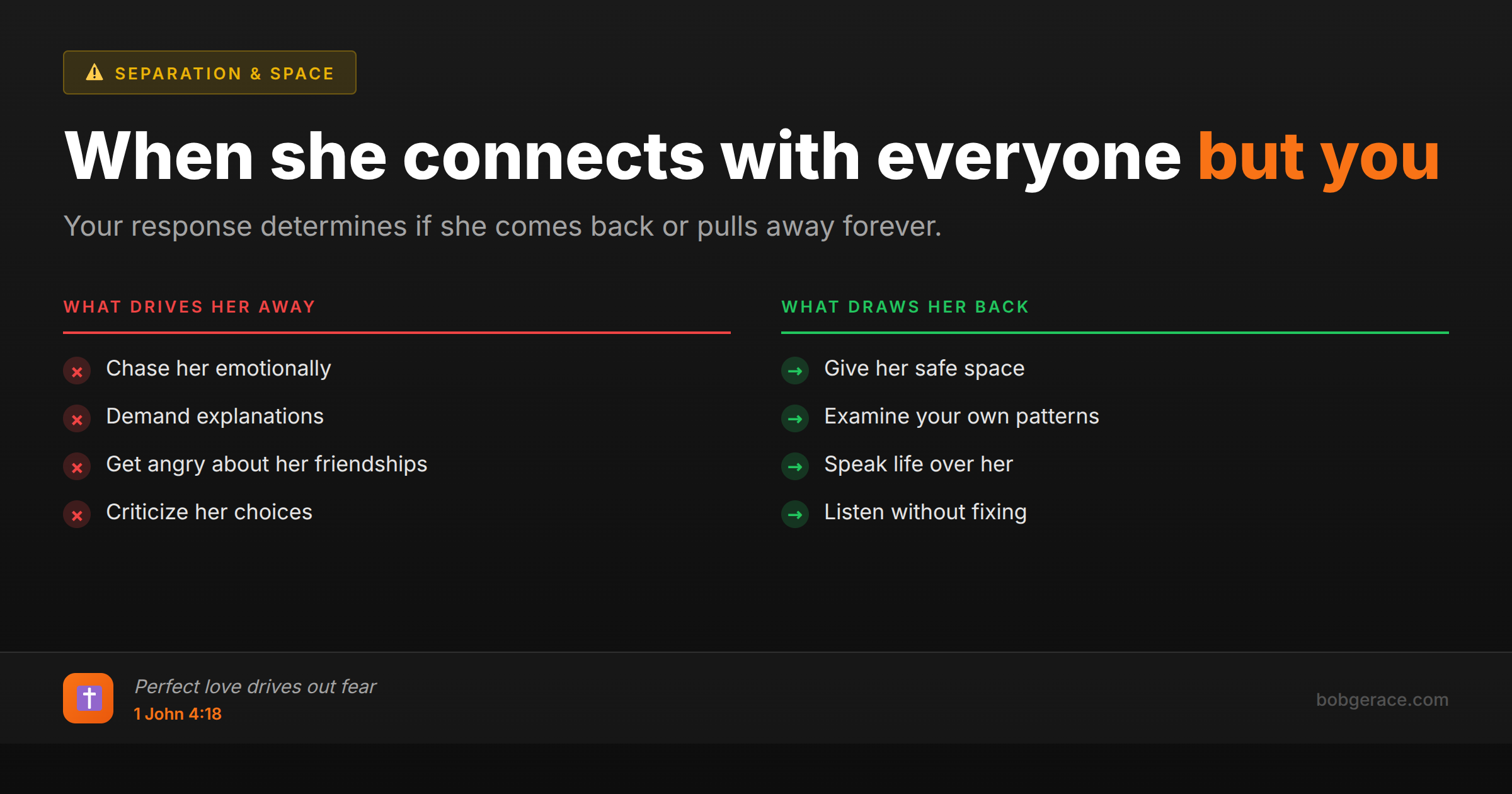
When your wife seems to attach easily to others but remains distant from you, it's often a protective mechanism born from unmet attachment needs within your marriage. She may have experienced repeated disappointment, criticism, or emotional unavailability from you that triggered her attachment system to seek safety elsewhere. This doesn't mean she's having affairs or being inappropriate. Rather, her emotional system has learned that connection with you feels risky or painful, so she naturally gravitates toward relationships that feel safer. Understanding this as an attachment injury rather than a character flaw is the first step toward healing your marriage.
The Full Picture
What you're witnessing is one of the most painful dynamics in marriage - selective attachment avoidance. Your wife can laugh with coworkers, confide in friends, and seem emotionally available to everyone except the person who matters most to you: you.
This pattern typically develops over months or years of accumulated attachment injuries. Maybe she tried to connect with you repeatedly but felt dismissed, criticized, or emotionally shut down. Perhaps during vulnerable moments, you responded with solutions instead of empathy, or worse, used her openness against her later during arguments.
The attachment system is designed for survival, not logic. When someone we love repeatedly hurts us emotionally, our brain categorizes them as "unsafe" for deep connection, even while maintaining surface-level functionality. Your wife may still handle household logistics with you, discuss schedules, even be physically intimate, but her heart has gone into protective mode.
Meanwhile, her connections with others feel lighter because there's less at stake. She can be herself with friends because their opinion of her doesn't carry the weight yours does. She can laugh with coworkers because they haven't seen her at her worst or used her vulnerabilities against her.
This isn't about you being a terrible person - it's about recognizing that somewhere along the way, the emotional safety in your marriage got compromised. The good news? Attachment injuries can heal when addressed with intentionality, patience, and genuine change.
What's Really Happening
From an attachment perspective, your wife is demonstrating what we call relationship-specific avoidance. Her attachment system is functioning normally with others but has developed protective strategies specifically with you.
This typically stems from repeated attachment injuries - moments when she reached for connection and experienced hurt instead. These could be times when she shared something vulnerable and you responded with criticism, times when she needed comfort and you offered judgment, or times when she sought understanding and you provided defensiveness.
The brain's attachment system prioritizes safety over connection. When someone we're bonded to repeatedly causes emotional pain, our nervous system begins to associate them with threat rather than comfort. This explains why she can be warm and open with others while remaining guarded with you.
What's particularly challenging is that this creates a negative cycle. The more distant she becomes, the more you likely pursue or criticize, which reinforces her need to protect herself. Meanwhile, her openness with others can trigger your own attachment fears, leading to jealousy or resentment that further damages the connection.
Recovery requires understanding that her withdrawal is protective, not punitive. She's not trying to hurt you - she's trying to avoid being hurt again. Healing happens when you can create consistent experiences of emotional safety, allowing her attachment system to slowly recategorize you as a source of comfort rather than threat.
What Scripture Says
Scripture gives us profound insight into the nature of love, safety, and restoration in relationships. 1 John 4:18 tells us that "perfect love drives out fear," reminding us that when someone we love is afraid to connect with us, the answer isn't pressure but perfect love that creates safety.
Proverbs 18:21 teaches that "the tongue has the power of life and death." If your wife attaches to others but not you, examine whether your words have brought life or death to her spirit. Have you spoken words that built her up or tore her down? This verse calls us to use our words to breathe life into our spouse's heart.
Ephesians 4:29 instructs us to "not let any unwholesome talk come out of your mouths, but only what is helpful for building others up according to their needs." Notice it says "according to their needs" - not what you think they need, but what actually serves them. Your wife needs to feel emotionally safe with you.
1 Peter 3:7 commands husbands to live with their wives "in an understanding way," treating them as the "weaker vessel" - not weaker in capability, but more delicate emotionally. This means recognizing that your words and actions carry tremendous weight in her life.
Colossians 3:19 warns husbands not to be "harsh" with their wives. The Greek word here implies bitterness or embitterment. If your wife seeks connection elsewhere, ask God to reveal whether you've been harsh in ways that have embittered her heart toward you.
Restoration is possible because 2 Corinthians 5:17 promises that in Christ, "the old has gone, the new is here." You can become a new kind of husband - one who offers safety instead of threat, understanding instead of judgment.
What To Do Right Now
-
1
Stop pursuing her emotionally while she's in protective mode - give her space to feel safe
-
2
Examine your own patterns: when does she withdraw and what typically precedes those moments?
-
3
Begin speaking words of affirmation and encouragement without expecting anything in return
-
4
Practice listening to understand rather than to respond or fix when she does share
-
5
Apologize specifically for times you've been critical, dismissive, or harsh with her
-
6
Demonstrate consistent emotional safety through your actions over weeks and months, not days
Related Questions
- What happened to her attachment to me?
- What is 'earned avoidance' from marriage pain?
- Can deactivated attachment reactivate?
- What is 'deactivation' and did I cause it?
- What attachment injuries lead to this kind of withdrawal?
- What would help her nervous system feel safe again?
- What is 'attachment injury' and did I cause one?
- Why does she see him as perfect and me as flawed?
- What does she need to release the resentment?
- How do I become a safe emotional presence?
Also find Bob on
Subscribe for weekly videos on Christian marriage.
Your Marriage Needs a Different Approach
You can't fix an attachment wound with generic advice. A coach who knows your specific story can help you see what she's protecting herself from—and how to rebuild safety with her.
Talk to Bob →