How do I parent through legal conflict?
6 min read
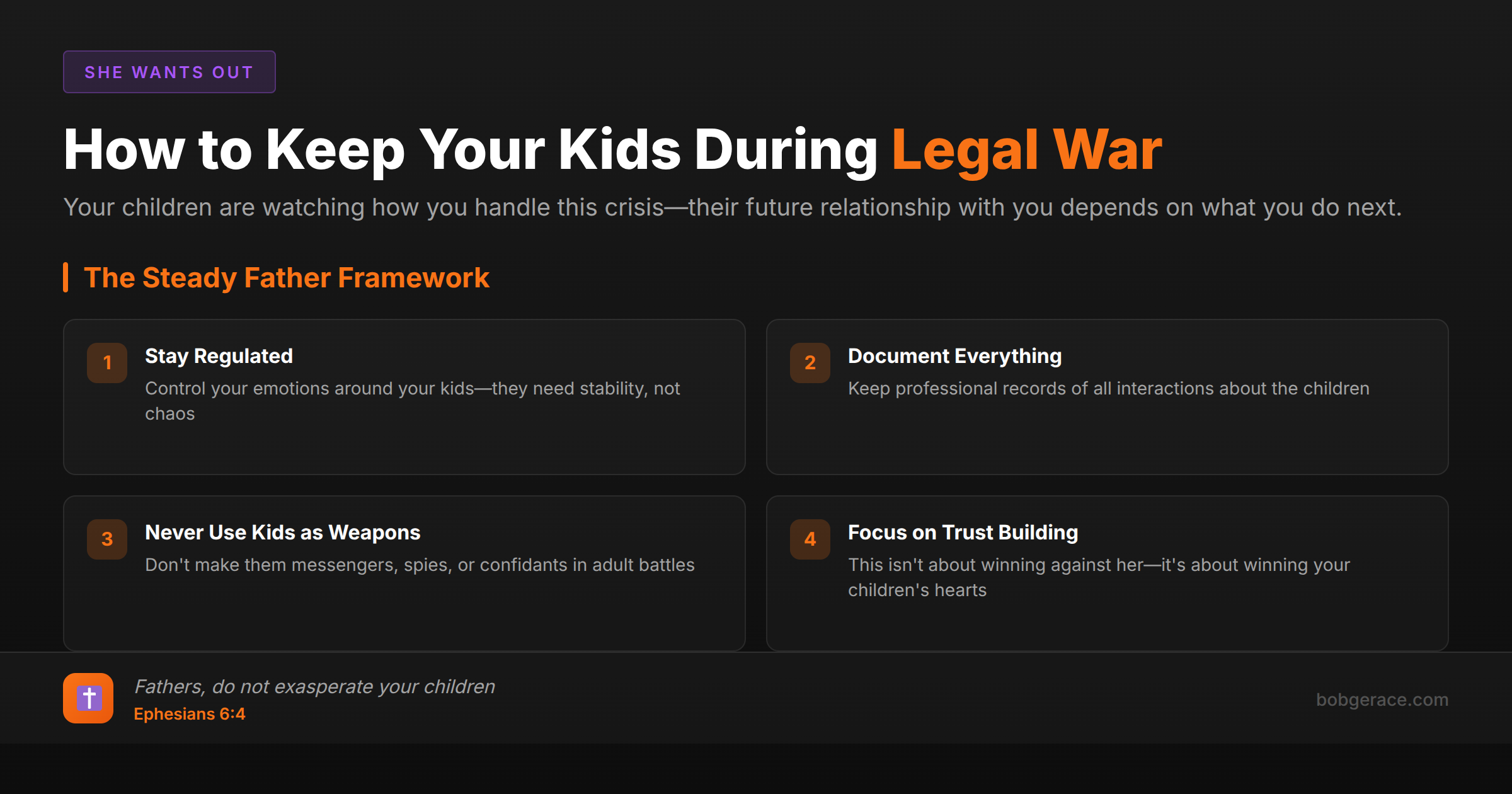
Your children are watching how you handle this crisis, and their future relationship with you depends on the choices you make right now. The temptation is to either withdraw in defeat or fight so hard that you forget they're caught in the crossfire. Neither works. The fathers who emerge from legal conflict with strong relationships with their children do three things consistently: they stay emotionally regulated around their kids, they document everything professionally, and they never use their children as weapons or confidants. Your wife may be acting out of hurt or bad counsel, but your job is to be the steady, trustworthy parent your children can count on. This isn't about winning against her—it's about winning your children's trust for the long haul.
The Full Picture
Legal conflict creates a perfect storm for parenting disasters. The stress is crushing, emotions run high, and everyone around you has opinions about what you should do. Meanwhile, your children are experiencing their own trauma as their world falls apart.
The biggest mistake fathers make is treating their children like allies in the battle. You might think sharing "the truth" about mom's behavior will help them understand, but it backfires spectacularly. Children aren't capable of processing adult relationship dynamics, and forcing them to choose sides damages them permanently.
Your children need you to be their father, not their friend or therapist. This means:
• Maintaining normal routines and boundaries during your time together • Refusing to discuss legal proceedings or your wife's behavior with them • Being the consistent, emotionally stable presence they can depend on • Protecting them from adult conversations and court documents
Document everything, but do it professionally. Keep detailed records of: • Visitation schedules and any violations • Communication attempts and responses • School events, activities, and your participation • Any concerning behavior or statements from your children
The fathers who maintain strong relationships with their children through legal conflict understand that this is a marathon, not a sprint. Your children will remember how you made them feel during this time long after the legal dust settles. The goal isn't to prove your wife wrong—it's to prove yourself right as their father.
What's Really Happening
Children experiencing parental conflict show measurable stress responses similar to trauma victims. Their cortisol levels spike, sleep patterns disrupt, and academic performance often declines. The research is clear: it's not the divorce itself that damages children long-term—it's the ongoing conflict and being caught in the middle.
What we see clinically is that children develop coping mechanisms during high-conflict situations that can persist for decades. They might become hypervigilant to adult emotions, feel responsible for managing parental distress, or shut down emotionally to protect themselves. The most damaging pattern is triangulation—when children are pulled into adult conflicts as messengers, spies, or emotional support systems.
Fathers going through legal conflict often experience what we call "reactive parenting"—making parenting decisions based on anger toward their spouse rather than their children's actual needs. This might look like being overly permissive to be the "fun parent" or sharing inappropriate information to "set the record straight."
The therapeutic goal is helping fathers understand that emotional regulation isn't just about managing your own feelings—it's about creating psychological safety for your children. When children feel safe with you, they naturally want to spend time with you. When they feel like they need to manage your emotions or take sides in adult conflicts, they begin to withdraw as a protective mechanism.
Successful co-parenting during legal conflict requires what we call "compartmentalization"—the ability to separate your role as a hurt spouse from your role as a protective father.
What Scripture Says
Scripture calls fathers to a higher standard, especially during crisis. Ephesians 6:4 instructs us: "Fathers, do not exasperate your children; instead, bring them up in the training and instruction of the Lord." During legal conflict, it's easy to exasperate our children by involving them in adult battles or letting our anger spill over onto them.
Proverbs 22:6 reminds us to "Start children off on the way they should go, and even when they are old they will not turn from it." The "way" isn't just moral instruction—it's showing them how a godly man handles adversity. Your children are learning how to respond to crisis by watching you.
1 Corinthians 13:4-7 defines love as patient, kind, not easily angered, and keeping no record of wrongs. This applies to how you love your children during this season. Even when you're documenting facts for legal purposes, you're not keeping a record of wrongs against your children or poisoning them against their mother.
Matthew 18:6 gives a sobering warning: "If anyone causes one of these little ones—those who believe in me—to stumble, it would be better for them to have a large millstone hung around their neck and to be drowned in the depths of the sea." Using children as weapons in marital conflict causes them to stumble in their ability to trust and love.
Galatians 6:9 encourages us: "Let us not become weary in doing good, for at the proper time we will reap a harvest if we do not give up." Parenting with integrity through legal conflict is "doing good" even when it feels like you're losing ground.
Your calling as a father doesn't diminish because your marriage is ending—it intensifies.
What To Do Right Now
-
1
Create a communication log documenting all interactions with your wife regarding the children—dates, times, content, and outcomes
-
2
Establish consistent routines during your parenting time that prioritize normalcy and emotional safety for your children
-
3
Practice the "24-hour rule" before responding to inflammatory communications from your wife or her attorney
-
4
Schedule regular one-on-one time with each child focused entirely on their interests, not legal matters
-
5
Develop code phrases with your attorney for urgent communications so children never overhear sensitive legal discussions
-
6
Find a trusted friend or counselor to process your anger and frustration—never your children
Related Questions
- How do I tell the kids?
- What do I say when kids ask what's happening?
- How do I co-parent during this?
- How do I be a good dad through this?
- How do I not badmouth her when I'm furious?
- What does faithful fatherhood look like through divorce?
- How do I protect myself emotionally?
- How do I stay grounded when everything feels adversarial?
- What does self-care look like in this season?
- How do I manage my nervous system through legal proceedings?
Also find Bob on
Subscribe for weekly videos on Christian marriage.
Your Kids Need You Steady Right Now
Legal conflict moves fast and your kids are watching. A coach who knows your specific custody situation can help you stay regulated and strategic when it counts most.
Talk to Bob →