How long did Hosea wait for Gomer?
5 min read
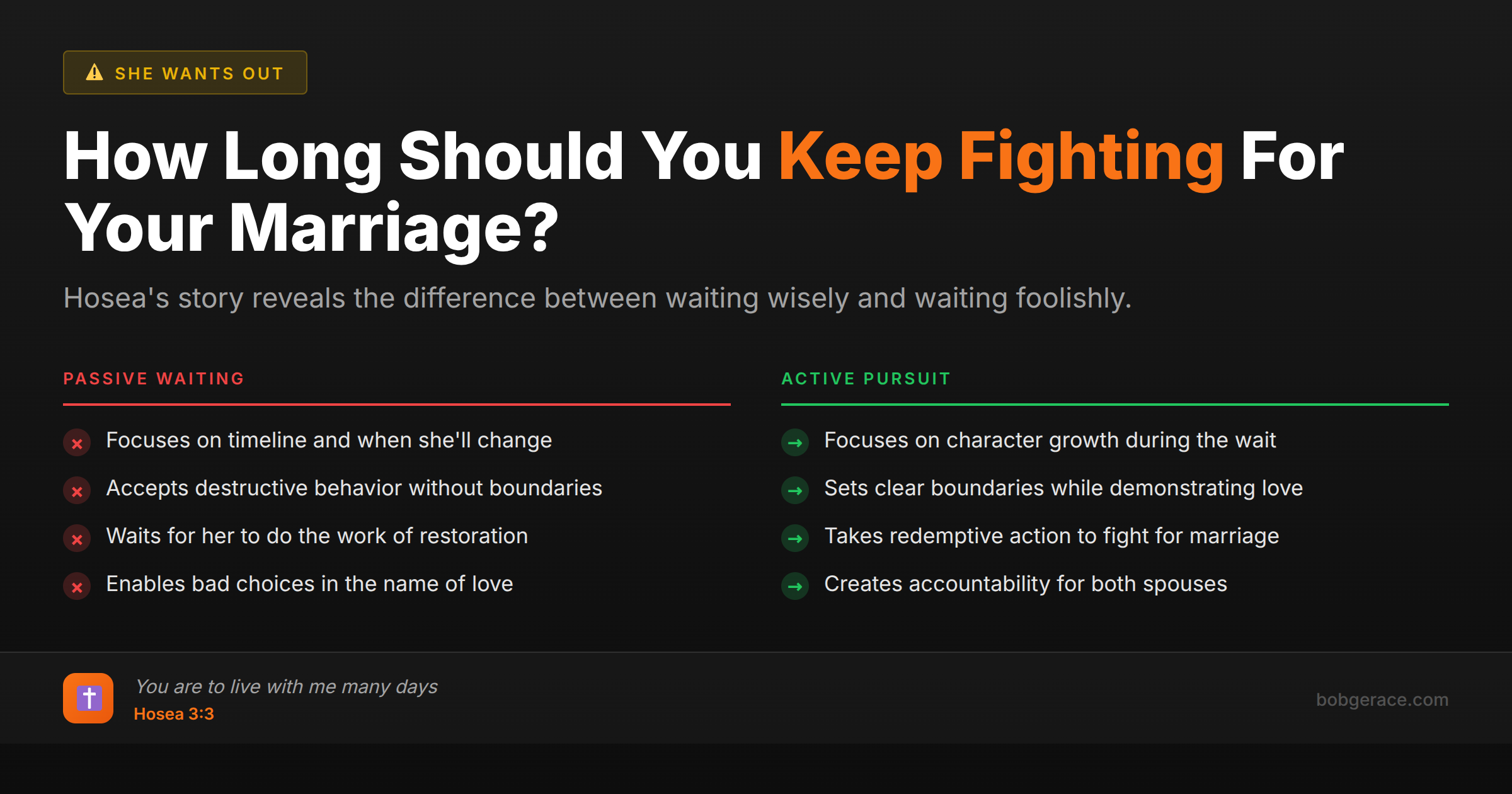
The Bible doesn't give us exact timeframes for Hosea's waiting, but the narrative suggests years of patient pursuit, redemption, and restoration. What we do know is that Hosea didn't just wait passively - he actively pursued, redeemed, and fought for his marriage despite Gomer's repeated unfaithfulness. Here's what matters for your situation: Hosea's story isn't primarily about timeline - it's about the character of persistent, sacrificial love. He waited as long as it took, but he also took action. He bought Gomer back from slavery, set boundaries, and created space for restoration. The question isn't how long you should wait, but how you should wait and what actions you should take while you're waiting.
The Full Picture
The book of Hosea spans multiple years, likely covering at least a decade of their relationship based on the birth of three children and the events described. But focusing solely on timeline misses the deeper lessons.
Hosea's waiting had several distinct phases:
• Active pursuit phase - He married Gomer knowing her background • Painful endurance phase - He stayed committed as she repeatedly left • Redemption phase - He actively bought her back from slavery • Restoration phase - He set boundaries and created space for healing
The key insight? Hosea's waiting wasn't passive hoping. He took decisive action at each stage. When Gomer left, he didn't just sit around praying she'd come back. He went and bought her freedom. He established clear expectations. He created consequences.
Many men misunderstand this story and think it means endless tolerance of destructive behavior. That's not what happened. Hosea pursued redemption while maintaining his own integrity and setting clear boundaries.
The timeline matters less than the quality and intentionality of your waiting. Are you growing? Are you addressing your own issues? Are you creating an environment that invites restoration while protecting yourself from ongoing harm?
Hosea's story is about God's relentless love, but it's also about wise, boundaried love that pursues restoration without enabling destruction.
What's Really Happening
From a therapeutic standpoint, the Hosea narrative demonstrates several crucial psychological principles about relationship restoration that we see play out in modern marriages.
Attachment and Trauma Patterns: Gomer's behavior likely reflected deep attachment wounds and trauma patterns. Research shows that individuals with disorganized attachment often create cycles of intimacy and abandonment. Hosea's consistent presence provided a secure base, but change required both time and intervention.
The Rescue Fantasy: Many men misinterpret Hosea's story through the lens of rescue fantasy - the belief that unconditional tolerance will eventually transform their spouse. Clinical observation shows this approach often enables dysfunction rather than promoting healing. Hosea actually demonstrated therapeutic love - persistent but boundaried.
Neuroplasticity and Change: Brain research confirms that deeply ingrained patterns take significant time to rewire. The neural pathways associated with addiction, infidelity, or emotional dysregulation don't change overnight. Studies suggest meaningful behavioral change typically requires 18-24 months of consistent new patterns.
Differentiation Process: Hosea maintained his own identity and values while remaining committed to the relationship. This psychological differentiation is crucial for healthy restoration. Codependent waiting, where you lose yourself in the process, actually impedes rather than promotes healing.
The clinical reality is that restoration requires active participation from both parties. While you can control your own healing and growth, you cannot force someone else's transformation, regardless of how long you wait.
What Scripture Says
Scripture provides several key insights about waiting and restoration in marriage:
Hosea 3:3 - *"Then I told her, 'You are to live with me many days; you must not be a prostitute or be intimate with any man, and I will behave the same way toward you.'"* This shows that restoration included clear boundaries and mutual accountability.
Hosea 2:14-15 - *"Therefore I am now going to allure her; I will lead her into the wilderness and speak tenderly to her. There I will give her back her vineyards, and will make the Valley of Achor a door of hope."* God's approach involves both consequences (wilderness) and hope (restoration).
Galatians 6:9 - *"Let us not become weary in doing good, for at the proper time we will reap a harvest if we do not give up."* This speaks to persistent faithfulness while trusting God's timing.
1 Corinthians 13:7 - *"Love bears all things, believes all things, hopes all things, endures all things."* Biblical love is enduring but not enabling. It bears consequences while maintaining hope.
Ephesians 5:25-26 - *"Husbands, love your wives, just as Christ loved the church and gave himself up for her to make her holy, cleansing her by the washing with water through the word."* Christ's love was sacrificial but transformative, not passive.
Matthew 18:15-17 - Jesus outlined a process for addressing sin that includes escalating boundaries when someone refuses to repent.
The biblical model combines unwavering commitment with wise boundaries, persistent love with appropriate consequences, and hopeful waiting with decisive action.
What To Do Right Now
-
1
Stop focusing on timeline and start focusing on your own growth and healing during this season
-
2
Establish clear, loving boundaries about what behaviors you will and won't accept
-
3
Identify specific actions you can take to demonstrate love while protecting your own wellbeing
-
4
Seek wise counsel from mature believers who can help you discern between healthy persistence and unhealthy enabling
-
5
Create accountability for your own character development and emotional health during this waiting period
-
6
Pray regularly for your spouse's heart while also asking God to show you areas where you need to grow
Related Questions
- How long do I wait before giving up?
- How long should I 'stand' for my marriage?
- What is the 'stander' movement and is it biblical?
- When does standing become idolatry of the marriage?
- Does God ever release someone from a covenant?
- What's the difference between hope and presumption?
- What does faithfulness require when she won't reciprocate?
- How do I model grace without enabling?
- What does restoration look like in Scripture?
- What does 'long-suffering' mean?
Also find Bob on
Subscribe for weekly videos on Christian marriage.
You Don't Have to Wait Alone
A coach who knows your marriage can help you figure out what waiting well actually looks like in your situation—and what action to take while you're in it.
Talk to Bob →