What boundaries make separation therapeutic?
6 min read
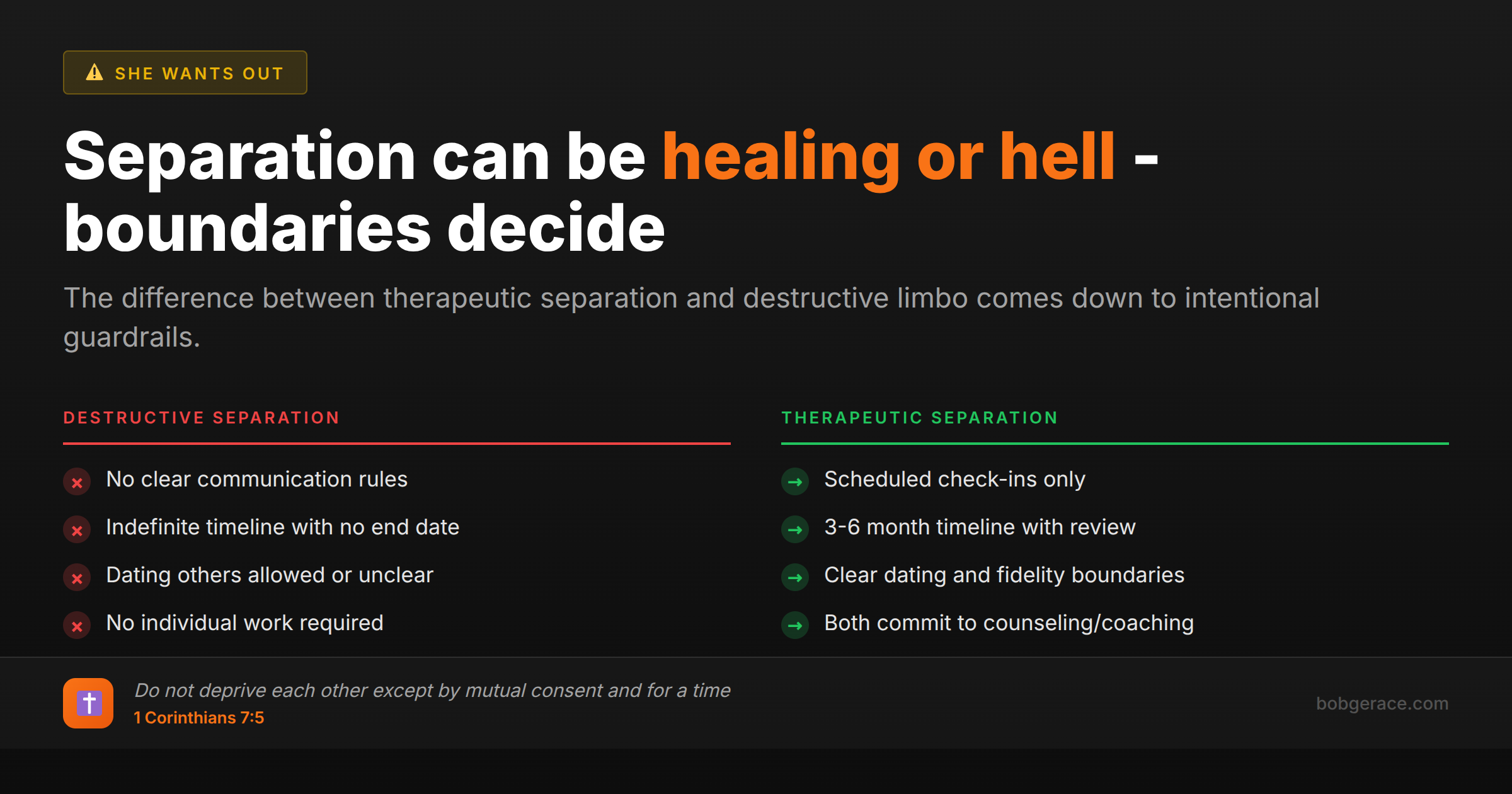
Therapeutic separation isn't just moving apart - it's creating a structured healing environment with clear boundaries that serve both spouses. The most crucial boundaries include: no contact except for scheduled check-ins, defined timeframes with review dates, and specific individual work commitments. Without these guardrails, separation becomes destructive limbo instead of restorative space. The difference between therapeutic and destructive separation lies in intentionality. Therapeutic separation has rules, goals, and accountability. It's not about punishment or creating distance - it's about creating safety for both people to do the hard work of healing. When done right, separation becomes a tool for restoration, not a step toward divorce.
The Full Picture
Therapeutic separation succeeds or fails based on the boundaries you establish upfront. Clear communication protocols are non-negotiable - this means scheduled calls or meetings (weekly or bi-weekly), not random texts or surprise visits. Both spouses need to know when and how they'll connect.
Financial boundaries prevent additional stress and manipulation. Who pays what? How are joint expenses handled? Who has access to accounts? These decisions need to be made before emotions run high.
Dating and intimacy boundaries must be crystal clear. Most therapeutic separations require complete exclusivity - no dating others, no intimate relationships outside the marriage. This isn't about control; it's about creating space for the marriage to heal without additional complications.
Timeframes with built-in review points prevent separation from becoming permanent limbo. Set 3-month, 6-month, or 1-year markers to evaluate progress and decide next steps. Without deadlines, separation becomes a comfortable avoidance pattern.
Individual work commitments are essential. Both spouses should commit to counseling, support groups, or specific personal development work. Separation without growth is just expensive roommate drama.
Children's needs require special attention. Kids need consistent schedules, honest (age-appropriate) communication, and protection from being messengers or emotional support for parents.
The biggest mistake couples make is treating separation like a trial run for divorce instead of intensive care for their marriage. Therapeutic separation is active, not passive. It requires more work, not less.
What's Really Happening
From a clinical perspective, therapeutic separation works by reducing immediate conflict while maintaining attachment bonds. Research shows that couples in high-conflict situations often need physical space to access their prefrontal cortex - the part of the brain responsible for rational decision-making.
Attachment theory explains why boundaries matter so much. Partners with anxious attachment styles may pursue relentlessly during separation, while avoidant partners may withdraw completely. Clear boundaries help regulate both patterns, creating what we call 'earned security' - a stable base for healing.
Gottman's research on marital stability emphasizes the importance of turning toward each other during conflict. Therapeutic separation allows couples to practice this turning toward in controlled, structured ways rather than the chaotic patterns that led to separation.
The neurobiological impact of sustained conflict creates trauma responses in both partners. Polyvagal theory suggests that physical separation can help reset the nervous system, but only if the separation feels safe rather than abandoning. This is why boundaries around communication and timeframes are crucial - they provide predictability that calms the nervous system.
Emotionally Focused Therapy (EFT) principles show that underneath anger and withdrawal are deeper fears of abandonment or engulfment. Therapeutic separation with clear boundaries allows couples to address these attachment fears without the immediate trigger of daily proximity.
Clinical outcomes improve significantly when couples follow structured protocols rather than informal separations. The key is maintaining connection while reducing reactivity.
What Scripture Says
Scripture acknowledges that sometimes physical separation serves healing purposes, but always within the context of restoration and commitment. 1 Corinthians 7:5 says, 'Do not deprive each other except perhaps by mutual consent and for a time, so that you may devote yourselves to prayer. Then come together again so that Satan will not tempt you because of your lack of self-control.' This verse establishes principles for therapeutic separation: mutual agreement, specific purpose (spiritual focus), and planned reunion.
Matthew 18:15-17 provides a framework for addressing conflict that can inform separation boundaries: 'If your brother or sister sins, go and point out their fault, just between the two of you. If they listen to you, you have won them over.' This suggests that healthy boundaries include direct communication and opportunities for repentance and restoration.
Galatians 6:1-2 reminds us: 'Brothers and sisters, if someone is caught in a sin, you who live by the Spirit should restore that person gently. Carry each other's burdens, and in this way you will fulfill the law of Christ.' Therapeutic separation should be restorative, not punitive.
Ephesians 4:15 calls us to 'speak the truth in love,' which means separation boundaries should be honest about problems while maintaining love and hope for restoration.
Ecclesiastes 3:1,3 teaches there is 'a time for everything... a time to tear down and a time to build.' Sometimes marriages need to be torn down to unhealthy patterns before they can be rebuilt on solid ground.
Proverbs 27:5-6 says 'Better is open rebuke than hidden love. Wounds from a friend can be trusted.' Sometimes loving boundaries require difficult conversations and temporary pain for long-term healing.
What To Do Right Now
-
1
Schedule a structured conversation to discuss separation boundaries before anyone moves out
-
2
Write down specific communication rules including frequency, method, and topics you'll discuss
-
3
Establish clear financial boundaries and document who pays for what during separation
-
4
Set a specific timeframe (3-6 months) with a scheduled review date to evaluate progress
-
5
Both commit to individual counseling or coaching and schedule first appointments this week
-
6
Create written agreements about dating, intimacy, and social media boundaries during separation
Related Questions
- What is 'structured separation' and does it work?
- Is trial separation ever a good idea?
- What are the rules of separation?
- Can we separate and still work on things?
- What does healthy communication during separation look like?
- How do I avoid 'separation drift'?
- What is a boundary vs. an ultimatum?
- What makes boundaries healthy?
- How do I enforce without controlling?
- What does self-protective boundary-setting look like?
Also find Bob on
Subscribe for weekly videos on Christian marriage.
Your Separation Needs a Real Plan
Separation without structure becomes limbo. A coach who knows your marriage can help you set boundaries that actually serve healing—not just distance.
Talk to Bob →