What percentage of separations end in divorce?
6 min read
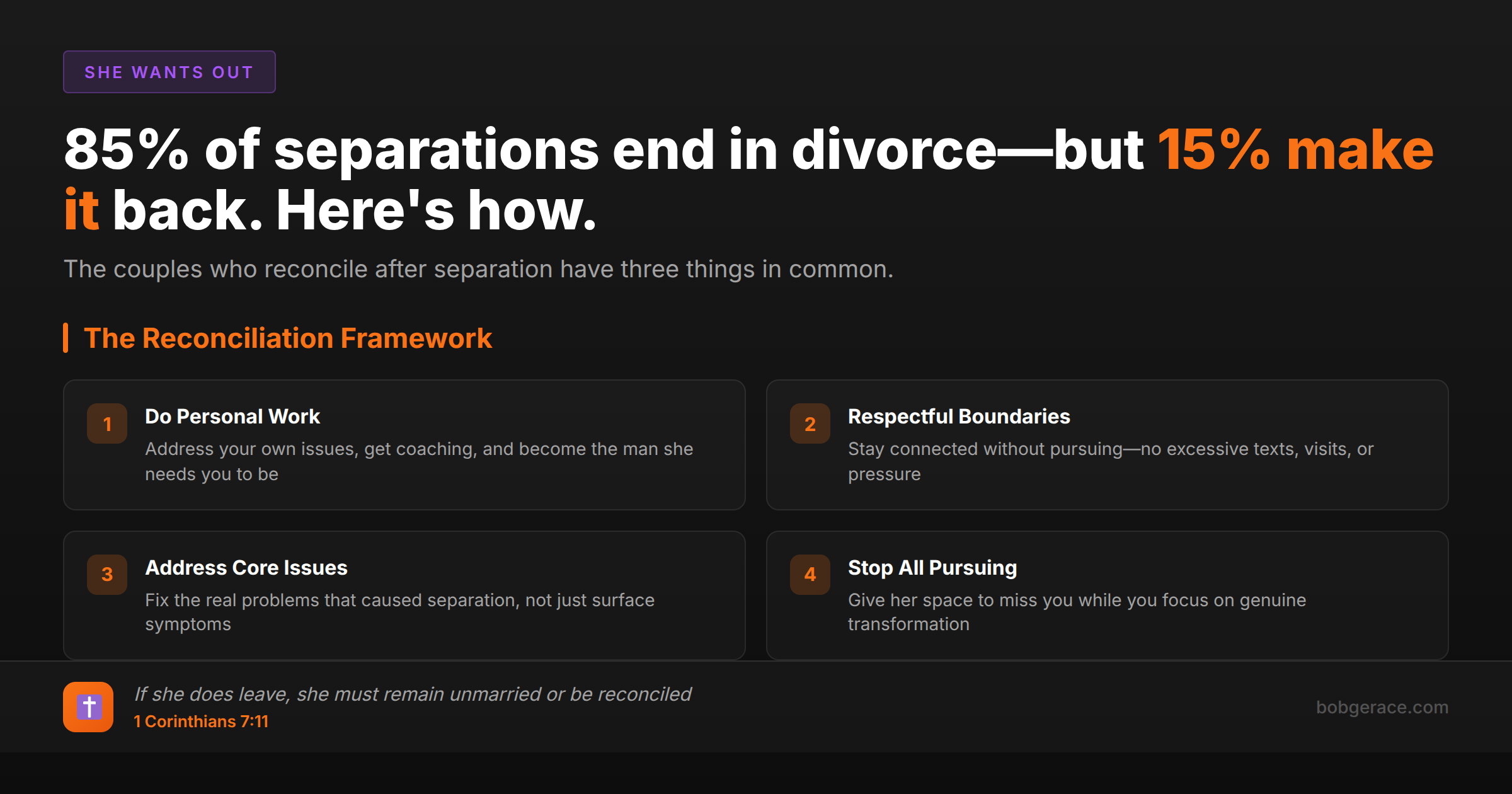
The hard truth? Research consistently shows that 80-85% of separations end in divorce within three years. That's a sobering statistic, but here's what matters more: what determines which 15-20% of couples actually reconcile and rebuild? It's not luck. It's not just love. The couples who make it back from separation have three things in common: one or both partners do significant personal work during the separation, they maintain respectful boundaries without completely cutting off communication, and they address the core issues that led to the separation rather than just missing each other. Right now, you're facing the most critical season of your marriage. The statistics don't have to be your destiny, but only if you're willing to do things differently than you did before the separation happened.
The Full Picture
The 80-85% divorce rate after separation isn't meant to discourage you—it's meant to wake you up to the reality of what you're facing. Most separated couples fail to reconcile because they make the same mistakes over and over again.
The most common mistakes during separation: • Pursuing and pressuring instead of respecting boundaries • Focusing on convincing her to come back instead of becoming someone worth coming back to • Making grand gestures and promises without demonstrating real change • Staying in denial about the severity of the problems that led to separation • Using the separation time to wait instead of using it to grow
What the 15-20% who reconcile do differently:
They take full responsibility for their contribution to the marriage breakdown. Notice I said contribution, not blame. You're not responsible for her choices, but you are responsible for the ways you've shown up in this marriage.
They use the separation strategically. Instead of seeing it as punishment, they see it as the last chance to save their marriage. They get serious about personal growth, often working with a coach or counselor.
They establish healthy boundaries. This might sound counterintuitive, but the couples who reconcile successfully don't chase. They give their spouse space while working on themselves.
They address root issues, not just symptoms. If emotional disconnection led to the separation, they don't just promise to talk more—they develop actual emotional intelligence and communication skills.
The timeline matters too. The longer a separation goes on without significant change and progress, the less likely reconciliation becomes. Most successful reconciliations happen within 6-18 months, which means you don't have unlimited time to figure this out.
What's Really Happening
From a therapeutic standpoint, separation represents what we call a "crisis-induced opportunity for change." The high divorce rate following separation isn't surprising when you understand that most couples enter separation in the same dysfunctional patterns that created the crisis in the first place.
Research from the Institute for American Values shows that couples who reconcile successfully after separation share specific characteristics: at least one partner demonstrates measurable behavioral change, both partners develop better conflict resolution skills, and they rebuild trust through consistent actions over time, not just words.
What's happening psychologically during separation:
The partner who initiated the separation (typically the wife in my practice) often experiences what researchers call "emotional divorce" before physical separation. By the time separation occurs, she's already psychologically detached. This is why pursuing behaviors feel invasive rather than loving to her.
Meanwhile, the other partner often experiences "separation shock"—suddenly realizing the severity of the marriage problems they may have minimized or ignored. This shock can be productive if it motivates genuine change, or destructive if it leads to desperate attempts to return to the status quo.
The couples who beat the odds typically engage in what attachment theory calls "earned security." They use the separation period to develop individual emotional regulation, learn to self-soothe during conflict, and rebuild their capacity for healthy interdependence.
Neurologically, it takes 90-120 days of consistent new behaviors to create lasting change. This is why promises without sustained action fail—the brain needs time and repetition to establish new neural pathways. The couples who reconcile give themselves and each other this time while demonstrating consistency.
What Scripture Says
Scripture acknowledges the reality of marital separation while calling us toward reconciliation and personal growth. 1 Corinthians 7:11 addresses separation directly: "But if she does leave, she must remain unmarried or else be reconciled to her husband. And the husband must not divorce his wife." This verse shows God's heart for reconciliation while respecting the reality that sometimes separation happens.
God often uses difficult seasons to refine our character. Romans 5:3-4 reminds us: "Not only so, but we also glory in our sufferings, because we know that suffering produces perseverance; perseverance, character; and character, hope." Your separation can become the catalyst for the character development your marriage desperately needs.
Matthew 7:3-5 confronts our natural tendency to focus on our spouse's faults: "Why do you look at the speck of sawdust in your brother's eye and pay no attention to the plank in your own eye?" During separation, it's crucial to focus on your own growth rather than trying to change or fix your wife.
The principle of Galatians 6:7 applies powerfully here: "Do not be deceived: God cannot be mocked. A man reaps what he sows." If you want to harvest reconciliation, you must sow the seeds of genuine change, respect, and godly character—not just nice gestures or promises.
Hosea 2:14 shows God's approach to winning back His unfaithful people: "Therefore I am now going to allure her; I will lead her into the wilderness and speak tenderly to her." Notice God doesn't chase or pressure—He creates space and speaks tenderly when the time is right.
Finally, 1 Peter 3:1-2 offers hope for marriage restoration: "Wives, in the same way submit yourselves to your own husbands so that, if any of them do not believe the word, they may be won over without words by the behavior of their wives, when they see the purity and reverence of your lives." While written to wives, the principle applies to husbands too—we win our spouses back through changed behavior, not arguments or manipulation.
What To Do Right Now
-
1
Accept the reality that reconciliation is possible but not guaranteed—let this motivate serious change, not paralyze you with fear
-
2
Stop all pursuing behaviors immediately—no excessive texting, unexpected visits, or pressure for her to "work on the marriage"
-
3
Identify the top three issues that led to your separation and create a specific plan to address each one through counseling, coaching, or personal development
-
4
Establish healthy boundaries during separation—agree on communication frequency, guidelines for interaction, and respect her need for space
-
5
Use this time for intensive personal growth—work with a coach, join a men's group, read relationship books, and develop the skills you've been lacking
-
6
Document your changes through a journal or accountability partner—real change requires measurement and consistency over time
Related Questions
- Is trial separation ever a good idea?
- What does research say about trial separation outcomes?
- What factors make separation helpful vs. harmful?
- What is 'structured separation' and does it work?
- What's the difference between space to heal and space to exit?
- How do I avoid 'separation drift'?
- Can a marriage survive infidelity?
- How long does recovery take?
- What's the success rate of marriages that survive affairs?
- What does research say about change persistence?
Also find Bob on
Subscribe for weekly videos on Christian marriage.
Your Separation Has a Clock on It
Bob works with men in active separation. He'll hear your specific situation—what led here, where your wife is now, what you've tried—and tell you what actually moves the needle in the next 30 days.
Talk to Bob →