What does a healthy co-parenting relationship look like?
5 min read
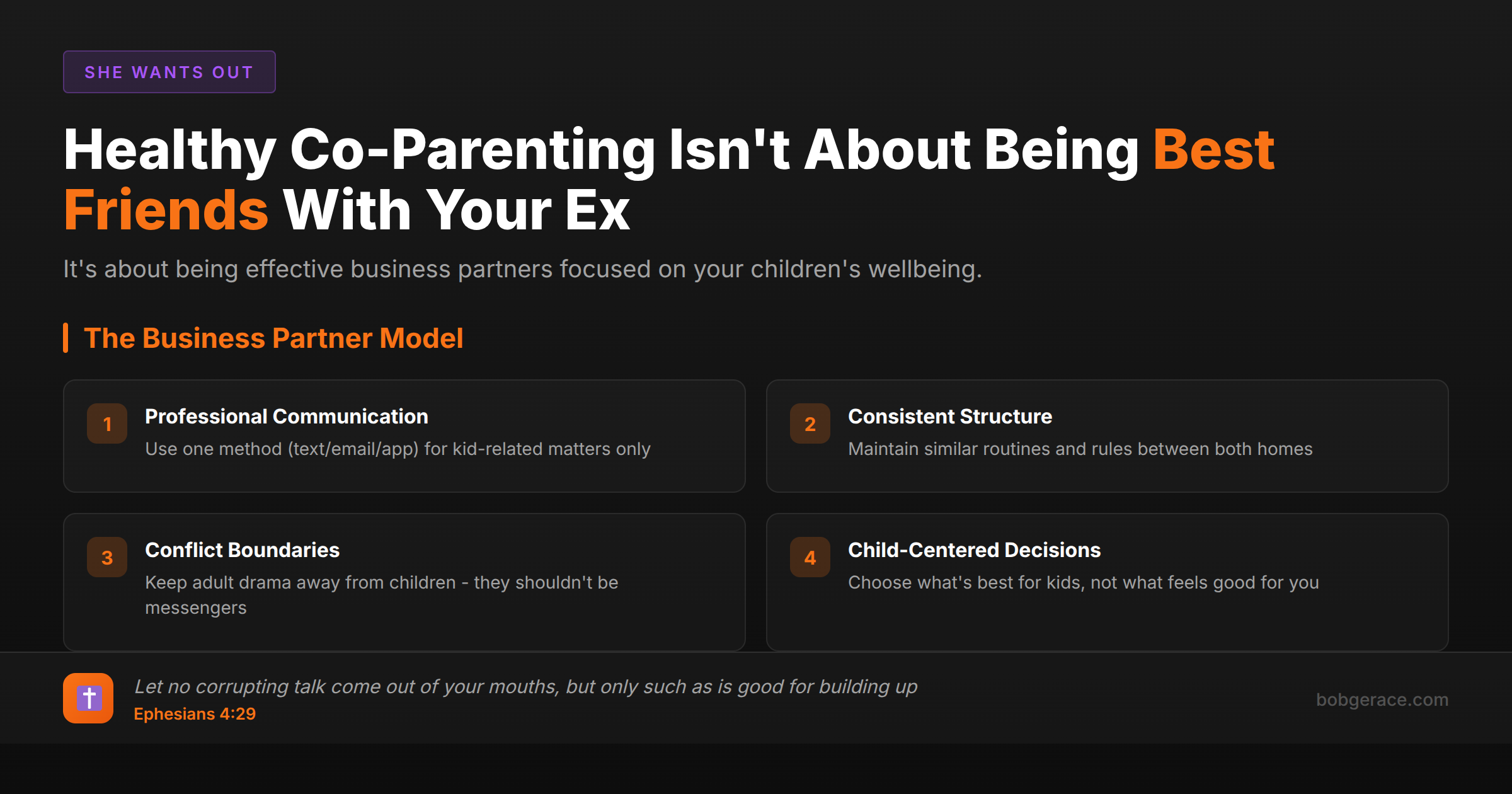
A healthy co-parenting relationship isn't about being friends with your ex - it's about being effective business partners focused on your children's wellbeing. You communicate respectfully about kid-related matters, maintain consistency between homes, and keep adult conflicts away from the children. The gold standard is when your kids feel secure and loved in both homes without being caught in the middle of adult drama. This means you bite your tongue about your ex's parenting choices unless they're truly harmful, you show up when you say you will, and you make decisions based on what's best for your children, not what feels good for you in the moment.
The Full Picture
Healthy co-parenting looks deceptively simple on paper but requires incredible emotional maturity in practice. It's business-like communication focused solely on the children. You text about pickup times, school events, and medical appointments - not about your feelings or your ex's new relationship.
Key characteristics include: • Consistent rules and expectations between homes (bedtimes, homework, chores) • Respectful communication through agreed-upon channels (text, email, co-parenting app) • Flexibility when genuine emergencies arise • United front on major decisions (school, medical care, activities) • Children never used as messengers or sources of information about the other parent
What it's NOT: You don't have to like each other, spend holidays together, or pretend everything's fine. Many men think healthy co-parenting means playing happy family - it doesn't. It means being professional colleagues who happen to share the most important job in the world.
Common mistakes: Trying to control what happens at the other house, using kids to gather intel, making every conversation about the past, or expecting your ex to parent exactly like you do. Your job is to be the best father you can be during your time, not to manage or judge her parenting during hers.
What's Really Happening
From a psychological standpoint, healthy co-parenting creates what we call 'secure attachment stability' for children navigating family transitions. Research consistently shows that children's adjustment post-divorce depends far more on the quality of co-parenting than on the divorce itself.
The key psychological principle is containment - keeping adult emotions and conflicts contained so children can focus on being children. When parents successfully compartmentalize their relationship issues from their parenting responsibilities, children show significantly lower rates of anxiety, depression, and behavioral problems.
Neurologically, consistency between homes helps children's developing brains feel safe. Predictable routines and aligned expectations reduce cortisol production and allow for healthy emotional regulation. Conversely, when children constantly navigate different rules, loyalty conflicts, and parental tension, their nervous systems remain in a chronic state of hypervigilance.
The therapeutic concept of 'parallel parenting' often works better than traditional co-parenting for high-conflict situations. This involves minimal direct communication, structured handoffs, and independent parenting styles while maintaining basic consistency on major issues. It's not ideal, but it's functional and protects children from ongoing conflict exposure.
What Scripture Says
Scripture calls us to prioritize our children's wellbeing and model Christ-like character even in difficult relationships. Ephesians 4:29 reminds us: *'Let no corrupting talk come out of your mouths, but only such as is good for building up, as fits the occasion, that it may give grace to those who hear.'* This applies directly to how we speak about and to our co-parent in front of our children.
1 Corinthians 13:4-5 defines love as patient and kind, not insisting on its own way. In co-parenting, this means choosing your children's peace over your need to be right. Matthew 5:9 declares *'Blessed are the peacemakers, for they will be called children of God.'* You can be a peacemaker without being a pushover.
Proverbs 27:14 warns that *'Whoever blesses his neighbor with a loud voice, rising early in the morning, will be counted as cursing.'* Sometimes our attempts to 'help' our co-parent or prove our point only create more conflict. Wisdom often means staying quiet.
Most importantly, Matthew 18:3 shows Jesus saying *'Unless you turn and become like children, you will never enter the kingdom of heaven.'* Your children are watching how you handle conflict, forgiveness, and respect. They're learning what love looks like under pressure. Make sure you're teaching them something worth learning.
What To Do Right Now
-
1
Establish one communication method for co-parenting (text, email, or co-parenting app) and stick to it
-
2
Create a shared calendar for custody schedules, school events, and activities that both parents can access
-
3
Write down your children's current routines and discuss basic consistency with your co-parent
-
4
Set clear boundaries about what topics you'll discuss (kids only) and which ones are off-limits (personal life)
-
5
Practice the 24-hour rule before responding to triggering messages from your co-parent
-
6
Schedule a monthly 15-minute check-in about how the kids are adjusting and what's working well
Related Questions
- How do I tell the kids?
- How do I co-parent during this?
- How do I be a good dad through this?
- How do I not badmouth her when I'm furious?
- How do I support their relationship with her when she's hurting me?
- What do kids need most from dad during divorce?
- What boundaries should I set?
- How do I set boundaries without controlling?
- How do I manage my nervous system through legal proceedings?
Also find Bob on
Subscribe for weekly videos on Christian marriage.
Your Co-Parenting Situation Is Specific
A coach who knows your story can help you navigate the tension between what's right for your kids and what your ex actually does. You don't have to keep guessing alone.
Talk to Bob →