What is 'parental alienation' and is it happening?
6 min read
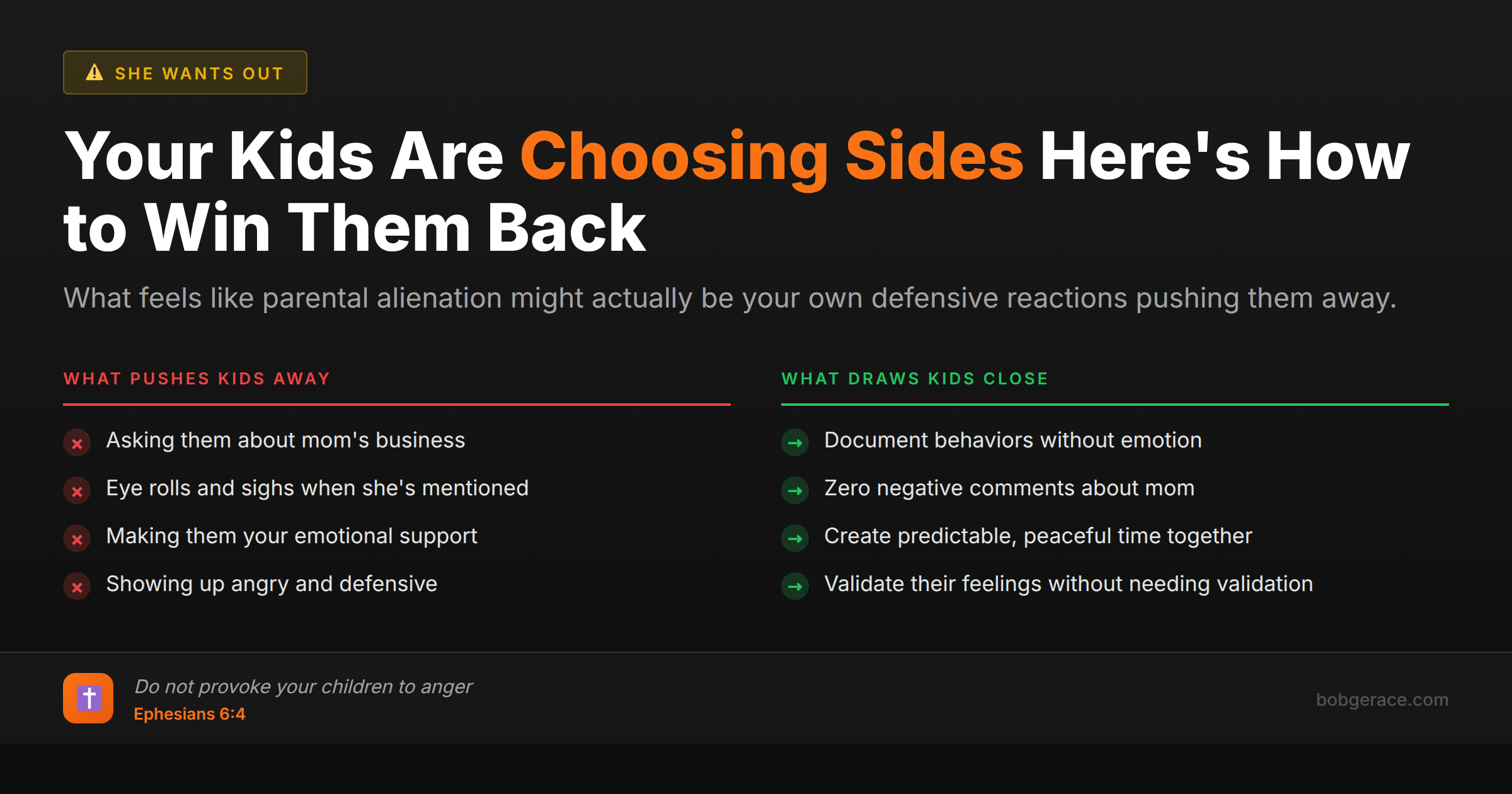
Parental alienation occurs when one parent systematically turns a child against the other parent through manipulation, false narratives, or emotional coercion. But here's what most men don't realize: what feels like alienation is often normal childhood adjustment to divorce trauma. Your kids may be pulling away, seeming distant, or repeating things that sound like your wife's words. That doesn't automatically mean she's poisoning them against you. The real question isn't whether alienation is happening—it's whether you're creating the conditions that make it easy for your children to choose sides. Kids naturally protect the parent they perceive as more hurt or vulnerable. If you're showing up angry, defensive, or constantly asking them about mom, you're making yourself the unsafe parent. The path forward requires brutal honesty about your role while protecting your relationship with your children.
The Full Picture
True parental alienation is systematic psychological manipulation designed to destroy the child's relationship with the targeted parent. It includes false accusations, restricting contact, programming the child with adult concerns, and creating loyalty binds where the child feels they must choose.
But here's the hard truth: most men I work with are dealing with normal divorce dynamics, not clinical alienation. Your children are:
• Processing trauma - Divorce shatters their world. Withdrawal is protective, not personal • Reading the room - Kids instinctively side with whoever seems more stable or less threatening • Repeating what they hear - This doesn't mean they're being programmed; it means they're kids • Testing boundaries - They're figuring out which parent is safe to express anger toward
The difference matters because your response determines the outcome. If you react to normal childhood divorce adjustment like it's alienation, you'll create the very dynamic you fear. Demanding loyalty creates resistance. Criticizing mom forces them to defend her. Interrogating them about what happens at her house makes you the unsafe parent.
Real alienation requires legal intervention. Normal divorce dynamics require you becoming the parent your children need during the worst period of their lives. That means showing up calm, consistent, and focused on their emotional safety rather than your own pain or your conflict with their mother.
The children who maintain strong relationships with both parents after divorce have fathers who refused to make them casualties of adult conflict.
What's Really Happening
From a clinical perspective, true parental alienation syndrome involves specific behavioral patterns that most separated families don't exhibit. Research shows that children's resistance to spending time with a parent is more often related to that parent's behavior than to systematic programming by the other parent.
Attachment theory helps us understand what's actually occurring. During family dissolution, children experience disorganized attachment - their primary security system is disrupted. They cope by aligning with the parent who feels emotionally safest, which isn't always the same as the parent who was closest to them before.
Studies indicate that children's adjustment to divorce depends heavily on conflict exposure and parental emotional regulation. When fathers present as emotionally dysregulated—angry about the divorce, critical of mom, or seeking emotional support from the children—kids instinctively create distance as a protective mechanism.
Developmental considerations are crucial. Younger children (under 10) often align with the primary caregiver due to dependency needs. Adolescents may choose sides based on their developing identity and sense of justice. Neither represents alienation—both represent normal developmental responses to family trauma.
The most effective intervention involves the non-residential parent improving their emotional regulation and creating genuinely safe emotional space for the children. This includes accepting the children's current emotional state without taking it personally, avoiding adult topics about the divorce, and consistently demonstrating stability over time. Clinical outcomes improve dramatically when fathers focus on becoming emotionally safe rather than fighting perceived alienation.
What Scripture Says
Scripture provides clear guidance on protecting children and responding to conflict with wisdom rather than reaction. Ephesians 6:4 instructs fathers: *"Do not provoke your children to anger, but bring them up in the discipline and instruction of the Lord."* During divorce, this means refusing to use children as emotional support or weapons against their mother.
Matthew 18:6 offers a sobering warning: *"Whoever causes one of these little ones who believe in me to sin, it would be better for him to have a great millstone fastened around his neck and to be drowned in the depth of the sea."* Involving children in adult conflict or asking them to choose sides causes spiritual and emotional harm that God takes seriously.
Proverbs 15:1 teaches practical wisdom: *"A soft answer turns away wrath, but a harsh word stirs up anger."* Your children are watching how you handle this crisis. Responding to their distance or difficult behavior with gentleness rather than defensiveness models Christ-like character and creates safety.
1 Corinthians 13:4-5 defines love in action: *"Love is patient and kind; love does not envy or boast; it is not arrogant or rude. It does not insist on its own way; it is not irritable or resentful."* This applies directly to your relationship with your children. Love doesn't demand immediate affection or loyalty—it serves their highest good even when it hurts.
Galatians 6:7-8 reminds us: *"Do not be deceived: God is not mocked, for whatever one sows, that will he also reap."* If you sow peace, patience, and protection of your children's hearts, you'll reap restored relationship. If you sow conflict, criticism of their mother, and emotional instability, you'll reap exactly what you're trying to prevent.
What To Do Right Now
-
1
Document specific behaviors objectively without emotional interpretation—distinguish between concerning patterns and normal divorce adjustment
-
2
Stop all negative comments about their mother in their presence, even subtle eye rolls or sighs when she's mentioned
-
3
Create predictable, peaceful time together focused on their interests rather than adult concerns or questions about mom
-
4
Validate their feelings about the divorce without requiring them to validate yours—be the adult in the relationship
-
5
Establish consistent, gentle boundaries that feel safe rather than controlling or demanding
-
6
Consult a family therapist experienced in high-conflict divorce to assess whether true alienation is occurring or if this is normal childhood adjustment
Related Questions
- She's turning the kids against me
- How do I document concerning behavior without being paranoid?
- What's the difference between alienation and a child's authentic response to my behavior?
- How do I stay connected when access is limited?
- What if she's genuinely unsafe and I'm not being paranoid?
- How do I not badmouth her when I'm furious?
- How do I tell the kids?
- What are signs my kids are struggling?
- How does parental conflict affect child attachment?
- What is 'parentification' and am I doing it to them?
Also find Bob on
Subscribe for weekly videos on Christian marriage.
Your Kids, Your Marriage — Not a Template
What's happening in your house isn't textbook. A coach who knows your specific situation can help you stay close to your kids without making this worse.
Talk to Bob →