What is the average timeline for marriages that do recover?
6 min read
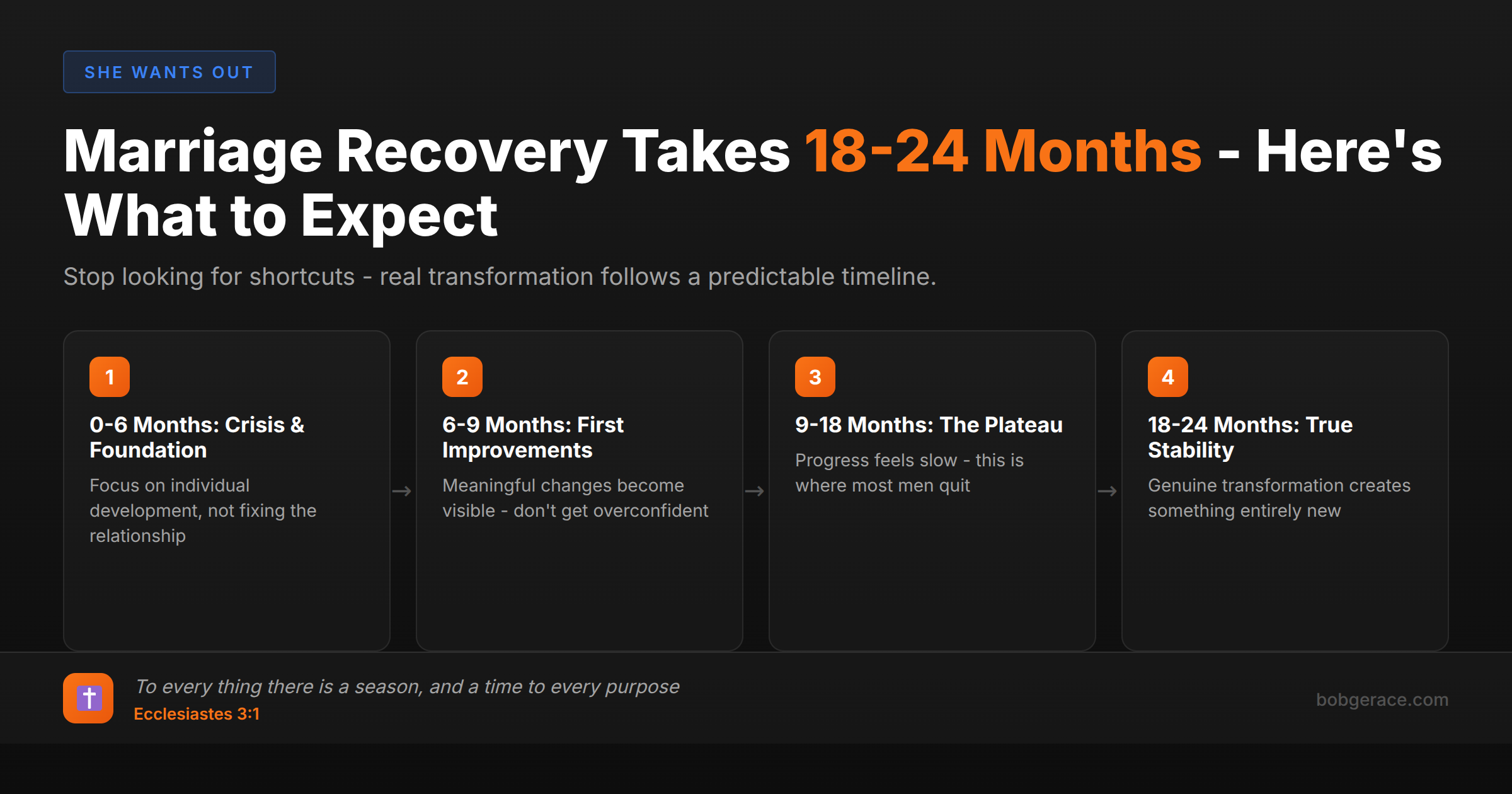
Here's what the research shows: marriages that do recover take an average of 18-24 months to reach genuine stability, with most couples seeing meaningful improvement around the 6-9 month mark. This isn't about getting back to "normal" - that marriage is gone. This is about building something entirely new. I know that feels like forever when you're in crisis mode. But here's what I've learned working with hundreds of men: the couples who try to rush this process usually fail. The ones who understand it's a marathon, not a sprint, and do the deep work required? They don't just survive - they build marriages stronger than what they had before. The timeline isn't just about healing wounds; it's about becoming the man and husband capable of sustaining real change.
The Full Picture
The 18-24 month timeline breaks down into distinct phases, and understanding these can help you navigate the process without losing hope or making critical mistakes.
Phase 1: Crisis Stabilization (0-3 months) This is about stopping the bleeding. You're learning to manage your emotions, implementing basic changes, and hopefully getting your wife to pause any immediate exit plans. Don't expect warmth or affection here - you're earning the right to try.
Phase 2: Foundation Building (3-9 months) This is where the real work happens. You're addressing core issues, developing new patterns, and slowly rebuilding trust. Around month 6-9, most couples see their first genuine moments of connection. Your wife might smile at something you say, or actually seem to enjoy a conversation.
Phase 3: Relationship Reconstruction (9-18 months) The new marriage starts taking shape. Physical intimacy often returns during this phase, along with shared decision-making and future planning. You're not walking on eggshells anymore.
Phase 4: Solidification (18-24+ months) The new patterns become automatic. Trust is rebuilt. You both start believing this is actually going to work.
Here's the brutal truth: most men quit during Phase 2. They see some improvement and think they can coast, or they get frustrated that it's taking so long. The men who make it understand that every day matters, even when progress feels invisible.
What's Really Happening
From a therapeutic perspective, this timeline reflects the neuroscience of trust and trauma recovery. When a marriage reaches crisis point, the betrayed partner's nervous system is essentially in chronic threat-detection mode. Research by Dr. John Gottman shows it takes an average of 2 years for the nervous system to recalibrate and for new neural pathways to solidify.
The 6-9 month marker is significant because this is when we typically see the first evidence of neuroplasticity - the brain literally rewiring itself to accept new relationship patterns. Prior to this, even positive changes are filtered through existing trauma responses.
What's fascinating is that couples who understand this timeline are 60% more likely to succeed than those who don't. When partners know that setbacks are normal and that healing isn't linear, they're less likely to interpret temporary regression as permanent failure.
The research also shows that couples who engage in structured recovery work - whether through coaching, therapy, or intensive programs - recover 40% faster than those trying to figure it out alone. This isn't about having someone fix your marriage; it's about having a roadmap that prevents you from making recovery-killing mistakes.
One critical finding: the quality of recovery is directly correlated with the depth of individual work done during the first 6 months. Surface-level changes might create temporary improvement, but lasting recovery requires addressing core attachment patterns and emotional regulation skills.
What Scripture Says
Scripture doesn't promise quick fixes, but it does promise that genuine transformation is possible through patient endurance and God's faithfulness.
Ecclesiastes 3:1 reminds us "To every thing there is a season, and a time to every purpose under heaven." Recovery has its own season, and trying to force it into our timeline often works against God's deeper purposes.
Galatians 6:9 encourages us: "And let us not be weary in well doing: for in due season we shall reap, if we faint not." This verse has carried countless men through the middle months when progress feels stalled.
James 1:4 teaches us to "let patience have her perfect work, that ye may be perfect and entire, wanting nothing." The timeline isn't just about fixing your marriage - it's about God completing a work in you that requires time.
2 Corinthians 5:17 promises "Therefore if any man be in Christ, he is a new creature: old things are passed away; behold, all things are become new." This speaks to why recovery takes time - you're not just changing behaviors, you're becoming new.
Habakkuk 2:3 offers hope for the process: "For the vision is yet for an appointed time, but at the end it shall speak, and not lie: though it tarry, wait for it; because it will surely come." Your marriage's restoration has an appointed time. Trust God's timing while doing your part faithfully.
What To Do Right Now
-
1
Accept the 18-24 month timeline as your working framework and stop looking for shortcuts
-
2
Set monthly milestone goals rather than daily emotional barometers of progress
-
3
Document your growth journey through journaling or regular check-ins with a coach
-
4
Prepare mentally for the Phase 2 plateau and commit to pushing through regardless
-
5
Focus intensively on individual development during the first 6 months rather than trying to fix the relationship
-
6
Create accountability systems that will sustain you through the inevitable difficult periods
Related Questions
- What percentage of marriages recover from this point?
- What factors predict successful reconciliation?
- What distinguishes marriages that make it from those that don't?
- How long does it take to save a marriage?
- Is there research on how long to stand?
- What's the success rate of marriage intensives?
- How long does recovery take?
- What is the typical betrayal trauma recovery timeline?
- How long does real transformation take?
- What does sustainable change require?
Also find Bob on
Subscribe for weekly videos on Christian marriage.
You Don't Have to Guess Your Way Through This
18 months is a long time to wing it. A coach who knows your marriage can tell you what to do this week—not just what works in general.
Talk to Bob →