What is 'sacrificial headship'?
6 min read
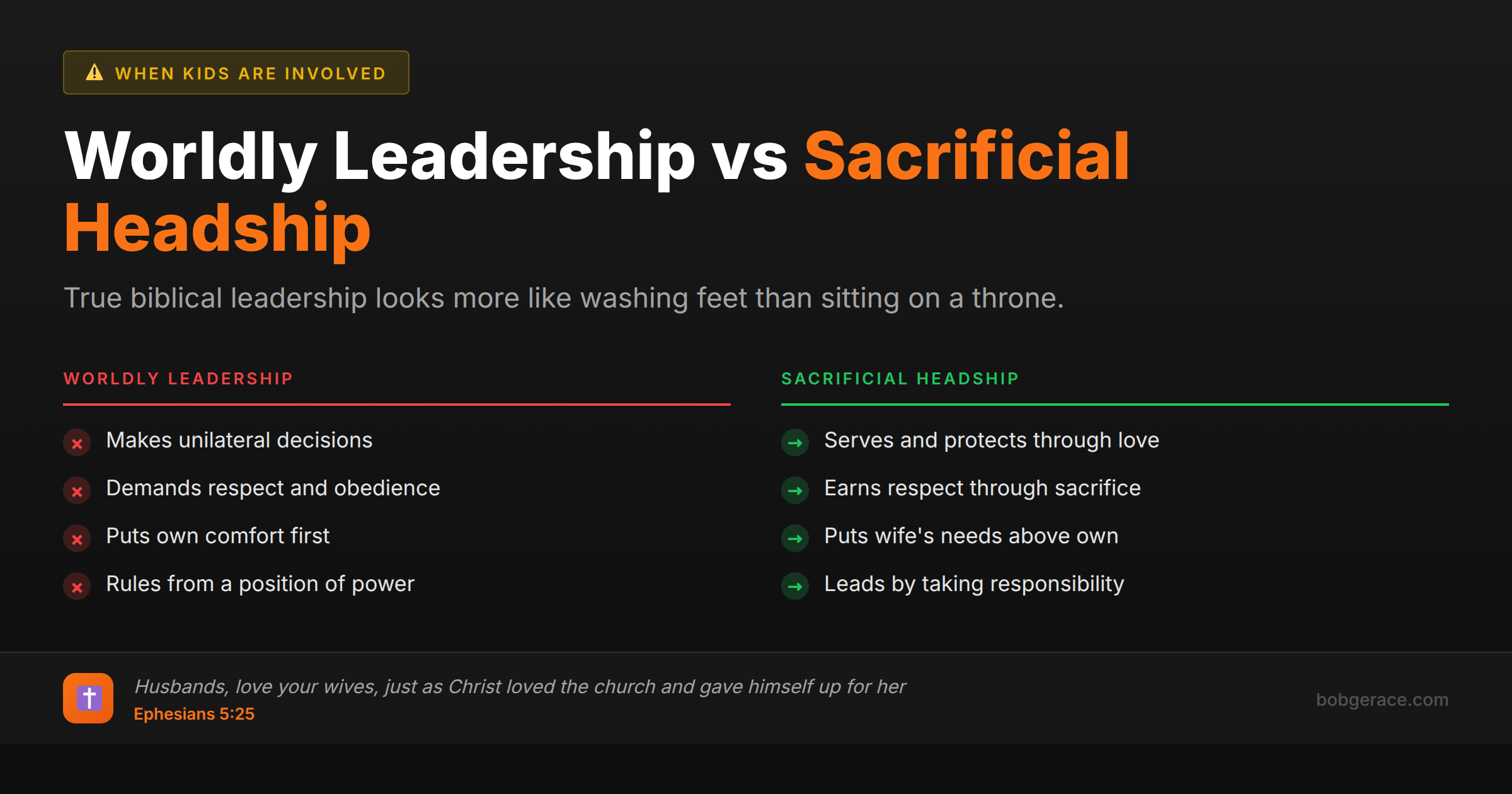
Sacrificial headship is the biblical model where husbands lead their marriages through loving service, protection, and selfless care - exactly as Christ leads the church. It's not about being the boss or making unilateral decisions. It's about taking responsibility for your family's spiritual, emotional, and physical wellbeing while laying down your own interests for theirs. This means you lead by serving, protect through sacrifice, and guide through love. You're the first to apologize, the first to forgive, and the first to put your wife's needs above your own comfort. True headship looks more like washing feet than sitting on a throne - it's leadership that costs you something and blesses everyone else.
The Full Picture
Sacrificial headship has been one of the most misunderstood concepts in Christian marriage - and frankly, it's been badly abused by men who wanted authority without responsibility.
Here's what it actually means: You lead by laying down your life for your wife and family. Not literally dying (though you might need to), but dying to your selfish desires, your need to be right, your comfort, and your convenience. Every single day.
This isn't about being the decision-maker - it's about being the responsibility-taker. When things go wrong in your marriage or family, you don't point fingers. You look in the mirror first. When there's conflict, you're the first to humble yourself. When there's a need, you're the first to sacrifice.
Real headship is expensive. It costs you your pride when you need to apologize. It costs you your time when your family needs attention. It costs you your energy when everyone else is tired. It costs you your preferences when others have needs.
The goal isn't compliance - it's flourishing. A husband practicing sacrificial headship creates an environment where his wife feels so loved, protected, and valued that she naturally wants to follow his lead. Not because she has to, but because she trusts completely that he has her best interests at heart.
This is exactly how Christ leads the church - not through force or manipulation, but through love so profound that we're drawn to follow Him. He gave up everything for us, and in response, we give our lives to Him.
What's Really Happening
In my practice, I see the devastating effects when men misunderstand headship as dominance rather than service. Wives shut down, children rebel, and marriages become battlegrounds instead of sanctuaries.
True sacrificial headship creates psychological safety - the foundation of all healthy relationships. When a wife knows her husband will consistently put her wellbeing above his own comfort, she experiences what we call 'secure attachment.' She can be vulnerable, honest, and authentic because she trusts his protective love.
Neurologically, this kind of leadership reduces stress hormones in the entire family system. When dad is emotionally regulated, sacrificially loving, and taking responsibility, everyone's nervous system can relax. Children feel safe, wives feel cherished, and the home becomes a place of peace rather than tension.
The counterfeit version - authoritarian control - triggers fight-or-flight responses. I've worked with countless wives whose bodies are in constant stress mode because they're living with a man who demands submission without demonstrating sacrificial love. This creates trauma, not intimacy.
Sacrificial headship requires emotional maturity and self-regulation. You can't lead others well if you can't manage your own emotions. You can't create safety for your family if you're reactive, defensive, or volatile. The husband sets the emotional tone for the entire household - which is both a privilege and a profound responsibility.
What Scripture Says
The biblical model is crystal clear - and it's radically different from worldly leadership:
Ephesians 5:25-26 - *"Husbands, love your wives, just as Christ loved the church and gave himself up for her to make her holy, cleansing her by the washing with water through the word."* This is the standard: Christ's love for the church. He didn't demand obedience - He earned it through sacrifice.
Ephesians 5:28-29 - *"In this same way, husbands ought to love their wives as their own bodies. He who loves his wife loves himself. After all, no one ever hated their own body, but they feed and care for their body, just as Christ does the church."* You're called to care for your wife with the same attention you give your own needs.
1 Peter 3:7 - *"Husbands, in the same way be considerate as you live with your wives, and treat them with respect as the weaker partner and as heirs with you of the gracious gift of life, so that nothing will hinder your prayers."* Leadership includes understanding, honor, and recognition of equality in God's eyes.
Mark 10:42-44 - *"Jesus called them together and said, 'You know that those who are regarded as rulers of the Gentiles lord it over them, and their high officials exercise authority over them. Not so with you. Instead, whoever wants to become great among you must be your servant, and whoever wants to be first must be slave of all.'"*
This is servant leadership - the exact opposite of domination. Biblical headship looks like Jesus washing the disciples' feet, not demanding they bow down.
What To Do Right Now
-
1
Ask your wife: 'How can I better serve and protect you?' Then listen without defending yourself
-
2
Identify one area where you've been demanding rather than sacrificing - apologize and change course
-
3
Take responsibility for the emotional climate in your home - if there's tension, ask what you contributed
-
4
Put your wife's needs above your comfort for the next 24 hours in practical, tangible ways
-
5
Study how Jesus led - through service, sacrifice, and love - and apply one specific example today
-
6
Pray for wisdom to lead like Christ, asking God to show you where you've been selfish or controlling
Related Questions
- What does 'love your wife as Christ loves the church' mean?
- What is biblical headship?
- What is 'servant leadership'?
- What does Christ's leadership model for husbands?
- What does 'dying for your wife' mean practically?
- What's the difference between authority and authoritarianism?
- What does masculine leadership look like?
- How do I lead without controlling?
- What does humble leadership look like?
- How do I become a man worth choosing without competing?
Also find Bob on
Subscribe for weekly videos on Christian marriage.
You Can't Lead Your Marriage Alone
Sacrificial headship isn't theory—it's daily decisions in your specific marriage. A coach helps you see what you're missing and calibrate to where your wife actually is.
Talk to Bob →