Is there a typical 'affair profile' for women?
6 min read
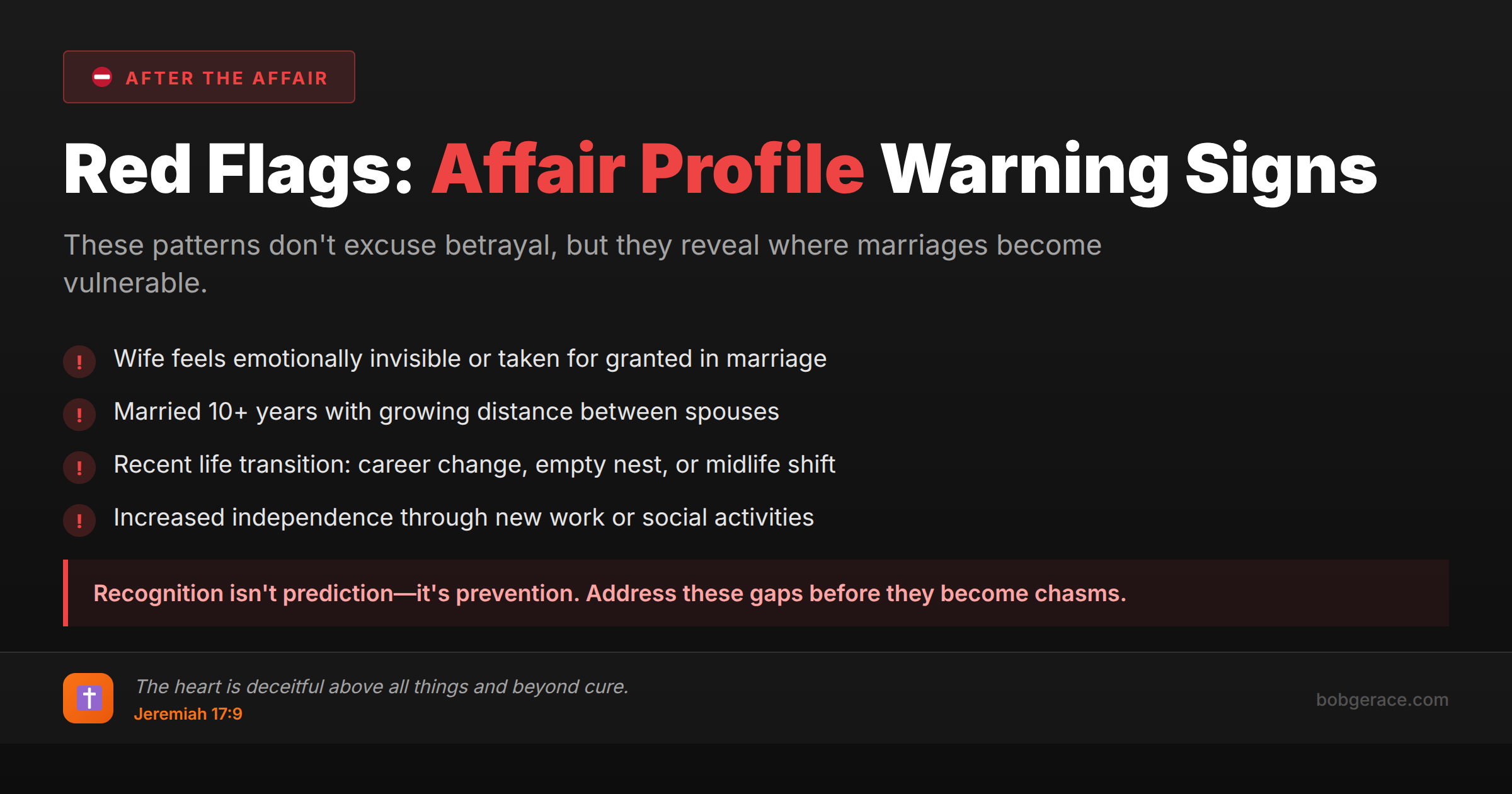
While every situation is unique, research has identified several common patterns in female infidelity. Women who have affairs often share certain characteristics: they're typically in marriages lacking emotional connection, feeling unappreciated or taken for granted, and experiencing a significant life transition (career change, empty nest, midlife). Unlike men who may seek physical gratification, women more commonly pursue emotional connection first. The 'typical' woman who has an affair is often between 35-50, married for 10+ years, and describes feeling invisible or disconnected from her spouse. She may have recently experienced increased independence through work or social activities. However, it's crucial to understand that these patterns don't excuse the behavior or predict who will cheat—they simply help us understand contributing factors for healing and prevention.
The Full Picture
Research from marriage therapists and sociologists reveals several consistent patterns in female infidelity, though it's important to remember that every woman and marriage is unique.
Common Demographic Factors: - Age 35-50 (peak years) - Married 10+ years - Often during major life transitions - Increasing financial or social independence - Career advancement or return to workforce - Children becoming more independent
Emotional and Relational Patterns: Women who have affairs frequently describe their marriages as emotionally distant or stagnant. They report feeling unappreciated, taken for granted, or invisible to their husbands. Unlike male infidelity, which often begins with physical attraction, female affairs typically start with emotional connection—meaningful conversations, feeling understood, or experiencing excitement and novelty.
The Progression Pattern: Most female affairs follow a predictable progression: emotional dissatisfaction at home, increased outside activities or responsibilities, meeting someone who provides attention and connection, gradual emotional intimacy, and finally physical involvement. This process can take months or even years.
Risk Factors: Certain circumstances increase vulnerability: major life stressors, communication breakdowns in marriage, decreased physical intimacy, childhood trauma or attachment issues, social circles that normalize infidelity, and increased opportunities through work or social media.
Understanding these patterns isn't about blame or excuses—it's about recognition and prevention. When couples recognize these warning signs early, they can address underlying issues before crisis hits.
What's Really Happening
From a clinical perspective, women who engage in affairs often exhibit what I call 'emotional starvation syndrome.' They're not necessarily seeking multiple partners or sexual variety—they're seeking connection, validation, and emotional intimacy that feels absent in their primary relationship.
The neurochemistry is significant here. Women's brains are wired differently for bonding and connection. When oxytocin and dopamine levels drop in a long-term marriage (which is normal), women may seek these neurochemical rewards elsewhere. The affair partner provides novelty, attention, and the //blog.bobgerace.com/marriage-mind-renewal-christian-transform-brain-crisis/:brain chemistry of new love.
I've observed three primary psychological profiles: The 'Invisible Woman' who feels overlooked and undervalued, The 'Overwhelmed Caregiver' who gives to everyone but receives little emotional support, and The 'Rediscovering Self' woman going through identity transitions.
It's crucial to understand that affairs rarely happen suddenly. There's typically a long runway of unmet needs, failed attempts at connection, and gradual emotional detachment from the marriage. The affair becomes a misguided solution to legitimate problems.
What's particularly important for recovery is recognizing that the affair is usually symptomatic of deeper issues—both individual and relational. Effective therapy addresses not just the betrayal, but the underlying emotional dynamics, communication patterns, and unmet needs that created vulnerability. The goal isn't just to end the affair, but to build a marriage that naturally protects against future infidelity through genuine emotional connection and mutual fulfillment.
What Scripture Says
Scripture doesn't provide excuses for adultery, but it does give us profound insight into the human heart and God's design for marriage. Understanding these patterns through a biblical lens helps us address root issues with both truth and grace.
The Heart's Deception: *"The heart is deceitful above all things and beyond cure. Who can understand it?"* (Jeremiah 17:9). Our emotions and desires can lead us astray when we don't anchor them in God's truth. The feelings of disconnection or unmet needs, while real, don't justify betraying our covenant.
God's Design for Marriage: *"However, each one of you also must love his wife as he loves himself, and the wife must respect her husband"* (Ephesians 5:33). God designed marriage to meet our deepest needs for love and respect. When these needs go unmet, we become vulnerable to seeking fulfillment elsewhere.
The Call to Faithfulness: *"Marriage should be honored by all, and the marriage bed kept pure, for God will judge the adulterer and all the sexually immoral"* (Hebrews 13:4). God takes marital faithfulness seriously because He understands how infidelity destroys the sacred covenant He designed.
Hope for Restoration: *"If we confess our sins, he is faithful and just and will forgive us our sins and purify us from all unrighteousness"* (1 John 1:9). Even in the devastation of adultery, God offers forgiveness and restoration.
*"Therefore, if anyone is in Christ, the new creation has come: The old has gone, the new is here!"* (2 Corinthians 5:17). God can transform hearts and marriages, creating something new from the ashes of betrayal.
*"And we know that in all things God works for the good of those who love him"* (Romans 8:28). Even affairs can become catalysts for deeper intimacy and stronger marriages when surrendered to God's redemptive power.
What To Do Right Now
-
1
Assess honestly - If you recognize these patterns in yourself or your marriage, acknowledge them without shame but with urgency for change.
-
2
Communicate vulnerabilities - Share your emotional needs and concerns with your spouse before seeking connection elsewhere.
-
3
Establish boundaries - Identify risky relationships or situations and create clear boundaries to protect your marriage.
-
4
Invest in your marriage - Deliberately rebuild emotional connection through regular date nights, meaningful conversations, and shared activities.
-
5
Seek accountability - Connect with a trusted friend, mentor, or counselor who can provide objective perspective and support.
-
6
Get professional help - If patterns of disconnection persist, engage a qualified marriage counselor before crisis hits your relationship.
Related Questions
- What are the most common reasons women have affairs?
- What is 'attachment affair' vs. 'exit affair'?
- What role did our relationship problems play?
- What role did her individual issues play?
- How does attachment style relate to affair risk?
- What attachment needs was the affair meeting?
- Where does this come from?
- What attachment style did I develop in childhood?
- What is 'family of origin' work?
Also find Bob on
Subscribe for weekly videos on Christian marriage.
Your Marriage Isn't a Pattern
Research shows trends. A coach sees what's specific about your wife, your history, and what you can actually do next week. You don't have to keep guessing alone.
Talk to Bob →