What blocks forgiveness?
6 min read
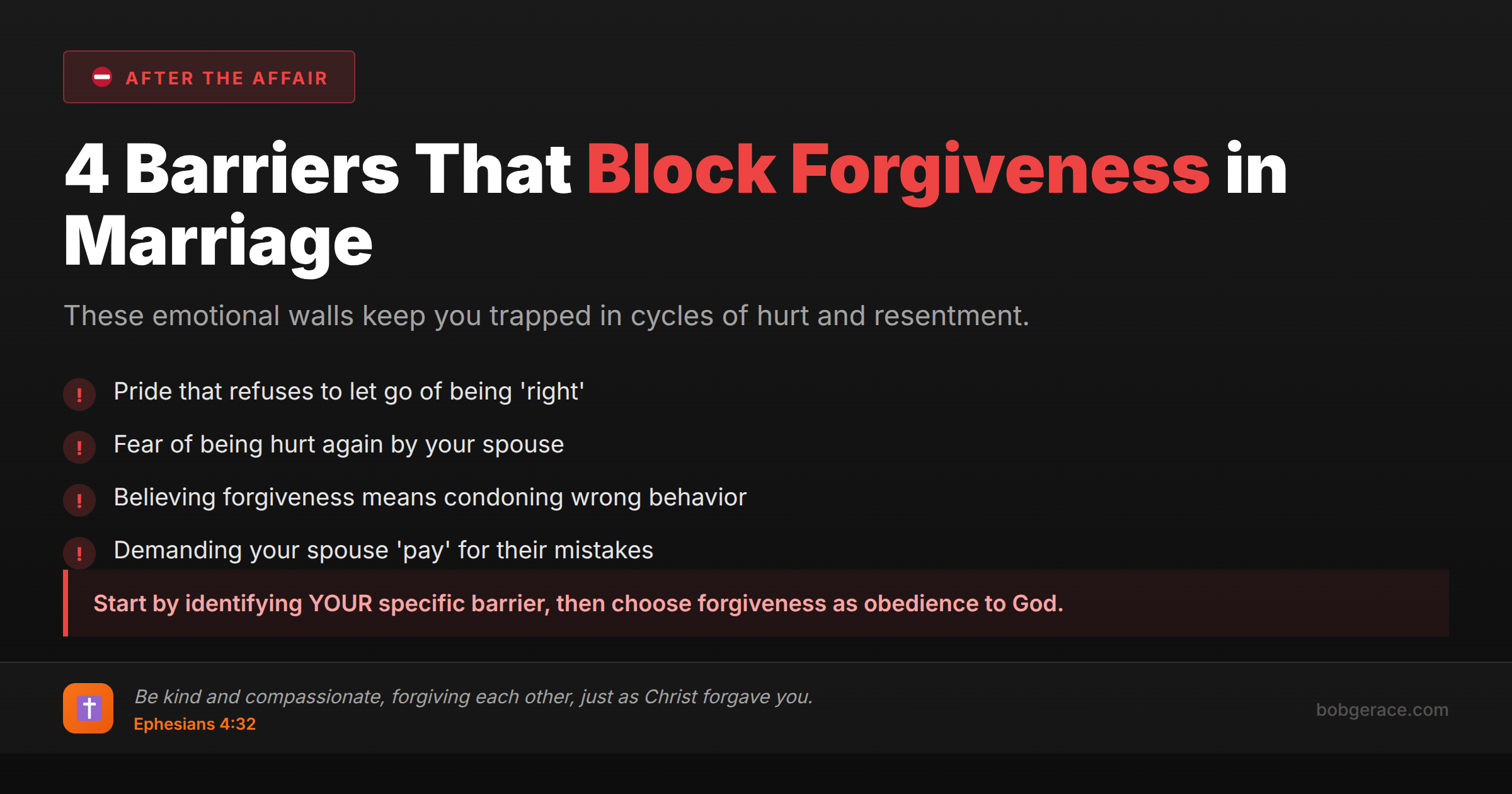
Several barriers commonly block forgiveness in marriage: pride that refuses to let go of being 'right,' fear of being hurt again, and the false belief that forgiveness means condoning wrong behavior. Resentment builds walls, while perfectionism demands the impossible from our spouse. Unhealed wounds from the past create emotional scar tissue that makes extending grace feel dangerous. The deepest block is often our desire for justice over mercy. We want our spouse to 'pay' for their mistakes rather than receive undeserved grace. This keeps us trapped in cycles of hurt and retaliation, preventing the healing God desires for our marriage.
The Full Picture
Forgiveness isn't just a nice idea—it's the foundation of every thriving marriage. But let's be honest: it's also one of the hardest things you'll ever do. When your spouse betrays your trust, speaks harsh words, or repeatedly falls into the same destructive patterns, forgiveness can feel impossible.
Pride stands as the biggest culprit. It whispers, "You're right to stay angry. They don't deserve forgiveness." Pride makes us cling to our hurt like a security blanket, convinced that our pain gives us power or protection.
Fear runs a close second. We're terrified that forgiveness equals vulnerability, and vulnerability led to pain before. So we build emotional fortresses, thinking safety lies in keeping our spouse at arm's length.
Misunderstanding also blocks forgiveness. Many couples believe forgiving means forgetting, excusing behavior, or becoming a doormat. This couldn't be further from the truth. Biblical forgiveness is about releasing the debt while still maintaining healthy boundaries.
Unresolved wounds from childhood or previous relationships create additional barriers. When your father abandoned you, trusting your husband after his affair feels impossible. When your mother criticized everything you did, your wife's correction triggers explosive defensiveness.
Finally, our desire for control keeps us stuck. We think holding onto anger gives us leverage, but it actually hands our peace over to the person who hurt us. True freedom comes through the radical act of release.
What's Really Happening
From a psychological perspective, unforgiveness creates what I call 'emotional bondage.' The hurt spouse becomes neurologically stuck in a trauma response, with the amygdala (fear center) hijacking rational thought processes. This explains why forgiveness feels impossible—your brain is literally wired for self-protection, not grace.
Research shows that holding grudges floods the body with stress hormones like cortisol, leading to depression, anxiety, and even physical illness. Couples trapped in unforgiveness cycles experience increased conflict, decreased intimacy, and higher divorce rates.
The most fascinating discovery in recent neuroscience research is that forgiveness literally rewires the brain. When we choose to forgive repeatedly, we strengthen neural pathways associated with empathy, emotional regulation, and relationship satisfaction. It's not just spiritually transformative—it's neurologically healing.
I often see clients who mistake rumination for processing. They rehearse their hurt over and over, thinking this will //blog.bobgerace.com/financial-leadership-christian-marriage-stop-money-wars/:lead to resolution. Instead, it deepens the neural grooves of resentment. True healing requires moving from rumination to reflection, from bitter rehearsal to honest examination of both the wound and the path forward.
The breakthrough moment comes when clients realize that forgiveness isn't about their spouse—it's about their own freedom. When we understand that unforgiveness is a prison we build for ourselves, the motivation to forgive shifts from obligation to liberation.
What Scripture Says
God's Word directly addresses the barriers to forgiveness, offering both diagnosis and cure. Ephesians 4:31-32 commands us to "Get rid of all bitterness, rage and anger, brawling and slander, along with every form of malice. Be kind and compassionate to one another, forgiving each other, just as in Christ God forgave you."
Notice the progression: we must actively remove the emotional barriers (bitterness, rage, anger) before we can extend forgiveness. This isn't passive—it requires intentional choice.
Matthew 18:21-22 shows Peter asking if forgiving seven times is enough. Jesus responds, "Not seven times, but seventy-seven times." This isn't about counting; it's about cultivating a forgiving heart that doesn't keep score.
Colossians 3:13 provides the ultimate motivation: "Bear with each other and forgive one another if any of you has a grievance against someone. Forgive as the Lord forgave you." We forgive not because our spouse deserves it, but because Christ forgave us when we didn't deserve it.
Matthew 6:14-15 reveals the spiritual stakes: "For if you forgive other people when they sin against you, your heavenly Father will also forgive you. But if you do not forgive others their sins, your Father will not forgive your sins." Unforgiveness blocks our relationship with God, not just our spouse.
Romans 12:19 addresses our desire for justice: "Do not take revenge, my dear friends, but leave room for God's wrath, for it is written: 'It is mine to avenge; I will repay,' says the Lord." We can release control because God handles justice perfectly.
1 Peter 4:8 reminds us that "love covers over a multitude of sins." This doesn't mean ignoring problems, but choosing love as our default response rather than keeping detailed accounts of wrongs.
What To Do Right Now
-
1
Identify your specific forgiveness barriers - Write down what's really keeping you stuck: pride, fear, past wounds, or misunderstandings about forgiveness itself
-
2
Choose forgiveness as an act of obedience - Stop waiting to 'feel' forgiving and start with the decision to obey God's command to forgive
-
3
Release the debt daily - Each morning, consciously choose to release your spouse from owing you for their mistakes (you may need to do this multiple times)
-
4
Set healthy boundaries - Forgiveness doesn't mean becoming a doormat; establish clear, loving boundaries to prevent future hurt
-
5
Seek God's perspective on your spouse - Ask the Holy Spirit to help you see your spouse as God sees them: broken but beloved, struggling but redeemable
-
6
Get professional help if needed - If past trauma or current patterns make forgiveness feel impossible, work with a Christian counselor to address deeper wounds
Related Questions
- What does biblical forgiveness require of me?
- Can I forgive without trusting?
- How do I forgive when she hasn't fully repented?
- What does real forgiveness look like?
- How do I forgive when I'm still hurt?
- What's the process of forgiveness?
- I can't control my anger
- What is the 'inner critic' and why does it sabotage?
- How do I grieve while also fighting?
Also find Bob on
Subscribe for weekly videos on Christian marriage.
Stuck on forgiveness in your marriage?
A coach who knows your story can help you see what's actually blocking you—and what real movement looks like for your specific situation.
Talk to Bob →