What does 'integration' of the affair into our story look like?
6 min read
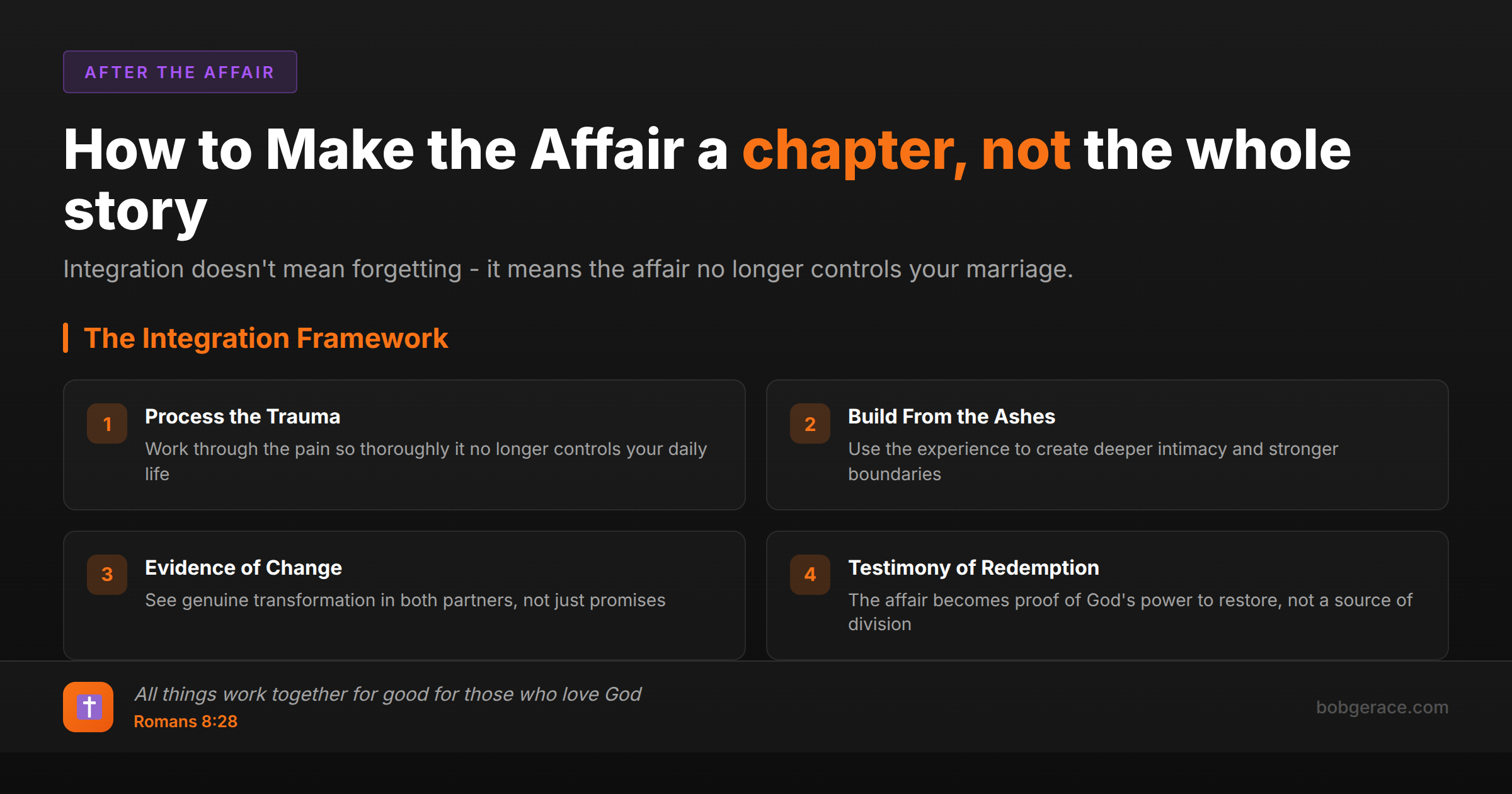
Integration means the affair becomes a chapter in your marriage story rather than the whole story. It's not about forgetting or minimizing what happened - it's about processing the trauma so thoroughly that it no longer controls your daily life or defines your relationship. Successful integration looks like being able to discuss the affair without being consumed by it, using the experience to build deeper intimacy and stronger boundaries, and seeing evidence of genuine transformation in both partners. The affair becomes part of your testimony of God's redemptive power rather than a constant source of pain and division.
The Full Picture
Integration is one of the most misunderstood concepts in affair recovery. Many couples think it means 'getting over it' or 'moving on,' but that's not what healthy integration looks like at all.
True integration means the affair becomes woven into your marriage story without dominating it. Think of it like a scar - it's always there, it tells a story of injury and healing, but it doesn't prevent you from living fully.
## What Integration Actually Includes:
Emotional Integration: You can feel the full range of emotions about the affair without being overwhelmed. Anger, sadness, even gratitude for lessons learned can coexist without destroying your peace.
Cognitive Integration: You understand what happened, why it happened, and what's been done to prevent it from happening again. The story makes sense in the context of your larger life narrative.
Relational Integration: The affair experience has actually contributed to deeper intimacy, better communication, and stronger boundaries in your marriage. You're more connected now than before.
Spiritual Integration: You can see God's hand in your redemption story. The affair, while painful, has become part of how God has shaped you both into who He wants you to be.
## What Integration Does NOT Look Like:
- Pretending it never happened - Never talking about it again - Having no emotional response to reminders - Rushing to 'forgive and forget' - Avoiding the hard work of understanding root causes
Integration is a process, not an event. It happens gradually as you do the hard work of processing trauma, rebuilding trust, and allowing God to redeem your story.
What's Really Happening
From a trauma recovery perspective, integration occurs when fragmented memories and emotions from the affair become organized into a coherent narrative that doesn't overwhelm the nervous system.
Initially, affair trauma creates what we call 'fragmentation' - pieces of the experience remain unprocessed and trigger intense emotional responses. During integration, these fragments get 'filed' properly in memory so they can be accessed without causing re-traumatization.
The neurological process involves several key changes:
The amygdala (fear center) stops treating affair-related memories as immediate threats. The hippocampus properly organizes these memories with appropriate time stamps - they become 'past events' rather than 'current dangers.' The prefrontal cortex regains control over emotional responses.
Behaviorally, you'll notice: - Decreased startle responses to triggers - Ability to discuss the affair without emotional flooding - Improved sleep and concentration - Return of interest in future planning - Increased emotional availability to your spouse
The timeline varies significantly. Some couples begin experiencing integration within 18-24 months, while others need 3-5 years of consistent work. Factors affecting timeline include: severity of deception, length of affair, quality of accountability measures, presence of other trauma history, and commitment to professional help.
Integration isn't about erasing the impact - it's about transforming how that impact affects your //blog.bobgerace.com/marriage-balance-account-christian-daily-deposits/:daily life and relationship dynamics.
What Scripture Says
God is the master of integration - He specializes in weaving painful chapters into beautiful stories of redemption. Scripture gives us a clear framework for understanding how God uses even our worst moments for His glory.
Romans 8:28 reminds us that 'all things work together for good for those who love God and are called according to His purpose.' This doesn't mean the affair was good - it means God can use even this devastation for your ultimate benefit.
Genesis 50:20 shows us Joseph's perspective after his brothers' betrayal: 'You meant it for evil, but God meant it for good.' Integration often involves seeing how God has used the affair to expose and heal deeper issues in your marriage.
Isaiah 61:3 promises that God will give us 'beauty for ashes, the oil of joy for mourning, the garment of praise for the spirit of heaviness.' This is the essence of integration - transformation of what was meant to destroy into something that actually strengthens.
2 Corinthians 1:3-4 explains that God 'comforts us in all our troubles so that we can comfort others.' Many couples find that their integrated story becomes a powerful ministry to other struggling marriages.
Psalm 23:4 acknowledges walking 'through the valley of the shadow of death' - note it's THROUGH, not stuck in. Integration is about completing the journey through the valley.
Joel 2:25 promises that God will 'restore the years that the locusts have eaten.' Integration often involves seeing evidence of this restoration - your marriage becoming stronger than it ever was before the affair.
God doesn't waste pain. He redeems it, transforms it, and uses it for His glory and your good.
What To Do Right Now
-
1
Write your affair story together - what happened, what you've learned, how you've grown, and where you see God's hand in your recovery
-
2
Identify specific ways the affair has led to positive changes in your marriage - better communication, stronger boundaries, deeper faith
-
3
Create new rituals and traditions that acknowledge your 'new' marriage - celebrate recovery milestones, renewal ceremonies, or service opportunities
-
4
Share your story (appropriately) with other couples who might benefit from your experience and testimony of God's redemption
-
5
Regularly remind yourselves of progress made - keep a journal of healing milestones and answered prayers throughout your recovery journey
-
6
Seek counseling if you're stuck - sometimes professional help is needed to facilitate healthy integration when trauma responses persist
Related Questions
- What does full recovery actually look like?
- What are the stages of betrayal trauma recovery?
- When do triggers decrease in intensity?
- What is the typical betrayal trauma recovery timeline?
- How long does recovery take?
- Will I ever get over this?
- What might I discover through this pain?
- What is 'post-traumatic growth'?
- How do I grow regardless of outcome?
- What legacy am I leaving them through this crisis?
Also find Bob on
Subscribe for weekly videos on Christian marriage.
Integration Work Needs a Human Guide
You can't process your specific story alone. A coach who knows your marriage can help you move from stuck to integrated—without white-knuckling it.
Talk to Bob →