What does rebuilding trust require from her?
6 min read
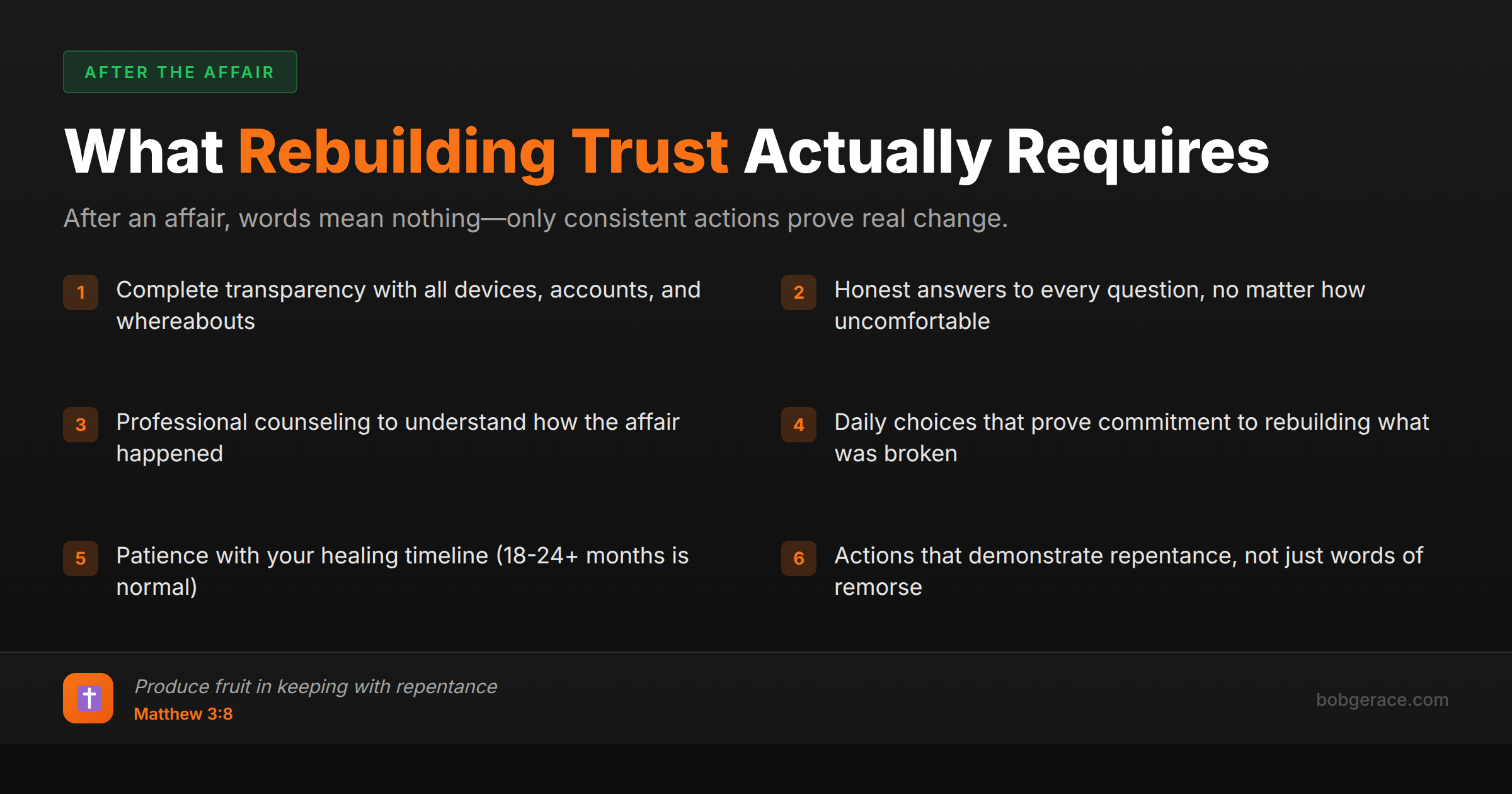
Rebuilding trust after an affair requires complete transparency, genuine remorse, and consistent action over time. She must be willing to answer all questions honestly, provide full access to communications and whereabouts, and demonstrate through daily choices that she's committed to rebuilding what was broken. This isn't about punishment—it's about proving trustworthiness through actions, not words. The process demands patience because trust rebuilds slowly, often taking 18-24 months or longer. She must understand that your healing timeline isn't something she controls, and her frustration with the process can't become your problem to manage. True restoration requires her full commitment to transparency and your emotional safety.
The Full Picture
Trust isn't rebuilt through promises—it's rebuilt through consistent, trustworthy behavior over time.
When a wife has had an affair, she's shattered something fundamental: her husband's ability to believe what she says matches what she does. Rebuilding that trust isn't about forgiveness (though that's important too)—it's about proving through actions that she can be trusted again.
This requires several non-negotiable commitments from her:
First, complete transparency. No more secrets, no more lies, no more "protecting" you from information. This means full access to phones, emails, social media, and whereabouts. It means answering questions—even painful ones—with complete honesty, even when she's tired of answering them.
Second, genuine remorse. Not just guilt about getting caught, but deep sorrow for the damage caused. This shows up as patience with your healing process, not defensiveness when you're struggling, and understanding that your pain is legitimate and deserved attention.
Third, consistent behavior change. The patterns and choices that led to the affair must be identified and changed. This often includes new boundaries with the opposite sex, changes in social situations, and sometimes career adjustments.
Fourth, patience with the timeline. Your healing can't be rushed, and her discomfort with the process isn't your responsibility to manage. Trust rebuilds on your timeline, not hers.
What's Really Happening
Neurologically, betrayal trauma creates a heightened state of vigilance in the betrayed partner's brain. The amygdala becomes hyperactive, constantly scanning for threats, while the prefrontal cortex struggles to process the cognitive dissonance between //blog.bobgerace.com/christian-marriage-service-transform-resentment-love/:love and betrayal.
For trust restoration to occur, the unfaithful partner must understand they're essentially helping rewire their spouse's neural pathways through consistent, predictable, safe behavior. Every act of transparency sends a "safety" signal to the traumatized brain. Every hidden phone call or defensive response reinforces the trauma.
The most common mistake I see is the unfaithful partner becoming frustrated with the healing timeline. They want to "move on" before true neural integration has occurred. This impatience actually delays healing because it signals to the betrayed partner that their spouse still doesn't understand the depth of damage caused.
Successful trust rebuilding requires the unfaithful partner to develop what we call "empathic patience"—the ability to stay emotionally present and supportive even when their partner's healing feels slow or repetitive. This isn't enabling; it's understanding that trauma recovery follows predictable neurobiological patterns that can't be rushed.
What Scripture Says
Scripture makes it clear that rebuilding trust requires more than words—it demands fruit that proves repentance is real.
"Produce fruit in keeping with repentance" (Matthew 3:8). John the Baptist's words to the Pharisees apply directly here. True repentance isn't just feeling sorry—it's demonstrating change through consistent actions that prove the heart has truly turned.
"Above all else, guard your heart, for everything you do flows from it" (Proverbs 4:23). The affair happened because of heart issues that weren't properly guarded. Rebuilding trust means establishing new heart guards—boundaries, accountability, and practices that protect against future compromise.
"Let your yes be yes, and your no be no" (Matthew 5:37). Trust is rebuilt when words consistently match actions. Every promise kept, every commitment honored, every truth told builds another brick in the foundation of restored trust.
"Be completely humble and gentle; be patient, bearing with one another in love" (Ephesians 4:2). This applies especially to her response to your healing process. Impatience with your timeline or defensiveness about your questions reveals pride that still needs addressing.
"If we confess our sins, he is faithful and just and will forgive us our sins and purify us from all unrighteousness" (1 John 1:9). While this speaks of God's forgiveness, it establishes the pattern: confession must be complete and ongoing, not just a one-time event.
What To Do Right Now
-
1
Have the transparency conversation: If she's serious about rebuilding trust, she needs to provide complete access to all devices and accounts, plus detailed accounting of her whereabouts and activities.
-
2
Establish check-in protocols: Create regular times for her to proactively update you on her day, activities, and any triggers or temptations she's facing.
-
3
Require professional help: Insist she get individual counseling to understand how she became capable of the affair and what changes are needed to prevent future compromise.
-
4
Document the commitment: Have her write out her specific commitments for rebuilding trust, including timelines and measurable actions—this isn't legalistic, it's clarity.
-
5
Set realistic expectations: Make it clear that trust rebuilding typically takes 18-24 months minimum, and her frustration with that timeline will only slow the process.
-
6
Monitor your own healing: Don't let her comfort become more important than your legitimate need to verify trustworthiness through consistent evidence over time.
Related Questions
Get Clear on Your Next Steps
Rebuilding trust requires wisdom about what to require and when. Let's create a clear path forward that protects your heart while giving your marriage the best chance at restoration.
Work With Me →