Can old attachment injuries be healed?
6 min read
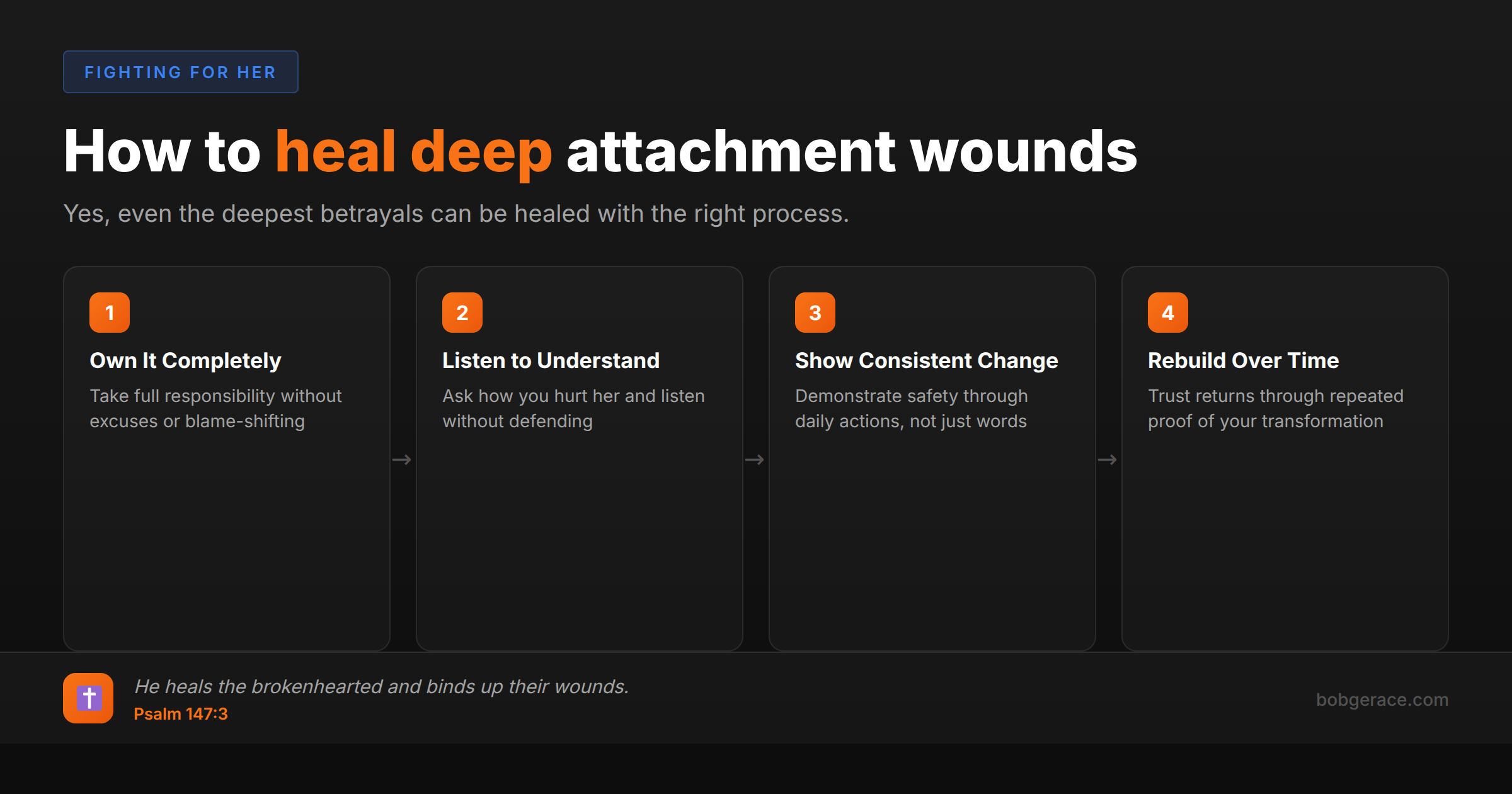
Yes, old attachment injuries can absolutely be healed, but it requires intentional work from both spouses and God's restorative power. These deep emotional wounds - like betrayal, abandonment, or broken trust - don't heal with time alone or simple apologies. They need specific attention and a process of rebuilding. Healing happens through consistent small actions that demonstrate safety, reliability, and love over time. The injured spouse needs to see genuine change, not just hear promises. The injuring spouse must understand the depth of harm caused and commit to earning trust back through their behavior. With professional guidance, biblical principles, and mutual commitment, even marriages with severe attachment injuries can be restored to intimacy and trust.
The Full Picture
Attachment injuries are those devastating moments when your spouse - the person who should be your safest haven - becomes the source of your deepest pain. Maybe it was an affair, an emotional betrayal, harsh words said in anger, or consistently choosing work or others over you. These aren't just hurt feelings that fade with time.
These wounds cut to the core of who you are and whether you matter.
When she's checked out, there's often a collection of these injuries that have built up over months or years. Each one reinforced the message that she's not safe with you, that you can't be trusted with her heart, or that she's not a priority in your life.
Here's what most men miss: the injury isn't just what you did - it's what it communicated to her about her value and your relationship. When you chose porn over intimacy with her, you didn't just look at images. You told her she's not enough. When you dismissed her concerns as "overreacting," you didn't just disagree. You told her that her feelings don't matter to you.
The good news? God is in the business of restoration. He specializes in taking what's broken and making it beautiful again. But healing attachment injuries requires more than prayer and good intentions. It demands:
- Genuine understanding of the harm caused - Consistent actions that demonstrate change - Patient persistence through the ups and downs of rebuilding - Professional guidance to navigate the process safely - Spiritual foundation that anchors the work in God's design for marriage
Your marriage can be healed. But it's going to require you to do the hardest work of your life.
What's Really Happening
From a clinical perspective, attachment injuries create what we call "negative cycles" in relationships. The injured spouse develops hypervigilance - constantly scanning for signs of future harm - while simultaneously protecting themselves through emotional withdrawal or criticism.
The brain literally rewires itself for protection. The injured spouse's nervous system becomes dysregulated around attachment cues. What looks like "overreaction" to past events is actually trauma response - their brain detecting danger where the partner sees safety.
The healing process requires neuroplasticity - literally rewiring the brain through new, safe experiences.
This happens through what researchers call "corrective emotional experiences." The injuring spouse must consistently show up differently, creating thousands of micro-moments that slowly teach the injured spouse's nervous system that safety is possible again.
We see three critical phases in attachment injury recovery:
Phase 1: Acknowledgment and Understanding - The injuring spouse fully grasps the impact of their actions without defensiveness or minimization.
Phase 2: Consistent Repair Actions - Daily behaviors demonstrate genuine change and prioritize the injured spouse's healing.
Phase 3: Renewed Intimacy - Trust rebuilds gradually as new positive experiences outweigh the injury memories.
The timeframe varies significantly based on injury severity, consistency of repair efforts, and both spouses' commitment to the process. Some couples see significant progress in 6-12 months, while deeper injuries may require 2-3 years of intentional work.
What Scripture Says
God's Word is clear about His heart for restoration and healing in relationships. The same God who reconciled us to Himself while we were still sinners is the God who can heal your marriage.
"He heals the brokenhearted and binds up their wounds." - Psalm 147:3
God specializes in healing wounds - including the deep emotional injuries in your marriage. He doesn't just put a bandage on them; He binds them up completely.
"Therefore, if anyone is in Christ, the new creation has come: The old has gone, the new is here!" - 2 Corinthians 5:17
This isn't just about salvation - it's about the complete transformation available through Christ, including in your marriage. Old patterns of hurt can give way to new patterns of love.
"Bear with each other and forgive one another if any of you has a grievance against someone. Forgive as the Lord forgave you." - Colossians 3:13
Forgiveness doesn't mean pretending the injury didn't happen or immediately trusting again. Biblical forgiveness means choosing not to hold the offense against your spouse while still working toward healing and restoration.
"Above all, love each other deeply, because love covers over a multitude of sins." - 1 Peter 4:8
This "covering" isn't hiding or ignoring sin - it's the kind of deep, sacrificial love that creates safety for confession, repentance, and healing to happen.
"The simple believe anything, but the prudent give thought to their steps." - Proverbs 14:15
Wisdom says that rebuilding trust requires both grace and discernment. Trust is rebuilt through consistent actions over time, not just good intentions.
"Restore to me the joy of your salvation and grant me a willing spirit, to sustain me." - Psalm 51:12
David's prayer after his devastating failures shows us that God can restore even what seems irreparably broken.
What To Do Right Now
-
1
Stop minimizing or defending your past actions - fully acknowledge the depth of pain you've caused without trying to explain it away or shift blame
-
2
Ask your wife specifically how your actions affected her and listen without interrupting, defending, or trying to fix - just understand and validate her pain
-
3
Take full ownership by saying 'I was wrong, I hurt you deeply, and I take complete responsibility' - no 'but' statements or excuses
-
4
Identify the specific behaviors and choices that created these injuries and commit to concrete changes with measurable actions she can observe
-
5
Seek professional help from a marriage counselor who understands attachment theory and can guide you through the healing process safely
-
6
Begin daily deposits of trust through small, consistent actions that demonstrate your commitment to her safety and your relationship's healing
Related Questions
- What are 'attachment injuries' and how many did I cause?
- Why does one wound matter more than a hundred good days?
- What does genuine repair look like for old wounds?
- What is an 'apology' vs. 'repair' vs. 'attunement'?
- What is 'felt understanding' and how do I give it?
- What does reconciliation require that apology doesn't?
- What attachment injuries lead to this kind of withdrawal?
- Can neural bonding pathways reopen?
Also find Bob on
Subscribe for weekly videos on Christian marriage.
Your Marriage Isn't a Textbook Case
Attachment injuries play out differently in every relationship. A coach who knows your specific story can help you rebuild trust in ways that actually fit your marriage.
Talk to Bob →