How do I live with uncertainty?
6 min read
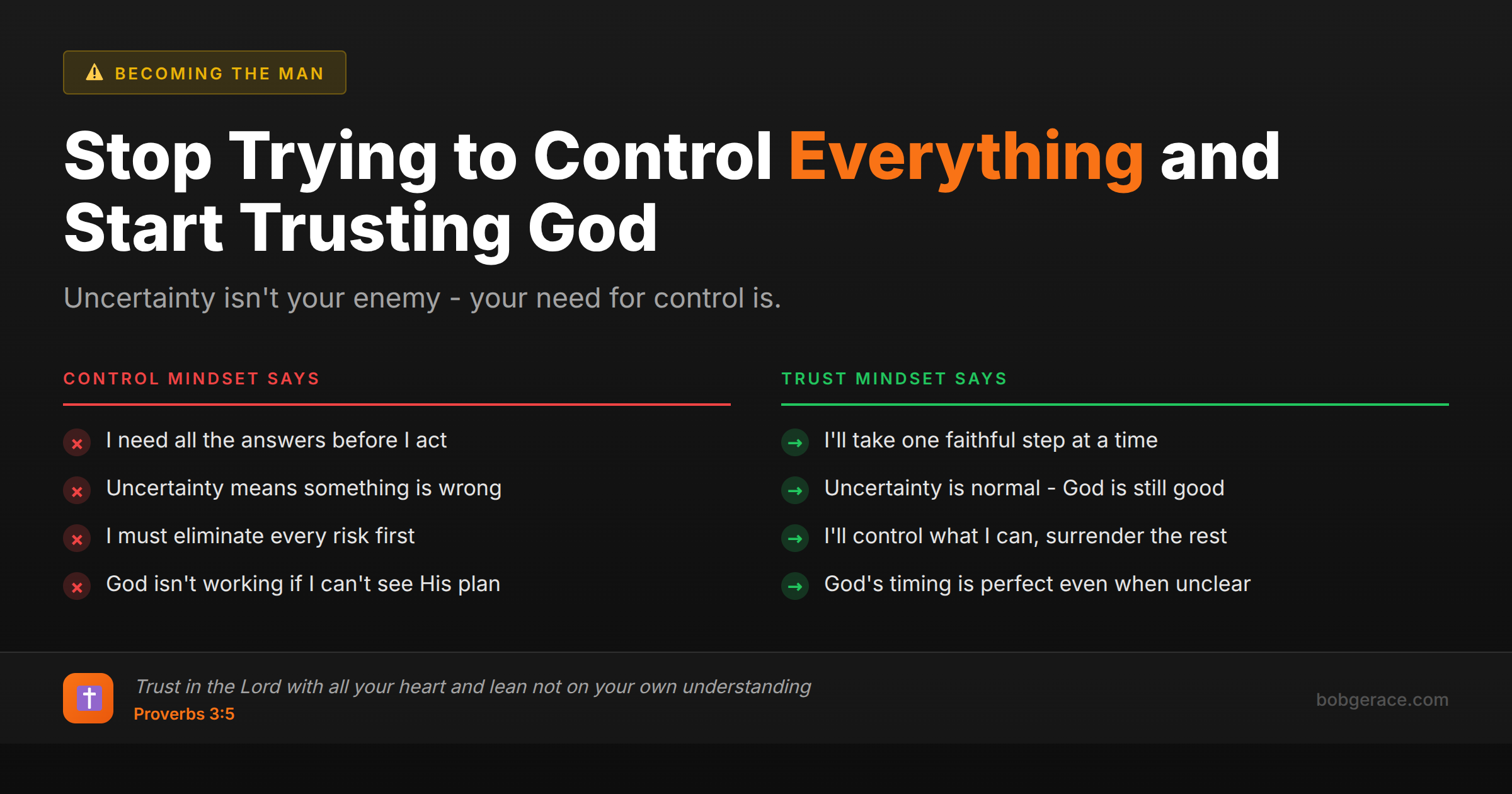
Living with uncertainty requires a fundamental shift from needing control to trusting in God's sovereignty while taking faithful action. Uncertainty isn't something to eliminate—it's something to navigate with wisdom, prayer, and practical boundaries. The goal isn't to have all the answers but to move forward with discernment, even when you can't see the full picture. This means creating stability where you can while surrendering what you cannot control. You establish clear boundaries around your values and non-negotiables, seek godly counsel, and take one faithful step at a time. Uncertainty becomes manageable when you focus on what God has revealed rather than what He hasn't, trusting His character even when His timing isn't clear.
The Full Picture
Uncertainty in marriage often feels unbearable because it triggers our deepest fears about security, love, and the future. You might be wondering if your husband will change, whether your marriage can survive current struggles, or if you're making the right decisions for your family. This emotional weight can paralyze you or drive you to make hasty choices just to escape the discomfort.
The truth is, uncertainty is a normal part of the human experience. Even in healthy marriages, we cannot guarantee outcomes or control another person's choices. What we can control is how we respond to uncertainty and where we place our ultimate trust.
Many women get stuck because they believe they need certainty before they can act. They wait for their husband to prove he's changed, for clear signs about the future, or for their feelings to align perfectly with their decisions. But this approach often leads to prolonged suffering and missed opportunities for growth.
Living with uncertainty doesn't mean being passive. It means making wise decisions with incomplete information while trusting God with the outcomes. It requires developing tolerance for discomfort while maintaining your values and boundaries. This balance allows you to move forward purposefully without being driven by fear or false hope.
Uncertainty becomes a teacher when we approach it correctly. It reveals where we've placed false security, shows us our need for God's guidance, and develops our capacity for faith. Rather than seeing it as an obstacle, we can view uncertainty as an invitation to deeper trust and more authentic living.
What's Really Happening
From a psychological standpoint, uncertainty activates our threat detection system, flooding us with stress hormones that make clear thinking difficult. Your brain interprets the unknown as potentially dangerous, which is why uncertainty feels so physically and emotionally uncomfortable.
This discomfort serves a purpose evolutionarily, but it can work against us in complex relational situations. When we're in fight-or-flight mode, we tend toward black-and-white thinking, rushing to decisions that provide temporary relief but may not serve our long-term wellbeing.
What I see clinically is that women who learn to tolerate uncertainty develop what we call 'distress tolerance'—the ability to experience difficult emotions without immediately acting to eliminate them. This skill is crucial for making wise decisions in marriage because it allows you to gather information, seek counsel, and pray without being driven by anxiety.
The key is learning to separate uncertainty from powerlessness. Many women assume that not knowing the future means they cannot take meaningful action in the present. But research shows that people who focus on what they can influence—their responses, choices, and boundaries—experience less anxiety even in uncertain situations.
Building uncertainty tolerance involves practicing mindfulness, challenging catastrophic thinking patterns, and gradually exposing yourself to situations where you don't have complete control. It's about rewiring your brain to see uncertainty as neutral rather than threatening, which creates space for wisdom and faith to operate.
What Scripture Says
Scripture consistently calls us to trust God's character and promises even when we cannot see His plan clearly. Proverbs 3:5-6 instructs us: "Trust in the Lord with all your heart and lean not on your own understanding; in all your ways submit to him, and he will make your paths straight." This doesn't promise we'll always know the path ahead, but that God will guide us as we trust Him.
Isaiah 55:8-9 reminds us that God's ways and thoughts are higher than ours. This isn't meant to frustrate us but to free us from the burden of having to figure everything out ourselves. We can rest in His wisdom even when our understanding is limited.
Matthew 6:34 teaches us to focus on today's challenges rather than borrowing worry from tomorrow: "Therefore do not worry about tomorrow, for tomorrow will worry about itself. Each day has enough trouble of its own." This isn't about ignoring the future but about not letting future uncertainties steal today's peace and effectiveness.
James 1:5 promises that God gives wisdom generously to those who ask: "If any of you lacks wisdom, you should ask God, who gives generously to all without finding fault, and it will be given to you." We may not receive complete certainty, but we can receive the wisdom we need for each decision.
Jeremiah 29:11 assures us of God's good intentions: "'For I know the plans I have for you,' declares the Lord, 'plans to prosper you and not to harm you, to give you hope and a future.'" Even when we can't see His plan, we can trust His heart toward us.
What To Do Right Now
-
1
Identify what you can and cannot control - make two lists and focus your energy on the first list only
-
2
Establish daily practices that create stability - consistent prayer time, exercise, or connecting with supportive friends
-
3
Set clear boundaries around your values and non-negotiables, even without knowing how situations will resolve
-
4
Seek wise counsel from trusted mentors or counselors who can provide perspective on your specific situation
-
5
Take one faithful step forward each day rather than waiting for complete clarity before acting
-
6
Practice gratitude for what God has already revealed and provided, anchoring your peace in His character rather than circumstances
Related Questions
- What if I make the wrong choice?
- How do I separate fear from wisdom?
- How do I separate hope from denial?
- What does discernment require?
- How do I make this decision?
- What factors should I weigh?
- Is there peace available before resolution?
- How do I know if I'm in denial or in faith?
- What does healthy hope look like vs. fantasy?
Also find Bob on
Subscribe for weekly videos on Christian marriage.
You Don't Have to Figure This Out Alone
A coach who knows your specific marriage can help you see what's actually in front of you—and what your next right move is.
Talk to Bob →