How do I pray without demanding outcomes?
6 min read
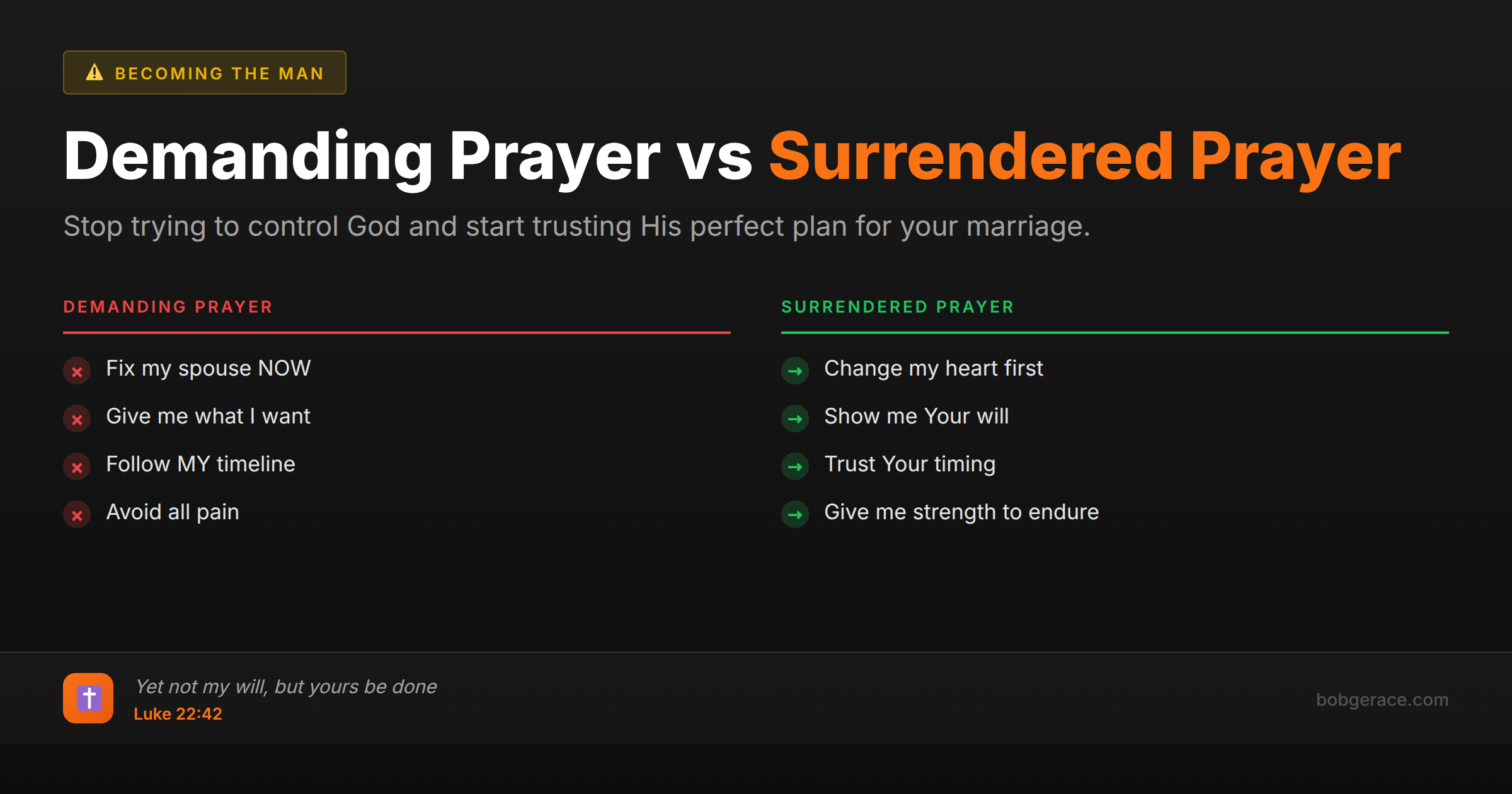
Praying without demanding outcomes means shifting from trying to control God to trusting His character. Instead of telling God what He must do, present your requests with open hands, acknowledging His wisdom exceeds yours. This doesn't mean praying passively - be specific about your needs and desires. But hold those requests with surrender, saying "Your will be done" and meaning it. The key is believing God loves you and your spouse more than you do, and His plans are better than yours even when you can't see it.
The Full Picture
Most of us learned to pray like we're placing an order at a restaurant. We present our requests and expect God to deliver exactly what we asked for, when we asked for it. When He doesn't, we feel unheard or disappointed.
But prayer isn't a transaction - it's a relationship. God isn't a cosmic vending machine; He's a loving Father who sees the full picture while we only see fragments. When your marriage is struggling, you might pray demanding your spouse change immediately, that conflicts stop, or that specific outcomes happen on your timeline.
The problem with demanding prayer: - It assumes you know what's best better than God does - It creates frustration when God doesn't comply with your timeline - It focuses more on outcomes than on relationship with God - It can lead to spiritual manipulation rather than genuine faith
Prayer with surrender looks different: - You still make specific requests - God wants to hear your heart - You acknowledge God's sovereignty and wisdom - You trust His character even when you can't understand His methods - You find peace in the process, not just in getting what you want
This doesn't mean becoming passive or stopping your requests. God invites bold, persistent prayer. But there's a difference between persistent faith and demanding control. One builds intimacy with God; the other creates distance.
What's Really Happening
From a psychological perspective, demanding prayer often stems from anxiety and a need for control. When our marriages are in crisis, our nervous systems activate fight-or-flight responses. Prayer becomes another attempt to manage our environment rather than process our emotions.
This creates what I call "transactional spirituality" - treating God like a problem-solving service rather than cultivating genuine relationship. Clients who pray this way often experience spiritual burnout when their demands aren't met, leading to either anger at God or self-blame for not having enough faith.
The neurological impact is significant: Demanding prayer keeps us in stress states because we're constantly monitoring whether God is "performing" according to our expectations. This actually impairs our ability to receive comfort, wisdom, or peace through prayer.
Surrendered prayer, however, activates our parasympathetic nervous system - the rest and digest response. When we release control to God, our bodies and minds can actually relax into His care. This physiological shift allows us to think more clearly, respond rather than react, and be more present in our marriages.
I've observed that couples who learn to pray with surrender rather than demands experience less anxiety about their relationship outcomes. They're able to focus on their own growth and responses rather than obsessing over changing their spouse. This paradoxically often leads to better marriage outcomes because they're operating from peace rather than panic.
What Scripture Says
Scripture gives us clear examples of how to approach God with our requests while maintaining proper perspective on His sovereignty.
Jesus modeled surrendered prayer: *"Going a little farther, he fell with his face to the ground and prayed, 'My Father, if it is possible, may this cup be taken from me. Yet not as I will, but as you will.'"* (Matthew 26:39). Even Jesus presented His request but surrendered to the Father's will.
We're invited to make requests boldly: *"Do not be anxious about anything, but in every situation, by prayer and petition, with thanksgiving, present your requests to God"* (Philippians 4:6). God wants to hear our specific needs and desires.
But we must remember who's in charge: *"'For my thoughts are not your thoughts, neither are your ways my ways,' declares the Lord"* (Isaiah 55:8). God's perspective is infinitely greater than ours.
Trust replaces demand: *"Trust in the Lord with all your heart and lean not on your own understanding; in all your ways submit to him, and he will make your paths straight"* (Proverbs 3:5-6).
His character justifies our surrender: *"And we know that in all things God works for the good of those who love him, who have been called according to his purpose"* (Romans 8:28).
Prayer changes us, not just circumstances: *"This is the confidence we have in approaching God: that if we ask anything according to his will, he hears us"* (1 John 5:14). The goal is alignment with God's will, not bending His will to ours.
What To Do Right Now
-
1
Begin each prayer by acknowledging God's character - His love, wisdom, and sovereignty over your situation
-
2
Present your specific requests honestly - don't hold back your desires or needs from God
-
3
Add 'Your will be done' to each request and spend time meaning it, not just saying it
-
4
Ask God to change your heart to align with His will rather than demanding He align with yours
-
5
Practice gratitude for what God has already done instead of focusing only on what you want Him to do
-
6
End prayers with surrender statements like 'I trust You with this' or 'Your ways are higher than mine'
Related Questions
Need Help Learning to Surrender in Prayer?
I'll help you develop a prayer life that brings peace instead of frustration, and learn to trust God's heart even when you can't see His plan.
Work With Me →