How do I process without a toxic support system?
6 min read
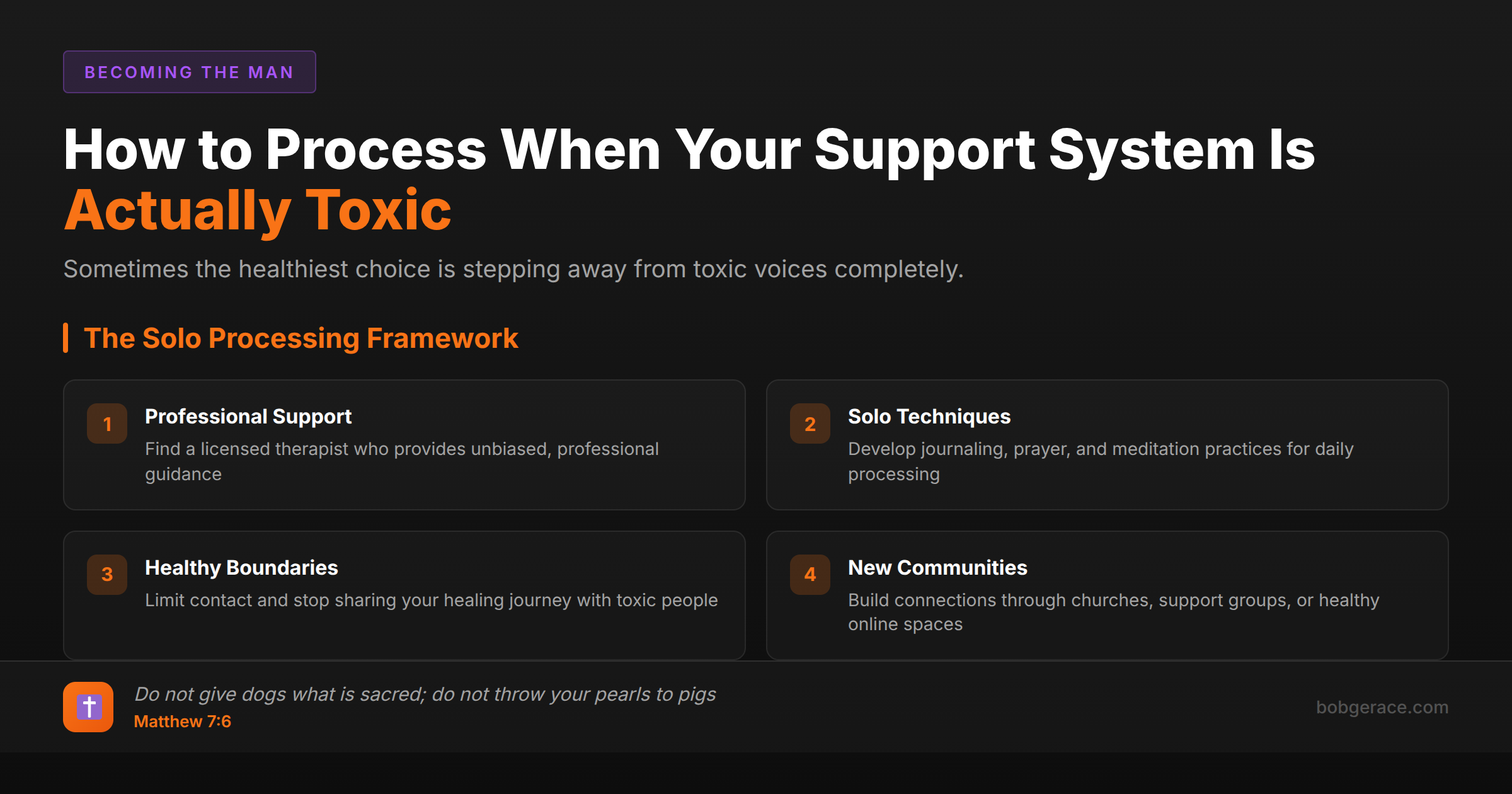
When your support system is toxic, you need to create alternative pathways for processing emotions and experiences. Start by establishing a relationship with a licensed therapist who can provide professional, unbiased support. Develop solo processing techniques like journaling, prayer, and meditation. Build new connections through healthy communities - churches, support groups, or online communities with strong boundaries. Remember that processing alone doesn't mean you're doing it wrong. Sometimes stepping away from toxic voices is the healthiest choice you can make. Focus on God's voice, professional guidance, and your own inner wisdom as you heal.
The Full Picture
Having a toxic support system feels like a cruel irony - the people who should be helping you heal are actually causing more harm. Maybe your family minimizes your pain, your friends give terrible advice, or everyone around you seems invested in keeping you stuck. This reality is more common than you think, and it doesn't mean you're doomed to process everything alone forever.
The truth is, sometimes going it alone initially is exactly what you need. When your support system is toxic, their input often re-traumatizes you, gaslights your experience, or pulls you back into unhealthy patterns. Stepping away from these voices - even temporarily - can be the most loving thing you do for yourself.
Processing without toxic support requires intentionality. You'll need to become your own advocate, create new support structures, and develop internal resources for emotional regulation. This might feel overwhelming at first, but it's incredibly empowering. You're taking control of your healing journey instead of depending on people who aren't equipped or willing to truly support you.
The goal isn't permanent isolation. It's creating space to heal while you build healthier connections. As you grow stronger and clearer about your needs, you'll naturally attract people who can offer genuine support. Some family relationships might even improve when you're no longer desperately seeking their validation or approval.
What's Really Happening
From a clinical perspective, toxic support systems often perpetuate the very problems you're trying to heal from. Family systems theory shows us that dysfunctional families resist change because it threatens their established patterns. When you start processing and healing, it can trigger anxiety in family members who aren't ready to examine their own issues.
Trauma-informed care emphasizes that healing happens in relationship - but that relationship doesn't have to be with your family of origin. You can form corrective emotional experiences with therapists, healthy friends, or support groups. The key is finding relationships characterized by safety, empathy, and genuine care for your wellbeing.
Neurologically, your brain needs co-regulation to heal from trauma. This means being in the presence of someone who is calm and grounded when you're dysregulated. If your support system is chaotic or invalidating, they're actually dysregulating your nervous system further. Professional therapy provides this co-regulation in a structured, safe environment.
Building distress tolerance skills becomes crucial when you don't have healthy support. Techniques like mindfulness, grounding exercises, and self-soothing help you manage difficult emotions without relying on others who might make things worse. This isn't about becoming completely self-reliant - it's about developing internal resources while you build healthier external connections.
What Scripture Says
Scripture acknowledges that sometimes we must separate from toxic influences, even family members, for our spiritual and emotional health. Jesus himself said, *'Do not give dogs what is sacred; do not throw your pearls to pigs. If you do, they may trample them under their feet, and turn and tear you to pieces'* (Matthew 7:6). Your healing journey is sacred - don't share it with people who will trample on it.
God promises to be your support when others fail you. *'Even if my father and mother abandon me, the Lord will hold me close'* (Psalm 27:10). This doesn't minimize the pain of lacking earthly support, but it reminds you that you're not truly alone. God's presence can sustain you through the hardest parts of processing.
*'Above all else, guard your heart, for everything you do flows from it'* (Proverbs 4:23). Guarding your heart might mean limiting access to people who consistently wound you. This isn't unforgiveness - it's wisdom. You can forgive someone and still maintain boundaries that protect your healing process.
Sometimes God uses seasons of solitude for our greatest growth. *'Therefore I am now going to allure her; I will lead her into the wilderness and speak tenderly to her'* (Hosea 2:14). Your 'wilderness' season without toxic support might be exactly where God wants to meet you most intimately. *'Be still, and know that I am God'* (Psalm 46:10). In the silence away from toxic voices, you can finally hear His voice clearly.
*'And the God of all grace, who called you to his eternal glory in Christ, after you have suffered a little while, will himself restore you and make you strong, firm and steadfast'* (1 Peter 5:10). Your current lack of support is temporary - God is preparing restoration and genuine community for your future.
What To Do Right Now
-
1
Find a licensed therapist or counselor who specializes in your specific issues - don't try to heal complex trauma or relationship issues completely alone
-
2
Start a daily journaling practice where you can process thoughts and emotions honestly without judgment or interference from others
-
3
Create physical and emotional boundaries with toxic people - limit phone calls, visits, and don't share details about your healing process with them
-
4
Join a healthy support group, church small group, or online community where you can connect with others who share similar values and experiences
-
5
Develop a daily spiritual practice of prayer, meditation, or Bible study to strengthen your connection with God as your primary source of support
-
6
Build a crisis plan with professional resources (therapist's number, crisis hotline, trusted friend outside your toxic system) for when you need immediate support
Related Questions
- What support do I need?
- What does healthy coping look like?
- What does healthy venting vs. rumination look like?
- How do I protect myself emotionally?
- Why do I need other men?
- How do I find other men?
- Should I tell anyone right now?
- What does wise counsel look like?
- How do I not lose my mind right now?
- What is self-care in crisis?
Also find Bob on
Subscribe for weekly videos on Christian marriage.
You Need a Coach Who Knows Your Story
Processing alone is hard. Processing with toxic voices is worse. A coach who understands your specific marriage can help you sort through what's real without the noise.
Talk to Bob →