Is there something wrong with me?
6 min read
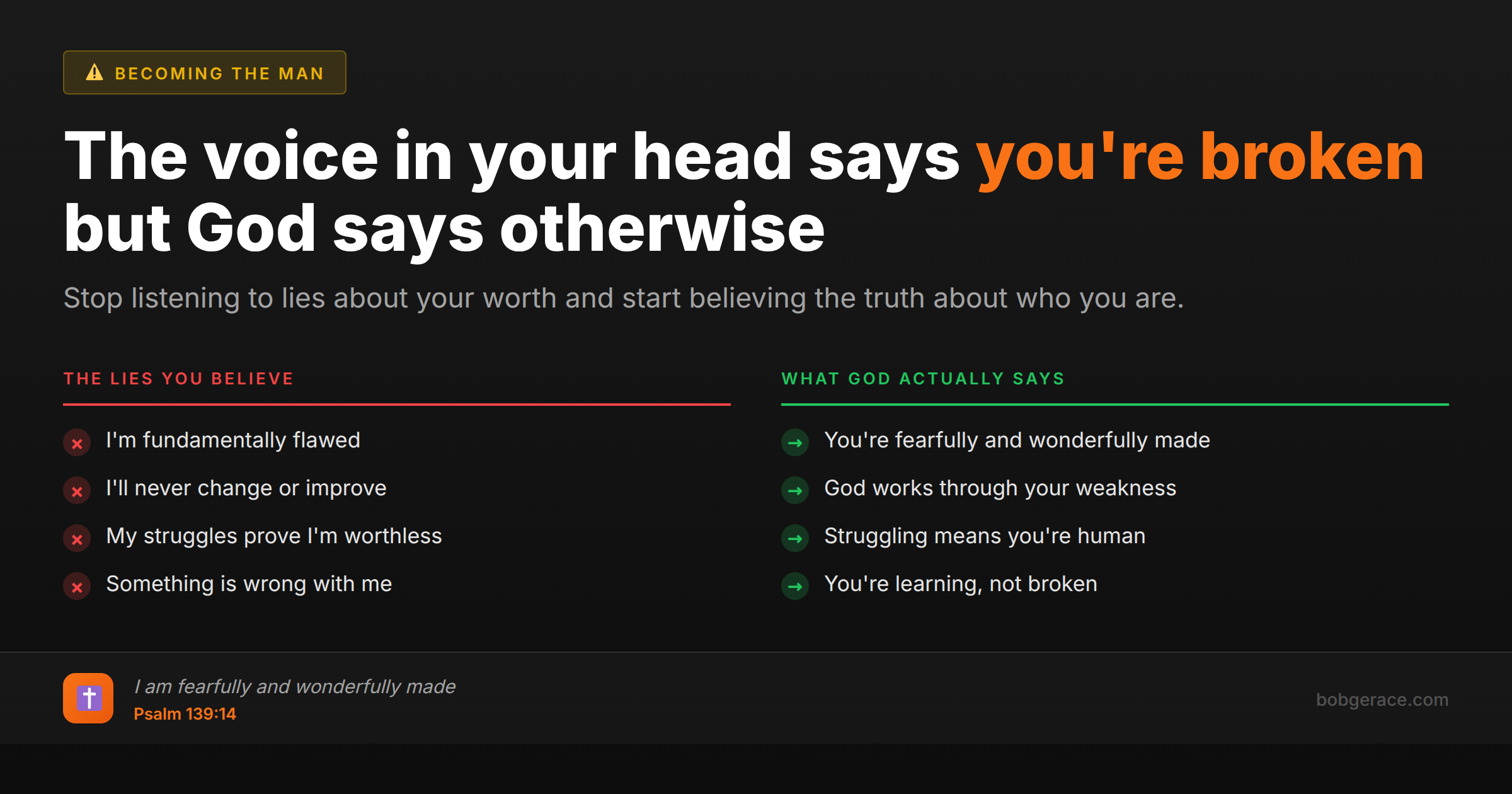
No, there's nothing fundamentally wrong with you. What you're experiencing are learned patterns, unhealed wounds, and normal human responses to stress and conflict. The very fact that you're asking this question shows self-awareness and a heart that wants to do better - that's actually a sign of emotional health, not brokenness. The patterns you see in your marriage didn't develop overnight, and they won't disappear overnight either. But they absolutely can change. You're not defective - you're human, dealing with the complex intersection of your past experiences, current stressors, and the unique dynamics of your relationship. Understanding this is the first step toward real transformation.
The Full Picture
When you keep making the same mistakes in your marriage, it's natural to wonder if you're fundamentally flawed. But here's what's really happening: you're operating from patterns that made sense at some point in your life, even if they're not serving you now.
Your patterns have roots. Maybe you learned to shut down because that's how you survived conflict as a child. Perhaps you react defensively because you've been hurt before. Or you might withdraw because that felt safer than engaging. These aren't character defects - they're adaptive strategies that your brain developed to protect you.
Your marriage triggers old wounds. Marriage has a unique way of activating our deepest insecurities and unresolved issues. When your spouse criticizes you, it might feel like childhood rejection all over again. When they seem distant, it can trigger abandonment fears you thought you'd moved past. This isn't weakness - it's the human experience.
You're dealing with two nervous systems. Every marriage is really two people's nervous systems trying to find safety and connection together. Sometimes those systems conflict. What feels safe to you might feel threatening to your spouse, and vice versa. Understanding this dynamic removes the shame and opens the door to real solutions.
The question isn't whether something is wrong with you - it's whether you're ready to understand yourself more deeply and develop new tools for your relationship. That takes courage, not because you're broken, but because growth always requires moving beyond what's familiar.
What's Really Happening
From a clinical perspective, what you're describing is completely normal human functioning under stress. Our brains are wired to protect us, and sometimes those protective mechanisms show up as patterns that don't serve our relationships well.
Attachment responses are automatic. Your reactions in marriage often stem from your attachment system - the deep-seated patterns formed in your earliest relationships. When you feel threatened or disconnected, your brain activates the same responses that helped you survive emotionally as a child. This isn't pathological; it's neurobiological.
Trauma responses are adaptive. What looks like 'overreacting' or 'being difficult' is often a trauma response. Your nervous system is doing exactly what it was designed to do - protect you from perceived danger. The problem is that your brain sometimes can't distinguish between actual threat and emotional triggers in your marriage.
Change happens through awareness and practice. The good news is that neuroplasticity - your brain's ability to form new neural pathways - means these patterns can absolutely change. It requires understanding your triggers, developing new coping strategies, and practicing them consistently. This isn't about fixing what's wrong with you; it's about expanding your capacity for connection and resilience.
Remember, seeking help isn't evidence of brokenness - it's evidence of wisdom and commitment to your relationship.
What Scripture Says
Scripture makes it clear that struggling doesn't mean you're fundamentally flawed - it means you're human and in need of God's grace and transformation.
You are fearfully and wonderfully made. Psalm 139:14 reminds us, 'I praise you because I am fearfully and wonderfully made; your works are wonderful, I know that full well.' Your struggles don't negate your inherent worth as God's creation. You're not a mistake or a problem to be solved.
God works in your weakness. 2 Corinthians 12:9 tells us, 'But he said to me, "My grace is sufficient for you, for my power is made perfect in weakness."' Your awareness of your struggles isn't a disqualification - it's the very place where God's power can work most effectively in your life and marriage.
Transformation is God's work in you. Philippians 1:6 promises, 'Being confident of this, that he who began a good work in you will carry it on to completion until the day of Christ Jesus.' God isn't finished with you yet. The patterns you're struggling with are part of the ongoing work He's doing in your heart.
You're called to growth, not perfection. Ephesians 4:15 encourages us to 'grow to become in every respect the mature body of him who is the head, that is, Christ.' Growth implies you're not there yet, and that's exactly where God wants to meet you. Romans 8:28 assures us that 'in all things God works for the good of those who love him' - including your marriage struggles.
What To Do Right Now
-
1
Stop the shame spiral by reminding yourself: 'I'm not broken, I'm learning.'
-
2
Identify one specific pattern you want to change and trace it back to its possible origin.
-
3
Share your struggles with your spouse from a place of vulnerability, not self-attack.
-
4
Seek professional help - therapy or coaching - to develop new tools and perspectives.
-
5
Practice self-compassion by treating yourself with the same kindness you'd show a good friend.
-
6
Commit to one small change you can make this week in how you respond to conflict.
Related Questions
- Do I have a personality disorder?
- What is 'complex trauma' and do I have it?
- What role might ADHD/depression/anxiety play?
- What assessment would tell me if I need more help?
- Is my anger normal or pathological?
- Should I be on medication?
- What is 'betrayal trauma' and do I have it?
- Is this PTSD?
- Why do I feel like I'm going to die?
- How do I not lose my mind right now?
Also find Bob on
Subscribe for weekly videos on Christian marriage.
You Don't Have to Figure This Out Alone
A coach who knows your marriage can see what you can't see from inside it. Bring your specific situation to someone who's walked hundreds of men through this.
Talk to Bob →