She says I'm emotionally unavailable
6 min read
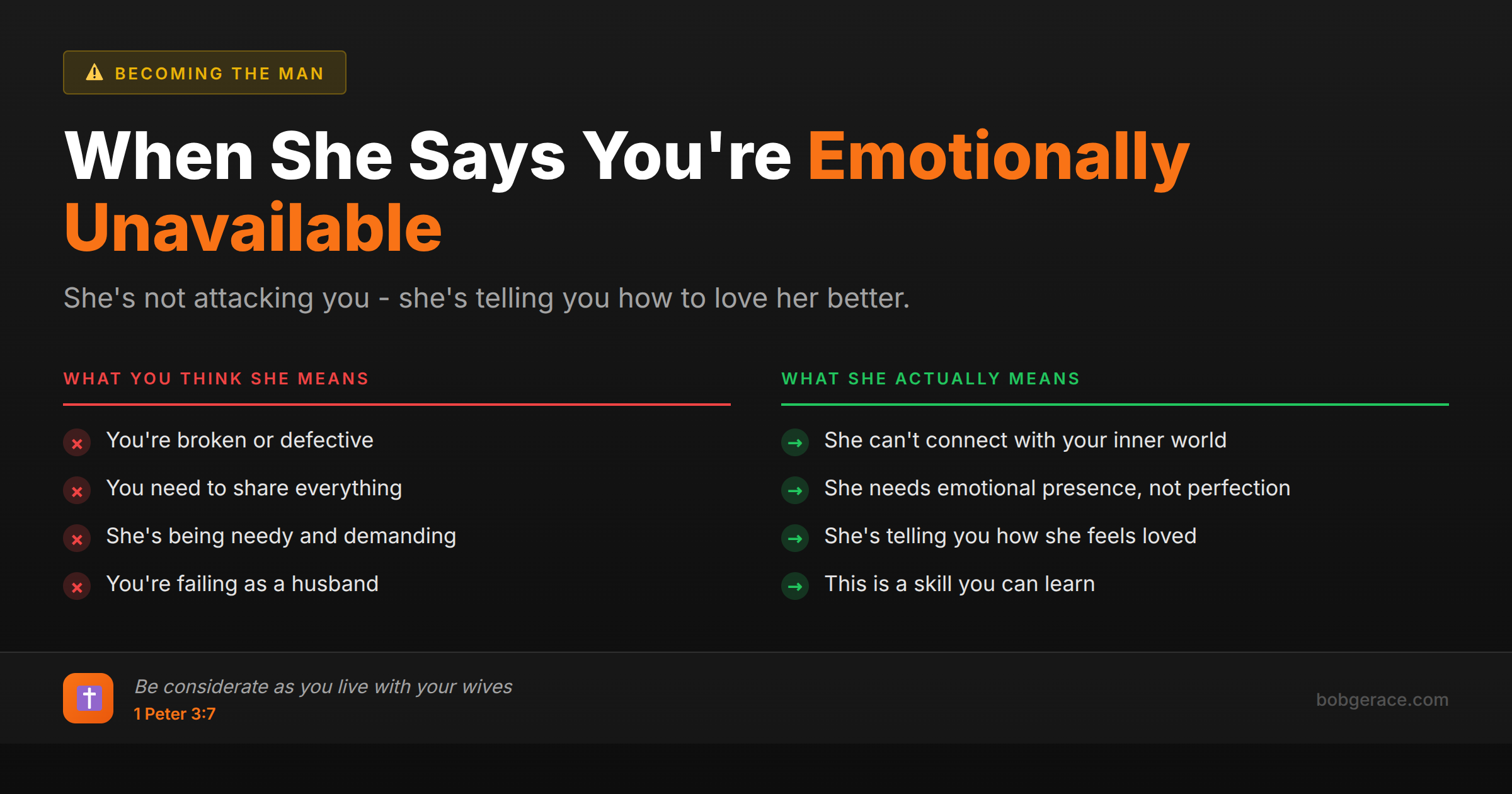
When she says you're emotionally unavailable, she's telling you she can't connect with your inner world. You might be physically present but mentally checked out, avoiding deep conversations, or shutting down when emotions run high. This isn't about being broken or defective - many good men struggle with emotional availability because we weren't taught these skills growing up. The good news? Emotional availability is a skill you can develop. It starts with recognizing that her need for emotional connection isn't weakness or neediness - it's how she feels loved and secure. When you learn to share your thoughts, feelings, and vulnerabilities appropriately, you'll strengthen your marriage in ways that surprise you both.
The Full Picture
Emotional unavailability isn't about being cold or uncaring. Most emotionally unavailable husbands are decent men who love their wives deeply. The disconnect happens because emotional availability requires skills many of us never learned.
What emotional unavailability looks like: - Deflecting serious conversations with humor or changing subjects - Going silent when she tries to discuss relationship issues - Focusing on solutions instead of understanding her feelings - Struggling to express your own emotions beyond anger or frustration - Feeling overwhelmed or trapped when she gets emotional - Using work, hobbies, or screens to avoid difficult conversations
Why this happens to good men: Many of us grew up in homes where emotions weren't discussed openly. We learned that "real men" solve problems, not talk about feelings. We developed coping mechanisms that worked in childhood but now create distance in marriage.
The cost is real. When you're emotionally unavailable, your wife feels lonely even when you're in the same room. She may become more demanding or critical, trying to break through your walls. Or she might withdraw entirely, protecting herself from the pain of feeling unseen.
But here's what she really needs: She needs to know what's happening inside you. Not your schedule or your opinions about the news - your actual thoughts, feelings, fears, and dreams. She needs you to be curious about her inner world too, asking questions that go deeper than logistics.
The transformation begins when you stop seeing her emotional needs as burdens and start seeing them as invitations to deeper intimacy.
What's Really Happening
Emotional unavailability often stems from attachment patterns formed early in life. If you learned that emotions were dangerous, unwelcome, or led to rejection, your nervous system developed protective mechanisms that now interfere with marital intimacy.
The neurological reality: When emotional topics arise, your sympathetic nervous system may activate, triggering fight-flight-freeze responses. You might feel flooded, shut down, or compelled to escape. This isn't weakness - it's your brain trying to protect you based on old programming.
Common underlying factors: - Childhood emotional neglect or criticism - Messages that emotions are feminine or weak - Trauma that made vulnerability feel unsafe - Perfectionism that makes emotional messiness uncomfortable - Cultural conditioning that equates masculinity with stoicism
The attachment cycle: Your emotional withdrawal triggers her attachment system, making her pursue connection more intensely. This feels overwhelming to you, causing more withdrawal. She interprets this as rejection, escalating her attempts to connect. Breaking this cycle requires understanding that her "neediness" is actually a normal response to disconnection.
Neuroplasticity offers hope. Your brain can form new neural pathways at any age. Through practice and patience, you can develop emotional awareness and expression skills. The key is starting small and building tolerance gradually rather than forcing dramatic changes that overwhelm your nervous system.
What Scripture Says
God designed marriage to be the deepest human relationship, requiring emotional intimacy and vulnerability. Scripture calls husbands to love sacrificially and understand their wives deeply.
"Husbands, in the same way be considerate as you live with your wives, and treat them with respect as the weaker partner and as heirs with you of the gracious gift of life, so that nothing will hinder your prayers." (1 Peter 3:7) Being "considerate" requires understanding her emotional world, not dismissing it.
"Above all else, guard your heart, for everything you do flows from it." (Proverbs 4:23) Guarding your heart includes being aware of what's in it, not shutting it down completely.
"Be completely humble and gentle; be patient, bearing with one another in love." (Ephesians 4:2) Gentleness with your wife's emotions reflects Christ's gentleness with us.
"Rejoice with those who rejoice; mourn with those who mourn." (Romans 12:15) This requires emotional presence and the ability to enter into another's emotional experience.
Jesus himself was emotionally available. He wept with Mary and Martha, felt compassion for the crowds, and expressed anger, joy, and sorrow appropriately. Following Christ means embracing the full range of human emotion, not suppressing it.
"As iron sharpens iron, so one person sharpens another." (Proverbs 27:17) This sharpening happens through honest, vulnerable relationship - exactly what your wife is asking for when she requests emotional availability.
What To Do Right Now
-
1
Ask her specifically what emotional unavailability looks like to her - Don't assume you know. Say: 'Help me understand what you mean when you say I'm emotionally unavailable.'
-
2
Practice the daily emotional check-in - Each evening, share one thing you felt that day and ask about her emotional experience. Start small and build consistency.
-
3
Stop trying to fix her emotions immediately - When she shares feelings, say 'Tell me more about that' instead of jumping to solutions.
-
4
Identify your emotional triggers - Notice when you want to shut down, change subjects, or leave the room. What topics or emotions make you uncomfortable?
-
5
Create a feelings vocabulary - Men often know 'fine,' 'frustrated,' and 'angry.' Expand to words like concerned, disappointed, hopeful, overwhelmed, or grateful.
-
6
Schedule weekly connection time - Twenty minutes of phone-free conversation about your inner lives, not logistics or problems to solve.
Related Questions
- How do I become emotionally intelligent?
- I never learned to process emotions
- How do I identify what I'm feeling?
- How do I open up without falling apart?
- What's healthy vulnerability look like?
- What is emotional intelligence and why does it matter?
- She won't talk about our problems
- She shuts down when I try to connect
- She's physically present but emotionally gone
- How do I become a safe emotional presence?
Also find Bob on
Subscribe for weekly videos on Christian marriage.
Don't Figure This Out Alone
Becoming emotionally available in your specific marriage means knowing what to share, when to share it, and how to stay present when she's upset. A coach who knows your story helps you practice the actual moves.
Talk to Bob →