What are red flags that this is manipulation?
6 min read
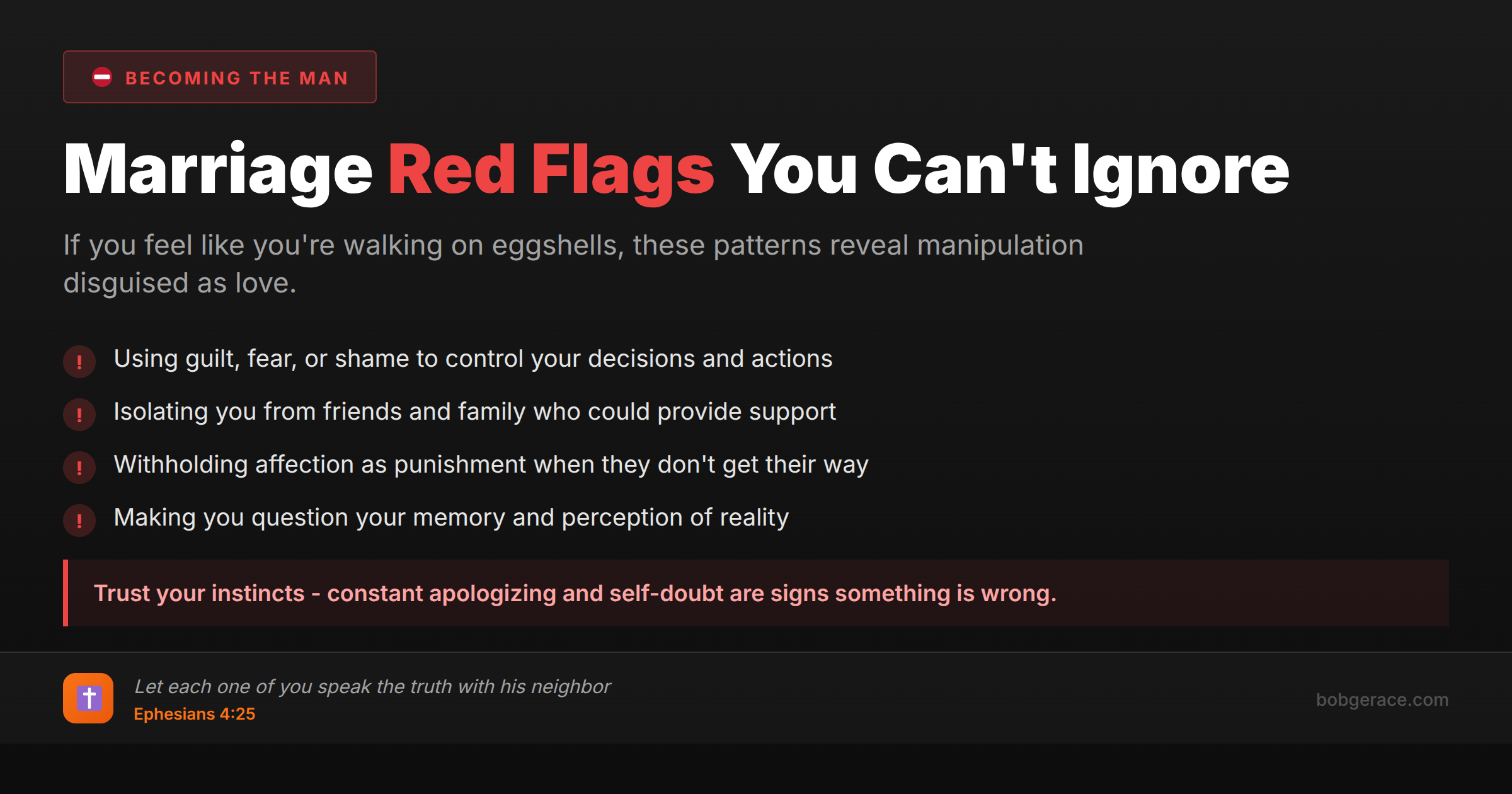
Manipulation in marriage shows up through patterns of control disguised as love or concern. Key red flags include your spouse using guilt, fear, or shame to get their way, isolating you from friends and family, withholding affection as punishment, or constantly questioning your memory and perception of events. You might notice they twist conversations to make you the problem, use your vulnerabilities against you, or create crises to distract from their behavior. Trust your gut - if you feel like you're walking on eggshells, constantly apologizing, or doubting your own reality, these are strong indicators of manipulation.
The Full Picture
Manipulation in marriage is insidious because it often masquerades as care, protection, or love. Unlike the dramatic portrayals we see in movies, real manipulation typically develops gradually, making it harder to recognize until you're deep in its web.
The most common red flags include:
Emotional Weaponry - Your spouse uses your deepest fears, insecurities, or past traumas against you during arguments. They might say things like "You're just like your mother" or bring up your failures when you try to address their behavior.
Reality Distortion - They consistently deny things they said or did, making you question your memory. This gaslighting creates dependency on their version of reality and erodes your confidence in your own perceptions.
Isolation Tactics - Gradually cutting you off from support systems through criticism of your friends, creating conflict with family members, or making it difficult for you to maintain outside relationships.
The Puppet Master Approach - They don't directly tell you what to do but create circumstances where you feel you have no choice. They might create financial dependency, use children as leverage, or manufacture emergencies that require your compliance.
Hot and Cold Dynamics - Alternating between excessive affection and withdrawal, praise and criticism, creating an addictive cycle where you're constantly trying to get back to the "good times."
Victim Playing - When confronted about their behavior, they immediately flip the script to become the wounded party, making you comfort them instead of addressing the original issue.
The tragedy is that manipulative spouses often genuinely believe they're justified in their behavior, seeing it as necessary for the relationship or family's wellbeing.
What's Really Happening
From a clinical perspective, manipulation in relationships often stems from deep-seated insecurities and a need for control. The manipulating partner typically has an underlying fear of abandonment or inadequacy that drives them to control their environment and relationships.
What makes manipulation so damaging is its impact on the victim's psychological wellbeing. Chronic manipulation creates what we call "learned helplessness" - a state where you begin to believe you're powerless to change your circumstances. This is compounded by trauma bonding, where the intermittent reinforcement of good treatment creates a powerful psychological attachment to the abuser.
The manipulated partner often experiences symptoms similar to PTSD: hypervigilance, anxiety, depression, and difficulty trusting their own judgment. They may develop what I call "emotional arthritis" - a stiffness in their ability to feel and express emotions naturally.
It's crucial to understand that manipulation is a learned behavior that serves a purpose for the person using it. They've discovered it works to get their needs met, avoid consequences, or maintain their preferred dynamic. This means they're unlikely to change without significant intervention and personal motivation.
Recognizing manipulation isn't about demonizing your spouse but about protecting your own psychological wellbeing. The goal is to see clearly so you can make informed decisions about how to respond and what boundaries you need to establish.
What Scripture Says
Scripture provides clear guidance about healthy relationships and warns against the manipulation tactics we see in troubled marriages. God's design for marriage is built on truth, love, and mutual respect - the opposite of manipulative behavior.
Truth Over Deception: "Therefore, having put away falsehood, let each one of you speak the truth with his neighbor, for we are members one of another" (Ephesians 4:25). Manipulation thrives on deception, half-truths, and reality distortion. God calls us to absolute honesty in our relationships.
Love Without Conditions: "Love is patient and kind; love does not envy or boast; it is not arrogant or rude. It does not insist on its own way; it is not irritable or resentful" (1 Corinthians 13:4-5). This directly contrasts with manipulative behavior that insists on its own way through emotional coercion.
Wisdom in Relationships: "The simple believes everything, but the prudent gives thought to his steps" (Proverbs 14:15). God doesn't call us to be naive or ignore red flags. We're meant to use discernment in our relationships.
Freedom from Control: "It is for freedom that Christ has set us free. Stand firm, then, and do not let yourselves be burdened again by a yoke of slavery" (Galatians 5:1). This applies to emotional and psychological slavery as much as spiritual bondage.
Gentle Confrontation: "Brothers, if anyone is caught in any transgression, you who are spiritual should restore him in a spirit of gentleness" (Galatians 6:1). We're called to address wrong behavior, not enable it through silence.
Protecting the Vulnerable: "Defend the weak and the fatherless; uphold the cause of the poor and the oppressed. Rescue the weak and the needy; deliver them from the hand of the wicked" (Psalm 82:3-4). Sometimes we must protect ourselves from those who would harm us.
What To Do Right Now
-
1
Document patterns by keeping a private journal of incidents, including dates, circumstances, and your spouse's exact words when possible
-
2
Trust your instincts and stop second-guessing your perceptions - if something feels wrong, pay attention to that feeling
-
3
Reconnect with trusted friends or family members who can provide perspective and support outside your marriage
-
4
Set small, clear boundaries and observe how your spouse responds - their reaction will tell you a lot about their intentions
-
5
Seek individual counseling with a therapist experienced in manipulation and emotional abuse to gain clarity and coping strategies
-
6
Develop a safety plan including financial independence, support network contacts, and safe spaces if the situation escalates
Related Questions
- What is 'love bombing'?
- What is the cycle of abuse/reconciliation?
- How do I distinguish hoovering from genuine pursuit?
- What are signs he's just scared not changed?
- What is 'performative remorse'?
- What does coercive control look like?
- How do I know if he's really changing?
- Is he manipulating me or actually different?
- How do I tell performance from genuine change?
- What are markers of genuine remorse vs. guilt?
Also find Bob on
Subscribe for weekly videos on Christian marriage.
Get a Coach Who Knows Your Story
Manipulation patterns are specific to your marriage. A coach helps you see what's actually happening in your situation and builds a plan that fits where you are right now.
Talk to Bob →