What is 'performative remorse'?
6 min read
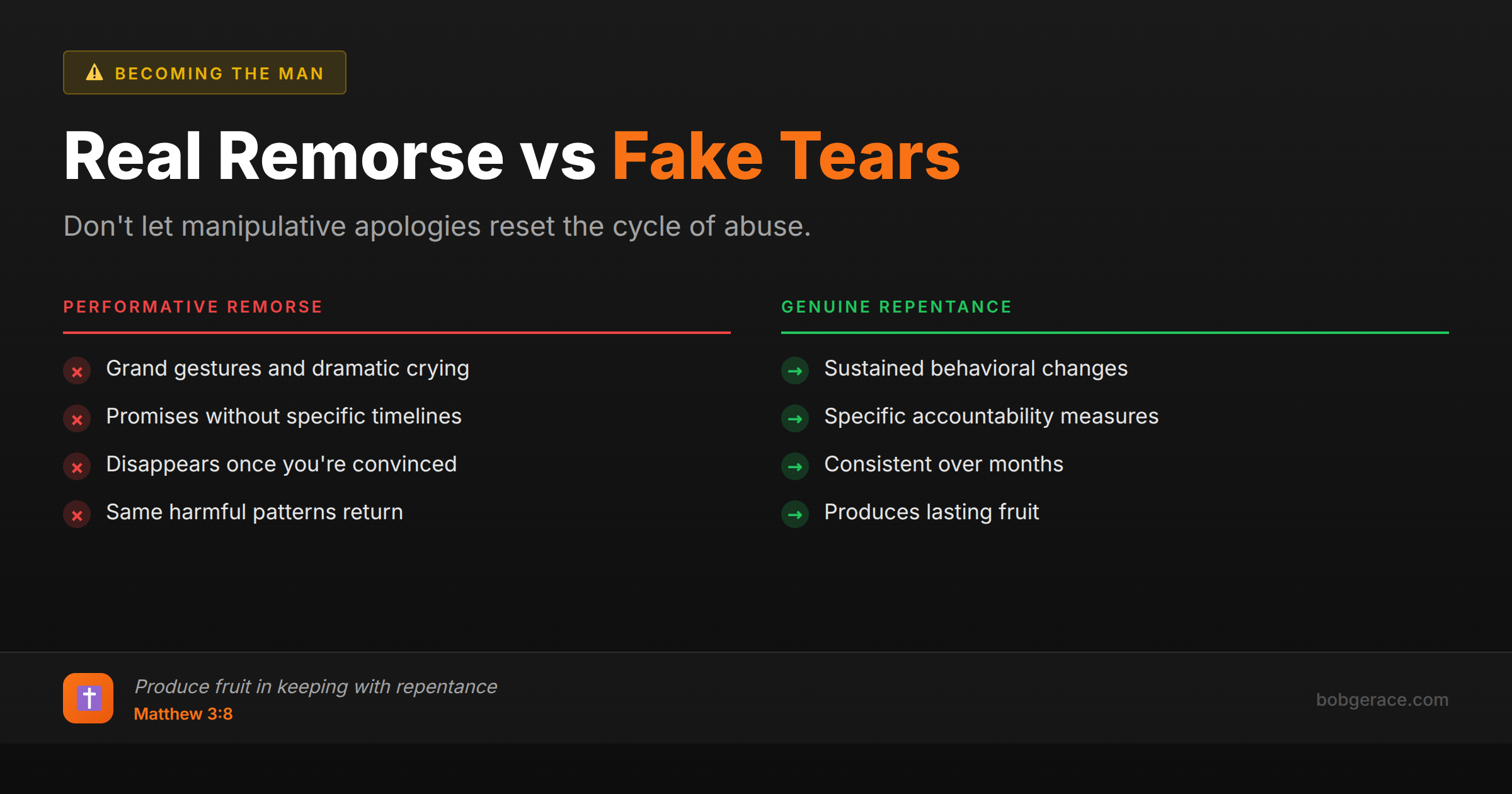
Performative remorse is fake sorrow designed to manipulate you into dropping your boundaries or forgetting their harmful behavior. It's an Oscar-worthy performance of regret without any real intention to change. Your spouse puts on a show of being sorry - maybe they cry, grovel, or make grand gestures - but it's all calculated to get you back under their control. The key difference between genuine remorse and performative remorse is the follow-through. Real remorse leads to sustained behavioral change and accountability. Performative remorse disappears the moment they think you're convinced, and the same harmful patterns return. If your gut tells you their apology feels like theater rather than truth, trust that instinct.
The Full Picture
Performative remorse is emotional manipulation disguised as an apology. It's when someone puts on an elaborate show of being sorry, not because they genuinely regret their actions, but because they want to avoid consequences and regain control over you.
Here's what performative remorse looks like: - Dramatic displays - Over-the-top crying, begging, or grand romantic gestures - Perfect timing - The remorse appears exactly when you're about to leave or set a boundary - Vague language - "I'm sorry you feel that way" instead of owning specific harmful actions - Quick fixes - They want immediate forgiveness without doing the work of change - Repeated cycles - The same "heartfelt" apology happens every few months
The manipulation works because: It exploits your compassion and desire for reconciliation. You want to believe they're genuinely sorry because that would mean your relationship can heal. But performative remorse is designed to get you to lower your guard without them having to actually change.
The difference is in the follow-through. Genuine remorse leads to: - Specific acknowledgment of harmful behavior - Taking responsibility without excuses - Asking what they can do to make amends - Sustained behavior change over time - Accepting consequences gracefully
Performative remorse evaporates once they think you're convinced. The tears dry up, the promises are forgotten, and you're back to the same destructive patterns. Trust your instincts - if their remorse feels like a performance, it probably is.
What's Really Happening
From a clinical perspective, performative remorse is a sophisticated manipulation tactic often seen in individuals with narcissistic or antisocial traits. It represents a calculated response designed to avoid accountability while maintaining control over their partner's emotional state.
The neurological reality is that genuine remorse activates the anterior cingulate cortex and prefrontal cortex - brain regions associated with empathy and moral reasoning. Performative remorse, however, primarily engages areas associated with strategic thinking and self-preservation. The person isn't experiencing genuine empathy for your pain; they're calculating how to minimize consequences for themselves.
This manipulation is particularly effective because it targets your attachment system. When someone appears genuinely remorseful, your brain releases oxytocin and dopamine, creating feelings of bonding and relief. Your nervous system begins to regulate, thinking the threat is over. But when the remorse is fake, you're essentially being neurochemically hijacked.
The trauma bonding aspect is crucial to understand. Each cycle of harm followed by performative remorse strengthens psychological dependence. Your brain begins to crave the relief that comes with their apologies, even when logic tells you they're not genuine. This creates an addiction-like cycle that becomes increasingly difficult to break.
Recognition is the first step toward freedom. When you can identify performative remorse for what it is - a manipulation tactic rather than genuine change - you can begin to protect yourself from its emotional impact and make clearer decisions about your relationship's future.
What Scripture Says
Scripture makes a clear distinction between genuine repentance and empty words. God's Word warns us about those who use false remorse to deceive and manipulate.
True repentance produces fruit: "Produce fruit in keeping with repentance" (Matthew 3:8). Genuine remorse isn't just words - it results in changed behavior. If your spouse's apologies never lead to lasting change, they're not experiencing biblical repentance.
Actions reveal the heart: "By their fruit you will recognize them" (Matthew 7:16). Jesus taught us to judge people by their consistent actions, not their words. Performative remorse focuses on impressive words while the fruit of their life remains rotten.
God sees through false remorse: "These people honor me with their lips, but their hearts are far from me" (Matthew 15:8). God isn't fooled by performative worship, and you don't have to be fooled by performative apologies. If their heart hasn't changed, their remorse is meaningless.
Wisdom protects us from deception: "The simple believe anything, but the prudent give thought to their steps" (Proverbs 14:15). Being discerning about someone's true intentions isn't unforgiving - it's wisdom. God calls us to be wise, not naive.
Real repentance includes restitution: "If the wicked restores what he had robbed, gives back what he had stolen..." (Ezekiel 33:15). Biblical repentance includes making things right, not just saying sorry. True remorse asks, "How can I repair the damage I've caused?"
We're called to be wise as serpents: "Be as shrewd as snakes and as innocent as doves" (Matthew 10:16). Recognizing manipulation isn't cynical - it's following Christ's direct instruction to be discerning while maintaining a pure heart.
What To Do Right Now
-
1
Document patterns - Write down specific instances of their apologies and what happened afterward to see the cycle clearly
-
2
Test their remorse - Ask for specific behavioral changes and timelines, then observe if they follow through consistently
-
3
Trust your gut - If their apology feels like theater, don't dismiss that instinct in favor of false hope
-
4
Require fruit - Look for sustained behavior change over months, not just immediate promises or temporary improvements
-
5
Set clear boundaries - Don't negotiate your standards down just because they're crying or making grand gestures
-
6
Seek outside perspective - Share the situation with a trusted counselor who can help you see clearly through the manipulation
Related Questions
- What distinguishes remorse from guilt?
- What are markers of genuine remorse vs. guilt?
- What does 'taking responsibility' actually look like?
- What does genuine repair look like for old wounds?
- What is 'white-knuckling' vs. real transformation?
- How do I tell performance from genuine change?
- Is he manipulating me or actually different?
- How do I know if he's really changing?
- What are signs he's just scared not changed?
- What are red flags that this is manipulation?
Also find Bob on
Subscribe for weekly videos on Christian marriage.
You Don't Have to Decode This Alone
A coach who knows your marriage can tell you what's real and what's theater. Bring this situation to someone who's seen it before.
Talk to Bob →