What does 'long-suffering' mean?
6 min read
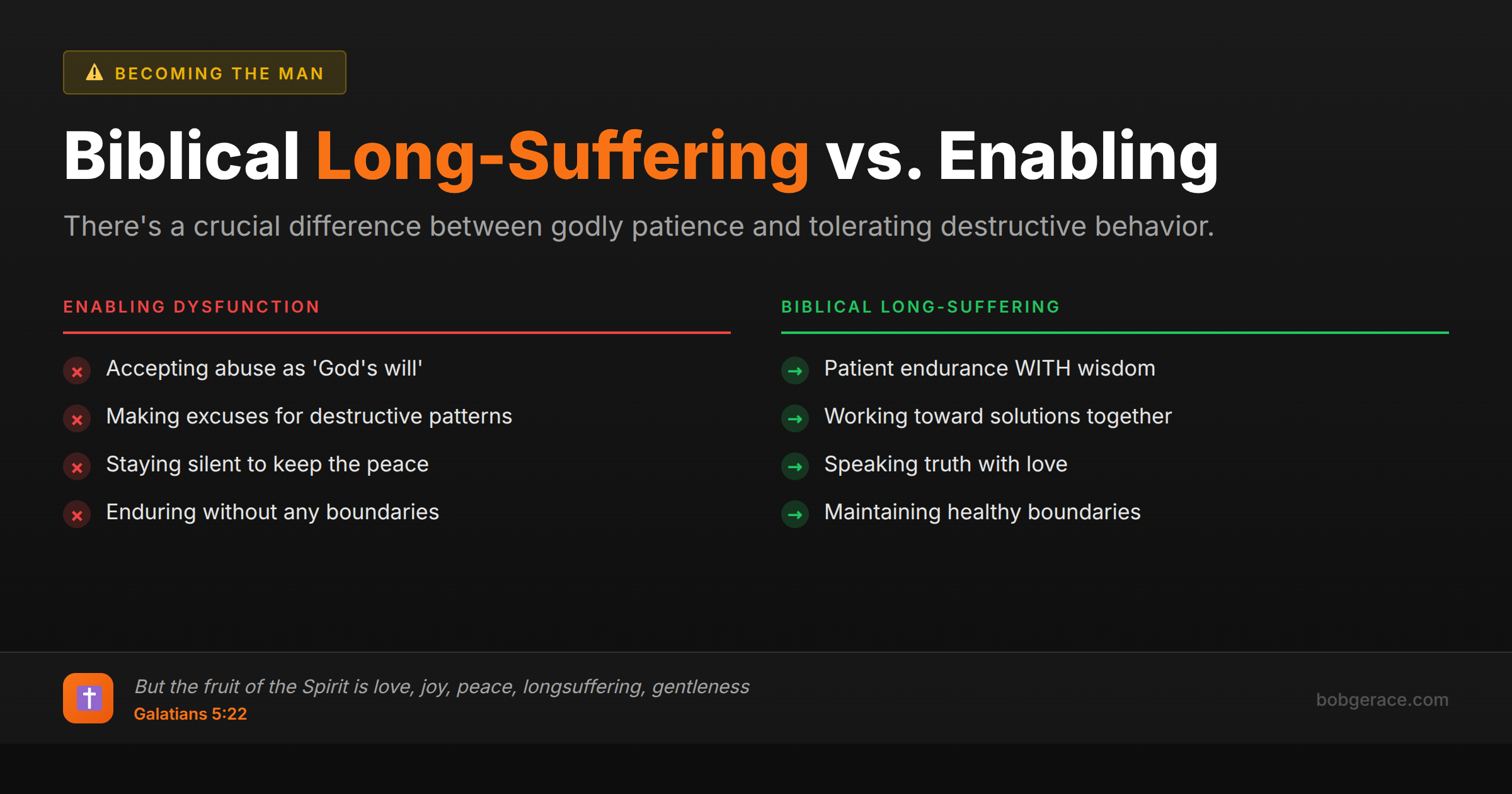
Long-suffering, from the Greek word 'makrothumia,' means patient endurance under difficult circumstances. It's the ability to remain steadfast and not give up quickly when facing trials, opposition, or slow progress. In marriage, long-suffering doesn't mean tolerating abuse or enabling destructive behavior - it means having the patience to work through challenges while maintaining healthy boundaries. True biblical long-suffering involves enduring hardship with hope and purpose, not passive acceptance of harm. It's about staying committed to doing what's right even when results take time, while still protecting yourself and your family from genuine danger or manipulation.
The Full Picture
Long-suffering has been tragically misunderstood in many Christian circles, especially when it comes to marriage advice for women. Too often, it's been weaponized to keep women in harmful situations under the guise of "biblical submission" or "godly patience." Let me be crystal clear: long-suffering is not a license for your husband to treat you poorly.
The biblical concept of long-suffering (makrothumia in Greek) literally means "long-tempered" - the opposite of being quick to anger or quick to give up. It's about having the emotional and spiritual endurance to persevere through legitimate challenges while working toward resolution. Think of it like a marathon runner who doesn't quit at mile 20 because they know the finish line is achievable.
However, long-suffering assumes you're in a race worth finishing. If someone is actively sabotaging your marathon by throwing obstacles in your path, poisoning your water, or physically attacking you, continuing to run isn't long-suffering - it's foolishness.
In marriage, long-suffering might look like: - Patiently working through communication issues over months or years - Enduring financial stress while building solutions together - Maintaining hope during seasons of emotional distance while seeking counseling - Persevering through legitimate disagreements about parenting or major decisions
Long-suffering does NOT mean: - Accepting verbal, emotional, or physical abuse - Enabling addiction without consequences - Tolerating infidelity without accountability - Remaining silent about destructive patterns that harm you or your children
The key distinction is this: long-suffering endures hardship while actively working toward healing and resolution. It's not passive victimhood - it's active, hopeful perseverance with appropriate boundaries.
What's Really Happening
From a clinical perspective, the confusion around long-suffering often stems from trauma bonding and learned helplessness. Many women have been conditioned to believe that enduring mistreatment is somehow virtuous, when in reality, this pattern often enables destructive behavior and prevents genuine healing.
Healthy long-suffering involves what we call 'distress tolerance' - the ability to withstand emotional discomfort while working toward positive change. This is very different from dissociation or emotional numbing, which are common responses to chronic mistreatment.
When someone practices healthy long-suffering in marriage, they maintain their sense of self, continue to advocate for their needs, and work collaboratively toward solutions. They don't lose their voice or agency. In contrast, unhealthy 'endurance' often involves suppressing legitimate concerns, accepting blame for others' actions, and gradually losing one's sense of reality and self-worth.
Neurologically, chronic stress from ongoing mistreatment actually changes brain function, making it harder to think clearly, set boundaries, and recognize red flags. This is why women in destructive marriages often struggle to differentiate between godly patience and enabling dysfunction.
True long-suffering maintains emotional and relational health while navigating challenges. If your 'patience' is causing you to lose yourself, doubt your perceptions, or compromise your fundamental safety and dignity, that's not biblical long-suffering - that's trauma response masquerading as virtue.
What Scripture Says
Scripture consistently presents long-suffering as a virtue that operates within the context of wisdom, justice, and love - never as blind endurance of evil.
Galatians 5:22-23 lists long-suffering as a fruit of the Spirit: "But the fruit of the Spirit is love, joy, peace, longsuffering, gentleness, goodness, faith, meekness, temperance." Notice it's paired with other virtues that protect and build up relationships.
1 Corinthians 13:4 tells us "Love suffers long and is kind." But this same chapter defines love as not being rude, not seeking its own way inappropriately, and not rejoicing in iniquity. Love that "suffers long" still maintains boundaries against sin.
2 Peter 3:9 shows us God's long-suffering: "The Lord is not slack concerning his promise, as some men count slackness; but is longsuffering to us-ward, not willing that any should perish, but that all should come to repentance." God's patience has a purpose - leading people to repentance and change.
Ephesians 4:2 instructs us to walk "with all lowliness and meekness, with longsuffering, forbearing one another in love." The word "forbearing" (anecho) means to hold up under weight - but notice it's "in love," not in fear or manipulation.
Proverbs 27:5-6 provides crucial balance: "Open rebuke is better than secret love. Faithful are the wounds of a friend." Sometimes long-suffering love requires confronting sin, not ignoring it.
Matthew 18:15-17 gives us the biblical process for addressing ongoing sin - it starts with private confrontation and escalates to involving the church community if repentance doesn't occur. This is long-suffering with accountability, not endless tolerance.
What To Do Right Now
-
1
Assess your situation honestly - Are you enduring legitimate challenges while working toward solutions, or tolerating destructive behavior that's getting worse?
-
2
Define your boundaries clearly - Write down what behaviors you will and won't accept, regardless of how your husband responds.
-
3
Seek wise counsel - Talk to a pastor, counselor, or trusted friend who can help you distinguish between godly patience and enabling dysfunction.
-
4
Document patterns - Keep a record of destructive behaviors and their frequency to help you see the situation clearly and make informed decisions.
-
5
Create a safety plan - If there's any risk of escalation, have a plan for protecting yourself and your children, including emergency contacts and safe places to stay.
-
6
Focus on what you can control - Practice long-suffering by consistently doing what's right while maintaining healthy boundaries, regardless of how others respond.
Related Questions
Get Clarity on Your Specific Situation
Every marriage is different, and applying biblical principles requires wisdom and discernment. Let's work together to help you understand what godly long-suffering looks like in your unique circumstances.
Get Personalized Help →