What is 'emotional inheritance'?
6 min read
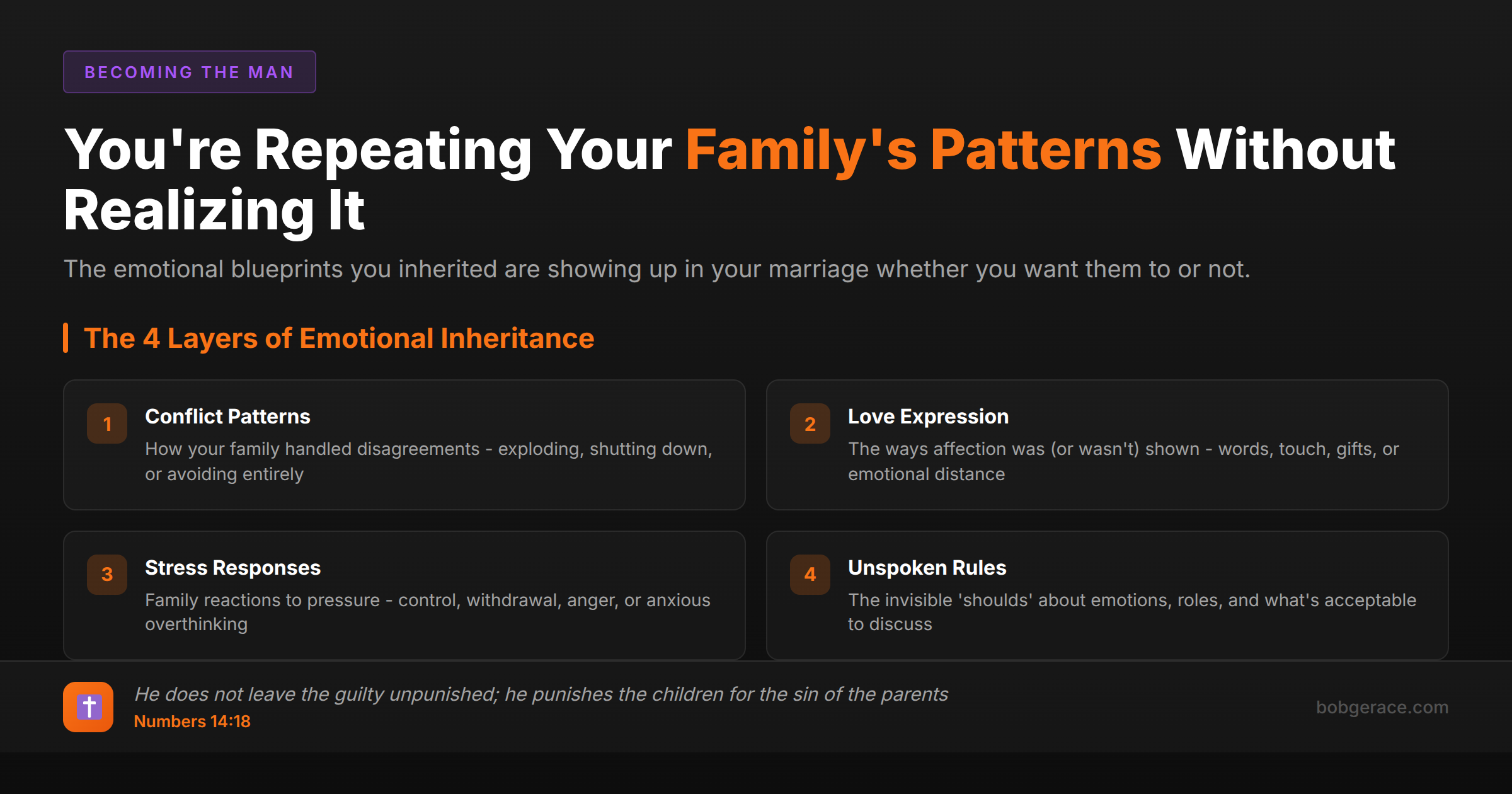
Emotional inheritance refers to the patterns of behavior, emotional responses, and relational dynamics that get passed down through generations, often without our conscious awareness. Just like we inherit physical traits from our parents, we also inherit emotional 'blueprints' - ways of handling conflict, expressing love, managing stress, and relating to others. This inheritance isn't just about what was directly taught to us. It includes the unspoken rules, the family's emotional climate, trauma responses, and even the things our parents struggled with but never addressed. These patterns show up in your marriage whether you want them to or not, often in moments of stress or conflict when you find yourself reacting in ways that surprise even you.
The Full Picture
Think of emotional inheritance like an invisible backpack you've been carrying your whole life. It's filled with your family's ways of doing relationships - some helpful, some harmful, most of them automatic.
What Gets Passed Down: - Communication styles (or the lack thereof) - Conflict resolution patterns - Ways of showing and receiving love - Responses to stress and crisis - Attitudes toward money, sex, parenting - Trust and vulnerability patterns - Emotional regulation skills - Trauma responses and coping mechanisms
How It Shows Up in Marriage: You might find yourself shutting down during arguments just like your dad did, or becoming anxiously controlling like your mom when things feel uncertain. Maybe you struggle with intimacy because emotional expression wasn't safe in your family, or you explode over small things because no one taught you healthy anger management.
The tricky part? You don't choose what you inherit, but you can choose what you pass on. Many couples get stuck thinking their automatic responses are just 'who they are,' but these patterns were learned - which means they can be unlearned.
The Good News: Emotional inheritance isn't all negative. You may have inherited resilience, strong work ethic, loyalty, or deep capacity for love. The goal isn't to reject everything from your family, but to become conscious of what you're carrying so you can keep what serves your marriage and change what doesn't.
What's Really Happening
From a clinical perspective, emotional inheritance operates through what we call 'implicit learning' - patterns absorbed at a neurological level before we had the capacity for conscious choice. Your nervous system learned to respond to relationship dynamics based on your earliest experiences, creating neural pathways that fire automatically under stress.
The Neuroscience Behind It: When you're triggered in your marriage, your brain often defaults to these inherited patterns because they're literally carved into your neural architecture. This is why you might hear yourself saying something and think, 'I sound just like my mother,' or find yourself withdrawing in ways that mirror your father's emotional unavailability.
Attachment and Family Systems: Your attachment style - how you connect, trust, and regulate emotions in close relationships - was largely shaped by your family's emotional inheritance. Anxious attachment often comes from families with inconsistent emotional availability. Avoidant attachment typically stems from families where emotional expression was discouraged or unsafe.
Breaking the Cycle: The encouraging news is that our brains remain plastic throughout life. Through conscious awareness, new experiences, and intentional practice, you can literally rewire these inherited patterns. This process requires understanding your triggers, developing new responses, and often working through unresolved family-of-origin issues that continue to impact your marriage.
What Scripture Says
Scripture clearly acknowledges that patterns get passed down through generations, but it also promises we're not destined to repeat our family's mistakes.
God's Heart for Breaking Negative Cycles: *"The Lord is slow to anger, abounding in love and forgiving sin and rebellion. Yet he does not leave the guilty unpunished; he punishes the children for the sin of the parents to the third and fourth generation."* - Numbers 14:18
This isn't about God punishing innocent children, but recognizing that sinful patterns create consequences that ripple through generations until someone chooses to break the cycle.
Your Identity Is in Christ, Not Your Family: *"Therefore, if anyone is in Christ, the new creation has come: The old has gone, the new is here!"* - 2 Corinthians 5:17
Your family's emotional inheritance doesn't define your destiny. In Christ, you have the power to become something new.
Breaking Generational Patterns: *"But I will not take my love from him, as I took it from Saul, whom I removed from before you. Your house and your kingdom will endure forever before me; your throne will be established forever."* - 2 Samuel 7:15-16
God promises to establish something different - a new legacy through those who follow Him.
Wisdom for Your Marriage: *"Above all else, guard your heart, for everything you do flows from it."* - Proverbs 4:23
*"In their hearts humans plan their course, but the Lord establishes their steps."* - Proverbs 16:9
You have both the responsibility to guard your heart from inherited patterns that harm your marriage and the promise that God will help establish new, healthier ways of relating.
What To Do Right Now
-
1
Map Your Emotional Inheritance: Write down patterns you notice from both sides of your family - how they handled conflict, showed affection, dealt with stress, communicated about difficult topics.
-
2
Identify Your Triggers: Notice when you react automatically in your marriage. What situations make you respond like your parents? When do you shut down, explode, or control?
-
3
Share With Your Spouse: Have an honest conversation about what each of you inherited. This isn't about blaming your families, but understanding each other's automatic responses.
-
4
Choose Your New Patterns: Decide together what kind of emotional legacy you want to create. What would healthy conflict look like? How do you want to show love? How will you handle stress differently?
-
5
Practice New Responses: When triggered, pause and ask, 'Is this my family's pattern or the response my marriage needs?' Choose the new pattern, even when it feels awkward at first.
-
6
Seek Help if Needed: If family trauma or deeply ingrained patterns are overwhelming your marriage, don't hesitate to get professional help. Breaking generational cycles often requires support.
Related Questions
Ready to Break Unhealthy Patterns?
Don't let your family's struggles define your marriage's future. Get personalized guidance for creating the healthy relationship you both deserve.
Get Help Today →