What is 'intergenerational transmission'?
6 min read
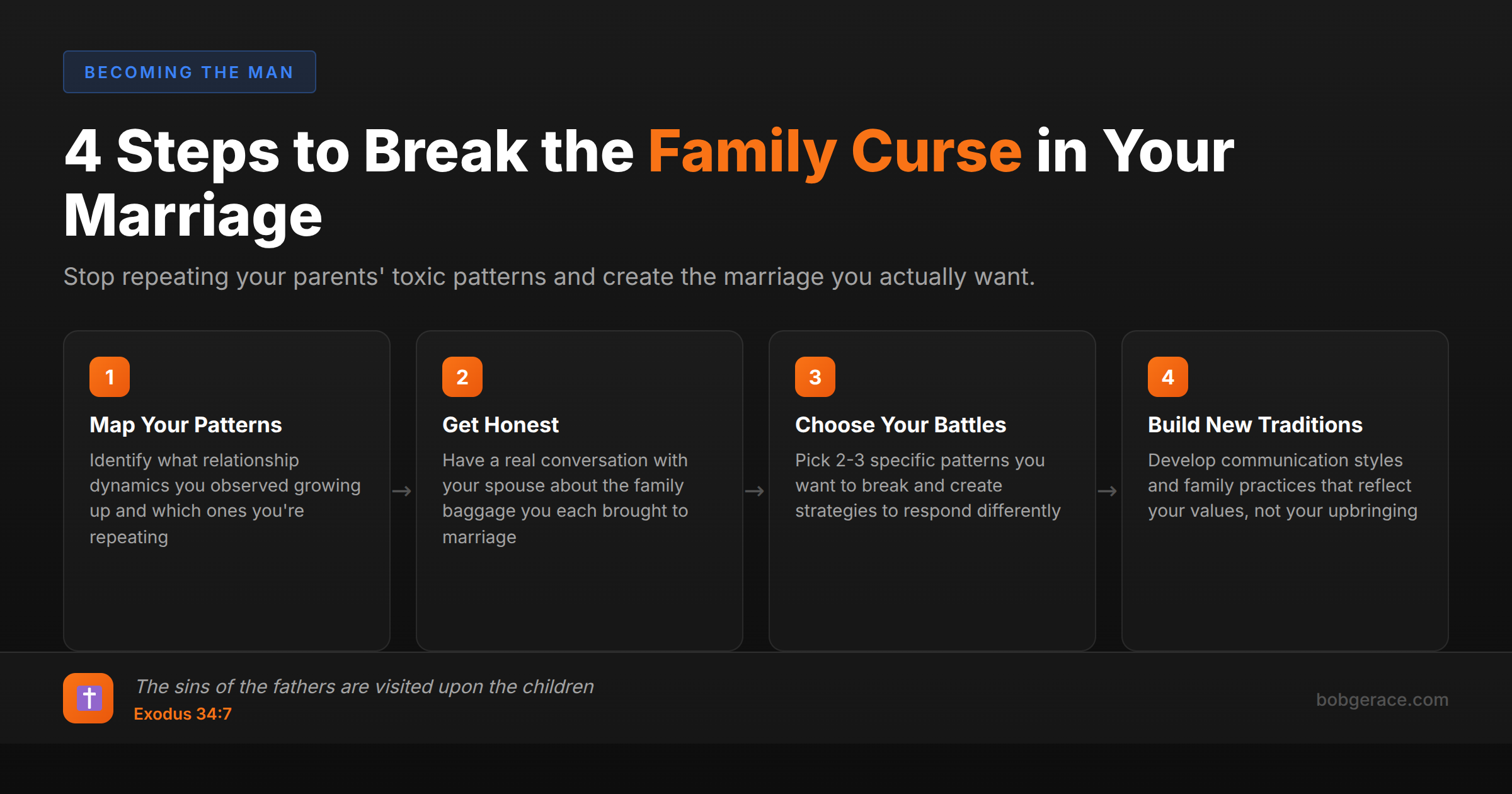
Intergenerational transmission is how patterns, behaviors, and relationship styles get passed down from one generation to the next within families. Think of it like a family inheritance - but instead of money or property, you're inheriting ways of handling conflict, expressing love, managing emotions, and navigating relationships. This happens both consciously and unconsciously. Your parents modeled certain behaviors, and you absorbed them as 'normal' - even if they weren't healthy. Now you might find yourself repeating the same patterns in your marriage, wondering why you keep having the same fights your parents had or why you shut down emotionally just like your dad did.
The Full Picture
Intergenerational transmission works like an invisible family curriculum that gets taught without anyone realizing they're teaching or learning it. Every family has its own 'rulebook' about how relationships work, how emotions are handled, and how problems get solved.
The Good News: Not everything passed down is negative. Maybe you inherited your grandmother's gift for hospitality or your father's strong work ethic. These positive patterns strengthen your marriage.
The Challenge: Negative patterns also get transmitted. If your parents never learned to resolve conflict healthily, you probably didn't either. If emotional intimacy was avoided in your family, you'll struggle with it in marriage.
How It Happens: - Modeling: You watched how your parents treated each other - Emotional Climate: You absorbed the 'feeling tone' of your home - Unspoken Rules: You learned what was acceptable and what wasn't - Trauma Responses: You developed coping mechanisms based on family stress
The tricky part is that these patterns feel 'normal' because they're all you've known. You might think every marriage involves yelling matches because that's what you grew up with. Or you might assume emotional distance is healthy because your parents never showed affection.
The Power of Awareness: Once you understand intergenerational transmission, you can start making conscious choices about what patterns to continue and which ones to break. You're not destined to repeat your family's mistakes - but you do need to actively choose a different path.
What's Really Happening
From a clinical perspective, intergenerational transmission occurs through multiple pathways that operate simultaneously. We're not just talking about learned behaviors - we're looking at how family systems create neural pathways, attachment styles, and even epigenetic changes that influence how we show up in relationships.
Attachment Theory: Your early relationships with caregivers literally shaped your brain's expectation of how relationships work. If your parents were inconsistent or emotionally unavailable, your nervous system learned to expect rejection or abandonment - and it's still scanning for those threats in your marriage.
Family Emotional Patterns: Families develop specific ways of managing anxiety, and these get passed down like DNA. Some families explode when stressed, others shut down, and others become chaotic. These aren't conscious choices - they're automatic responses that feel necessary for survival.
The Role of Trauma: Unresolved trauma doesn't just affect the person who experienced it - it gets transmitted to the next generation through parenting styles, emotional availability, and family narratives. A parent who experienced abandonment might become overprotective or emotionally distant, creating new challenges for their children.
Differentiation Challenges: Families with poor boundaries often produce adults who struggle to maintain their own identity within marriage. They either lose themselves completely or become rigidly defensive - both patterns create marital conflict.
The good news is that awareness creates choice. When couples understand these patterns, they can begin the work of conscious relationship building rather than unconscious pattern repetition.
What Scripture Says
Scripture acknowledges the reality of generational patterns while also proclaiming our freedom to break negative cycles through Christ's power.
The Reality of Generational Influence: *"The sins of the fathers are visited upon the children to the third and fourth generation"* (Exodus 34:7). This isn't about punishment - it's about the natural consequence of how families work. Broken patterns create broken relationships.
But God Offers a New Way: *"Therefore, if anyone is in Christ, the new creation has come: The old has gone, the new is here!"* (2 Corinthians 5:17). You're not stuck repeating your family's patterns. Through Christ, you can create something entirely new.
The Power of Conscious Choice: *"Choose for yourselves this day whom you will serve... But as for me and my household, we will serve the Lord"* (Joshua 24:15). Joshua made a conscious decision to break from generational patterns and establish a new legacy.
Marriage as Partnership: *"For this reason a man will leave his father and mother and be united to his wife, and they will become one flesh"* (Genesis 2:24). Biblical marriage requires 'leaving' - not just physically, but emotionally separating from family patterns that don't serve your new union.
Renewal of the Mind: *"Do not conform to the pattern of this world, but be transformed by the renewing of your mind"* (Romans 12:2). This applies to family patterns too - you can choose transformation over repetition.
Hope for Future Generations: *"But from everlasting to everlasting the Lord's love is with those who fear him, and his righteousness with their children's children"* (Psalm 103:17). The legacy you create can bless generations to come.
What To Do Right Now
-
1
Map your family patterns - identify what relationship dynamics you observed growing up and which ones you're repeating
-
2
Have an honest conversation with your spouse about the family patterns you each brought to marriage
-
3
Choose 2-3 specific patterns you want to break and create intentional strategies to respond differently
-
4
Develop new family traditions and communication styles that reflect your values, not just your upbringing
-
5
Consider professional counseling to help identify and change deeply rooted patterns you might not see clearly
-
6
Pray together about the legacy you want to create for your children and future generations
Related Questions
Ready to Break the Cycle?
Understanding generational patterns is just the beginning. Let me help you create the marriage legacy you actually want to pass down.
Get Help →