What unmet needs from childhood am I still seeking?
5 min read
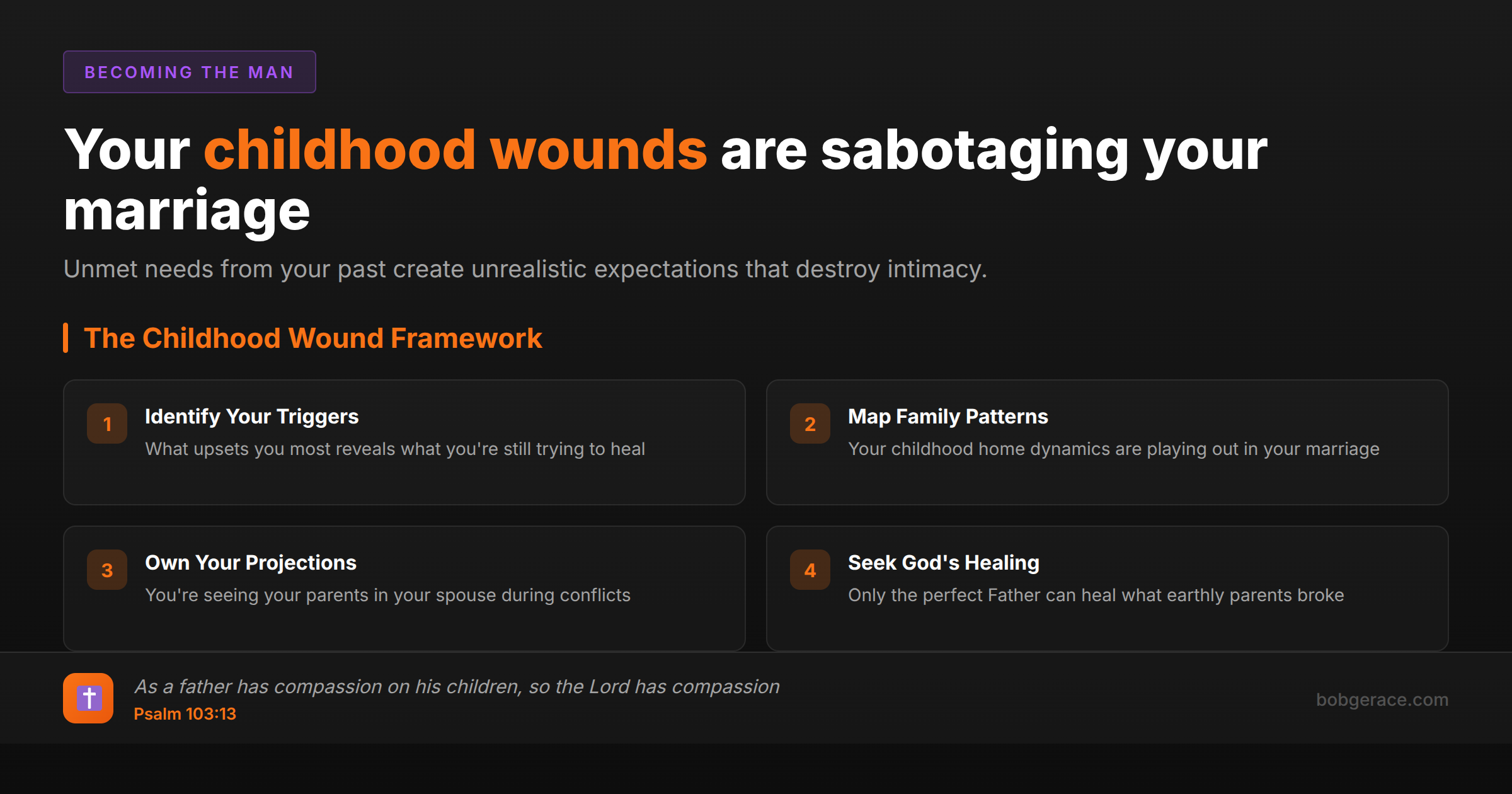
Your childhood unmet needs are likely showing up in your marriage through patterns of seeking approval, control, safety, or emotional connection. If you experienced inconsistent love, criticism, neglect, or emotional unavailability from caregivers, you're probably still trying to get those needs met through your spouse. This creates unrealistic expectations and relationship conflict. Common unmet childhood needs include unconditional love, emotional safety, validation, consistent attention, and feeling valued. When these weren't adequately provided, we develop coping strategies that follow us into adulthood. Recognizing these patterns is the first step toward healing and creating healthier relationship dynamics.
The Full Picture
Every person enters marriage carrying invisible baggage from their childhood - and that's completely normal. The problem isn't that you have unmet needs from the past; it's when those needs unconsciously drive your behavior in ways that damage your marriage.
Common Childhood Unmet Needs: - Unconditional love and acceptance - If love felt conditional on performance, you may seek constant approval - Emotional safety and security - If your environment felt chaotic, you might try to control everything - Consistent attention and validation - If you were overlooked, you may demand excessive reassurance - Feeling valued and significant - If you felt invisible, you might create drama to feel important - Trust and reliability - If promises were broken, you may struggle with faith in your spouse
These unmet needs create what psychologists call "attachment wounds." Your nervous system learned to survive in your childhood environment, developing strategies like people-pleasing, perfectionism, emotional withdrawal, or aggressive control. What helped you survive as a child often sabotages your marriage as an adult.
The key insight? Your spouse cannot heal your childhood wounds. When you unconsciously expect them to fill holes that your parents left, you set both of you up for failure. Your spouse becomes the target for disappointment that really belongs to your past. This creates a cycle where you're constantly seeking something they can't provide, leading to frustration, resentment, and emotional distance.
Recognizing this pattern is actually hopeful news - it means your marriage problems aren't necessarily about your spouse or your relationship. They're about unfinished business from your past that needs attention and healing.
What's Really Happening
From a clinical perspective, unmet childhood needs create what we call "implicit memories" - emotional and behavioral patterns stored in your nervous system without conscious awareness. These patterns get triggered in intimate relationships, especially marriage, because intimacy naturally activates our attachment system.
When your attachment needs weren't consistently met in childhood, your nervous system develops adaptive strategies. You might become hypervigilant (constantly scanning for rejection), avoidant (protecting yourself by withdrawing), or anxiously attached (desperately seeking reassurance). These aren't character flaws - they're survival adaptations.
In marriage, these patterns show up as: - Projection - seeing your critical parent in your spouse's feedback - Emotional flashbacks - having reactions that seem disproportionate to the situation - Repetition compulsion - unconsciously recreating familiar (but unhealthy) relationship dynamics - Trauma bonding - confusing intensity with intimacy
The good news is that awareness creates choice. When you can identify your triggers and understand their origin, you can begin responding from your adult self rather than your wounded child self. This process, called "earned security," allows you to develop healthier attachment patterns regardless of your childhood experience. Therapy, particularly approaches like EMDR or somatic work, can be incredibly helpful in processing these deep patterns and creating new neural pathways for secure attachment.
What Scripture Says
Scripture acknowledges that our past profoundly shapes us, but it also offers hope for transformation and healing. God understands the impact of broken relationships and provides a path forward.
God as the Ultimate Parent: "As a father has compassion on his children, so the Lord has compassion on those who fear him" (Psalm 103:13). When earthly parents fail us, God offers the perfect parenting we never received - unconditional love, consistent faithfulness, and secure attachment.
Healing from the Past: "He heals the brokenhearted and binds up their wounds" (Psalm 147:3). God doesn't minimize childhood pain but promises active healing. This isn't just spiritual bypassing - it's actual emotional and psychological restoration through His love and truth.
Breaking Generational Patterns: "The Lord is slow to anger, abounding in love and forgiving sin and rebellion. Yet he does not leave the guilty unpunished; he punishes the children for the sin of the parents to the third and fourth generation" (Numbers 14:18). This verse acknowledges that family patterns repeat, but through Christ, we can break these cycles.
New Identity: "Therefore, if anyone is in Christ, the new creation has come: The old has gone, the new is here!" (2 Corinthians 5:17). Your identity isn't defined by what you lacked in childhood but by who you are in Christ. This new identity provides the security and love your heart has always craved.
Wisdom for Marriage: "Above all else, guard your heart, for everything you do flows from it" (Proverbs 4:23). Protecting your heart includes understanding how past wounds affect present relationships and taking responsibility for your own healing rather than expecting your spouse to fix you.
What To Do Right Now
-
1
Identify Your Triggers - Write down the top 3 situations in your marriage that consistently upset you. Ask: "What childhood need might this be touching?"
-
2
Map Your Family Patterns - List the emotional dynamics from your childhood home. How do these show up in your marriage? What did you vow never to repeat that you're actually repeating?
-
3
Own Your Projections - When you're upset with your spouse, pause and ask: "Is this about them, or am I seeing someone from my past in this situation?"
-
4
Communicate Your Discoveries - Share with your spouse what you're learning about yourself. Say: "I realize I sometimes react to you like you're [parent/caregiver], and that's not fair to you."
-
5
Develop Self-Soothing Skills - Learn to calm your nervous system when triggered. Practice deep breathing, prayer, or grounding techniques before responding to your spouse.
-
6
Seek Professional Help - Consider counseling to process deeper childhood wounds. Some patterns require professional support to heal effectively and break generational cycles.
Related Questions
- What attachment style did I develop in childhood?
- What attachment injuries did I experience?
- What did I learn about love from my parents?
- What didn't I receive that I'm still looking for?
- What role did my childhood play in my anger patterns?
- What did I not receive from my father that I need?
- What attachment needs was the affair meeting?
- What does my pattern protect me from?
- Why does she seem to attach to everyone but me?
- What have I done that made connection feel unsafe?
Also find Bob on
Subscribe for weekly videos on Christian marriage.
Your patterns need a human who knows your story
Childhood wounds don't follow a script. A coach who hears where you came from and sees how it's showing up in your marriage can help you stop repeating what you can't fix alone.
Talk to Bob →