What role does cortisol play in my reactivity?
6 min read
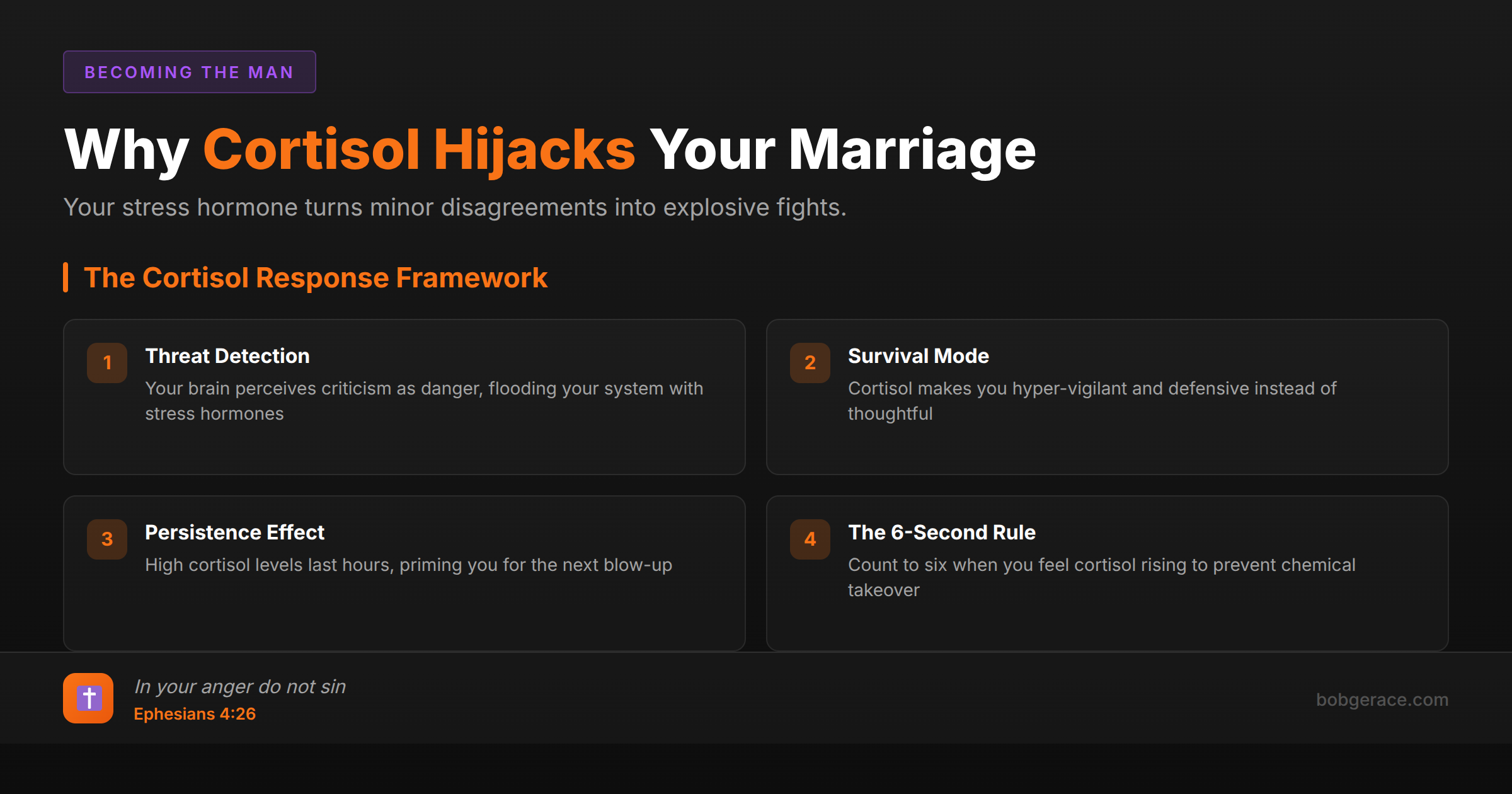
Cortisol is your body's primary stress hormone, and it plays a massive role in making you reactive during marital conflicts. When your brain perceives threat—even emotional threat from your spouse—cortisol floods your system within seconds, putting you in survival mode. This biochemical response makes you hyper-vigilant, defensive, and prone to explosive reactions rather than thoughtful responses. Here's what's crucial to understand: cortisol doesn't distinguish between a charging bear and your spouse's criticism. Your body reacts the same way. High cortisol levels can persist for hours after an argument, keeping you on edge and primed for the next blow-up. This creates a vicious cycle where yesterday's stress makes today's minor disagreement feel like a major threat.
The Full Picture
Think of cortisol as your body's alarm system that's stuck on high alert. When you're chronically stressed in your marriage—walking on eggshells, constantly defending yourself, or living in conflict—your cortisol levels stay elevated. This isn't just uncomfortable; it's rewiring your brain to see your spouse as a threat.
The Cortisol-Reactivity Cycle: First, your brain detects perceived danger (criticism, rejection, disrespect). Within 200 milliseconds, cortisol begins flooding your system. Your heart rate spikes, muscles tense, and rational thinking goes offline. You're now operating from your reptilian brain—the part designed for survival, not love.
This is why you can go from zero to explosive anger in seconds. It's not a character flaw; it's biochemistry. But here's the problem: cortisol has a long half-life. Even after the immediate threat passes, it takes 20-60 minutes for levels to return to baseline. During this window, you're hypersensitive to any perceived slight.
The Marriage Impact: Chronic cortisol elevation creates what I call "reactive living." You're not responding to what's actually happening; you're responding to your stress-flooded interpretation of what's happening. Your spouse asks, "How was your day?" and your cortisol-soaked brain hears, "What did you screw up today?" This distortion destroys intimacy and trust.
The good news? Understanding cortisol's role gives you power. When you recognize you're cortisol-flooded, you can choose different responses. You can't control the initial flood, but you can absolutely control what happens next.
What's Really Happening
From a neurobiological perspective, cortisol reactivity in marriage creates what we call "threat-based relating." When cortisol is chronically elevated, the brain's threat detection system—the amygdala—becomes hyperactive while the prefrontal cortex, responsible for rational thinking and empathy, goes offline.
Research shows that individuals with high baseline cortisol levels interpret neutral facial expressions as threatening and recall more negative details from interactions with their spouse. This isn't conscious; it's your stress-altered brain literally changing how you perceive reality.
The Physiological Cascade: Cortisol triggers the release of glucose for immediate energy while suppressing non-essential functions like digestion and immune response. In your marriage, this means you're physiologically prepared to fight or flee, not to listen, empathize, or problem-solve. The rational, loving part of your brain is essentially offline.
What makes this particularly challenging in marriage is that cortisol also impairs memory consolidation. You're more likely to remember the emotional intensity of conflicts rather than specific details, leading to those frustrating "that's not what happened" arguments.
Breaking the Pattern: The key is recognizing cortisol's signature: racing heart, shallow breathing, muscle tension, and tunnel vision. Once you identify these signs, you can implement what I call "cortisol circuit breakers"—specific techniques that help restore your nervous system to baseline and bring your rational brain back online.
What Scripture Says
God designed our bodies with stress responses for good reasons, but He also calls us to be "slow to anger" (James 1:19). The challenge isn't that we have stress responses—it's learning to steward them wisely.
"In your anger do not sin: Do not let the sun go down while you are still angry" (Ephesians 4:26). Paul acknowledges anger as natural but warns against sinful responses. When cortisol floods your system, you're at high risk of sinful reactions—harsh words, contempt, or withdrawal.
"A gentle answer turns away wrath, but a harsh word stirs up anger" (Proverbs 15:1). This wisdom aligns perfectly with cortisol science. Gentle responses help regulate both your spouse's and your own stress hormones, while harsh words trigger more cortisol release.
"Be still, and know that I am God" (Psalm 46:10). This isn't just spiritual advice; it's neurobiological wisdom. Stillness—both physical and mental—helps cortisol levels return to baseline and reconnects you with God's peace.
"Above all else, guard your heart, for everything you do flows from it" (Proverbs 4:23). Guarding your heart includes managing your stress responses. When cortisol is high, your heart is unguarded—vulnerable to fear, anger, and reactive decisions.
"Cast all your anxiety on him because he cares for you" (1 Peter 5:7). Chronic worry and anxiety keep cortisol elevated. Actively surrendering your marriage anxieties to God isn't passive; it's a powerful stress-management strategy that honors Him.
God wants your marriage to be a place of peace, not chronic stress. Learning to manage cortisol is part of being a good steward of the body and relationship He's given you.
What To Do Right Now
-
1
Recognize your cortisol signals - Learn your body's stress signatures: racing heart, shallow breathing, tense shoulders, or tunnel vision.
-
2
Implement the 6-second rule - When you feel cortisol rising, count slowly to six. This prevents the immediate chemical flood from taking over.
-
3
Practice tactical breathing - Inhale for 4 counts, hold for 4, exhale for 6. This activates your parasympathetic nervous system and lowers cortisol.
-
4
Create physical space - When cortisol-flooded, say "I need a few minutes" and step away. Don't engage until your system resets.
-
5
Address chronic stress sources - Identify ongoing marriage stressors that keep your baseline cortisol high and tackle them systematically.
-
6
Build daily stress buffers - Exercise, prayer, adequate sleep, and nutrition all help maintain healthy cortisol rhythms and reduce reactivity.
Related Questions
- What's happening in my brain when I rage?
- What is 'amygdala hijack' and how do I interrupt it?
- What is the 'rage circuit' and how do I rewire it?
- What does chronic anger do to my nervous system?
- What's the relationship between stress and anger threshold?
- What is 'window of tolerance' and how do I widen mine?
- What's happening to my nervous system right now?
- How do I regulate when my body is in fight-or-flight?
- What does 'window of tolerance' mean and why am I outside it?
Also find Bob on
Subscribe for weekly videos on Christian marriage.
You Can't Cortisol-Hack Your Marriage Alone
Knowing the biology doesn't stop the flooding when your wife says the thing that sets you off. A coach who knows your triggers and your marriage can build the plan that actually works in your kitchen.
Talk to Bob →