What role does environment play in triggering patterns?
6 min read
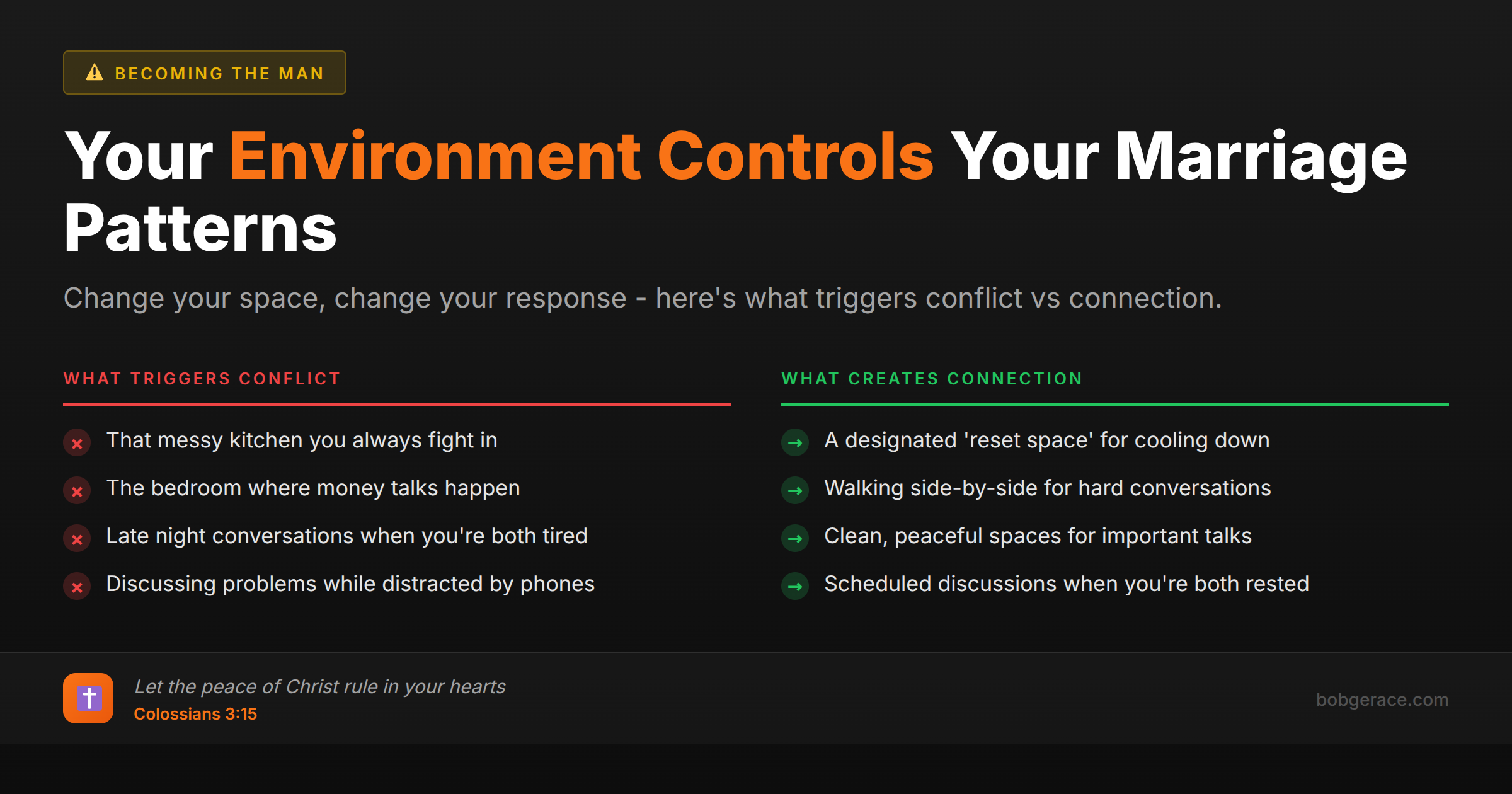
Your environment is a powerful trigger for patterns because your brain constantly scans for cues that predict what's coming next. Everything from the tone of voice your spouse uses to the physical space you're in can activate automatic responses you've developed over years of marriage. When you walk into a messy kitchen or hear that familiar sigh from your partner, your nervous system immediately starts preparing for conflict or withdrawal based on past experiences. The good news is that environmental triggers work both ways. Just as certain environments can set off destructive patterns, intentionally designed environments can promote connection and peace. Your brain is remarkably adaptable, and changing your physical and emotional environment is often the fastest way to interrupt destructive cycles and create space for new, healthier responses to emerge.
The Full Picture
Think of your brain as a sophisticated prediction machine that's constantly scanning your environment for cues about what's likely to happen next. After years of marriage, your nervous system has catalogued thousands of environmental triggers - the sound of your spouse's car in the driveway, the look on their face when they check their phone, even the time of day when certain conversations typically happen.
Physical Environment Triggers: Your physical space speaks loudly to your subconscious. A cluttered bedroom might trigger anxiety and avoidance. The kitchen island where you always have tense money conversations becomes a trigger itself. Even lighting can impact your nervous system - harsh fluorescent lights activate stress responses while warm lighting promotes connection.
Emotional Environment Triggers: The emotional atmosphere is equally powerful. Silence can trigger anxiety in someone whose childhood was filled with the "silent treatment." Raised voices might immediately activate fight-or-flight responses. The emotional residue from unresolved conflicts literally hangs in the air, priming your system for defensiveness.
Timing and Routine Triggers: Patterns often cluster around specific times and routines. Sunday evenings might trigger anxiety about the upcoming week. Bedtime routines can become battlegrounds. Even holidays and anniversaries can activate old wounds and defensive patterns.
Social Environment Triggers: The presence of others dramatically impacts your patterns. You might be completely different people when the kids are around versus when you're alone. Social media environments can trigger comparison and dissatisfaction. Extended family gatherings often activate old dynamics.
Here's what's crucial to understand: you have more control over your environment than you think. While you can't control everything, intentionally designing your environment is one of the most practical ways to interrupt destructive patterns and create conditions for healthier responses.
What's Really Happening
From a neuroscience perspective, environmental triggers activate what we call "contextual memory networks." Your brain has learned to associate specific environmental cues with certain emotional and behavioral responses. When you encounter these cues, your nervous system automatically prepares for what it predicts will happen next, often before you're consciously aware of it.
The amygdala, your brain's alarm system, is particularly sensitive to environmental context. It can detect subtle changes in facial expressions, vocal tones, and even body language within milliseconds, triggering stress responses that prepare you for perceived threats. This is why walking into a room where your spouse is already upset can immediately put you on edge, even before any words are spoken.
Neuroplasticity and Environmental Change: The remarkable thing about your brain is its capacity for change through neuroplasticity. When you consistently alter your environment, you're literally rewiring neural pathways. Creating new environmental contexts gives your brain the opportunity to form new associations and responses.
The Power of Environmental Interrupts: One of the most effective therapeutic interventions is environmental modification. Something as simple as having difficult conversations in a different room, changing your morning routine, or introducing calming elements like plants or specific music can interrupt automatic patterns and create space for conscious choice.
Trauma-Informed Environmental Design: For individuals with trauma histories, environmental triggers can be particularly intense. Understanding your specific triggers and designing environments that promote safety and regulation becomes essential for healing. This might involve controlling lighting, reducing noise, or creating clear physical boundaries that support nervous system regulation.
What Scripture Says
Scripture consistently emphasizes the importance of environment in shaping our hearts and responses. God understands that what surrounds us profoundly impacts who we become and how we respond to others.
Creating Environments of Peace: *"Let the peace of Christ rule in your hearts, since as members of one body you were called to peace. And be thankful."* (Colossians 3:15) Peace isn't just an internal state - it's something we actively cultivate in our environments and relationships.
The Power of Atmosphere: *"Above all else, guard your heart, for everything you do flows from it."* (Proverbs 4:23) Guarding your heart includes being intentional about the environments you create and allow into your life.
Environmental Influence: *"Do not be yoked together with unbelievers. For what do righteousness and wickedness have in common? Or what fellowship can light have with darkness?"* (2 Corinthians 6:14) While often applied to marriage, this principle speaks to the broader truth that our environment shapes us.
Creating Sacred Space: *"But when you pray, go into your room, close the door and pray to your Father, who is unseen."* (Matthew 6:6) Jesus recognized the importance of environmental context for spiritual and emotional health.
Hospitality and Environment: *"Offer hospitality to one another without grumbling."* (1 Peter 4:9) Creating welcoming, peaceful environments is a form of love and service.
Wisdom in Design: *"By wisdom a house is built, and through understanding it is established; through knowledge its rooms are filled with rare and beautiful treasures."* (Proverbs 24:3-4) God calls us to be intentional about creating environments that reflect His wisdom and promote flourishing.
As followers of Christ, we're called to be co-creators with God, actively designing environments that promote love, peace, and connection in our marriages.
What To Do Right Now
-
1
Identify Your Top 3 Environmental Triggers - Write down the specific places, times, or situations that consistently activate destructive patterns in your marriage
-
2
Create a 'Reset Space' - Designate one area in your home as a calm, neutral zone where you can go to regulate your nervous system before responding
-
3
Change Your Conversation Locations - If certain rooms trigger conflict, intentionally move important discussions to neutral or positive spaces like a walking path or peaceful room
-
4
Establish Environmental Cues for Connection - Introduce specific lighting, music, or scents that signal to both your nervous systems that this is a safe space for intimacy and openness
-
5
Design Transition Rituals - Create specific routines that help you shift from work/stress mode to connection mode, like changing clothes, taking three deep breaths, or playing calming music
-
6
Practice Environmental Awareness - For the next week, pay attention to how different environments affect your mood and responses, then make one small change to create a more peaceful atmosphere
Related Questions
Ready to Design Environments That Support Your Marriage?
Let's work together to identify your specific environmental triggers and create intentional changes that promote connection and peace in your relationship.
Get Help Now →