What should I expect to see at 30/90/180 days?
5 min read
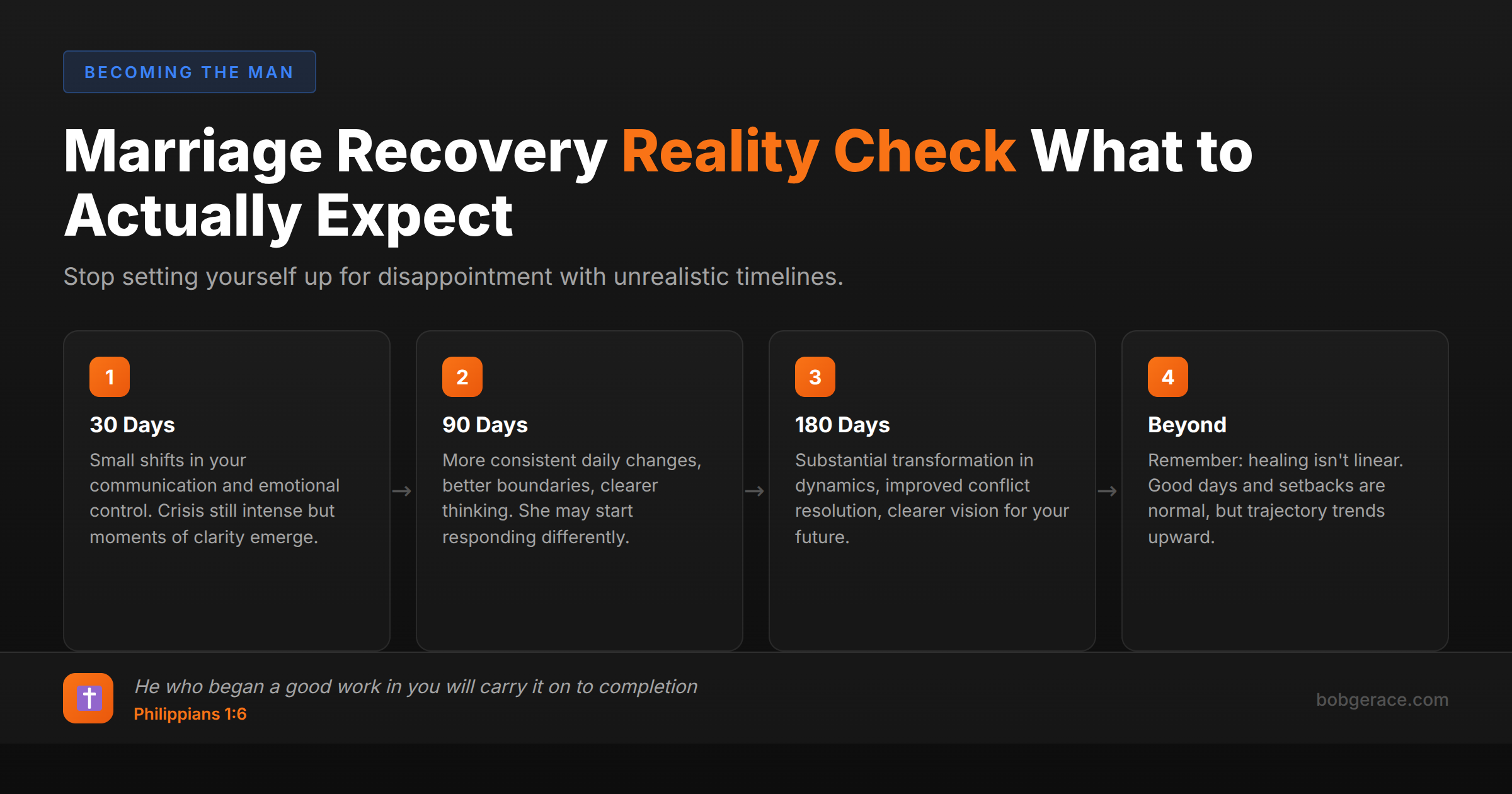
Recovery in marriage follows predictable patterns, but every situation is unique. At 30 days, expect small shifts in communication and your own emotional regulation. The crisis may still feel intense, but you'll notice moments of clarity. At 90 days, you should see more consistent changes in daily interactions, better boundaries, and clearer thinking about your situation. Your husband may begin responding differently to your new approaches. At 180 days, expect more substantial transformation in relationship dynamics, improved conflict resolution, and a clearer vision for your marriage's future. Remember, healing isn't linear - you'll have good days and setbacks, but the overall trajectory should trend upward with consistent effort.
The Full Picture
Marriage recovery operates on emotional, relational, and spiritual timelines that rarely sync up perfectly. Understanding what's realistic at each milestone prevents discouragement and helps you celebrate real progress.
The 30-day mark is about stabilization. You're learning new tools, implementing boundaries, and beginning to respond differently to old patterns. Expect internal shifts more than external changes. Your husband might initially resist or test new boundaries. This is normal - systems push back against change. Focus on consistency over perfection.
At 90 days, patterns begin shifting noticeably. You'll have developed new habits around communication, self-care, and emotional regulation. Your husband will likely start responding to the "new you" - sometimes positively, sometimes with confusion or resistance. This is when many women see breakthrough moments mixed with challenging setbacks.
The 180-day milestone typically brings more substantial transformation. Six months of consistent change creates new relationship dynamics. You'll have weathered multiple cycles of conflict and resolution using new tools. Your husband will have adjusted to your changes and begun his own growth process (if he's going to). This is when you can evaluate whether your marriage is truly healing or if deeper interventions are needed.
Remember: progress isn't always visible externally. Your internal growth - emotional stability, clarity, confidence - often precedes changes in your husband's behavior by weeks or months.
What's Really Happening
Neurologically, we're rewiring decades of relational patterns, and the brain requires time to establish new neural pathways. In the first 30 days, you're primarily focused on interrupting automatic responses and implementing new behaviors. This creates cognitive load and emotional fatigue - completely normal.
The 90-day window is critical because this is when new behaviors begin feeling more natural. Research shows it takes 66-254 days to form new habits, depending on complexity. Relationship habits are among the most complex because they involve two people's nervous systems interacting.
Attachment theory explains why partners initially resist change. Even positive changes can trigger anxiety in your spouse because they disrupt familiar patterns, even dysfunctional ones. His initial resistance doesn't predict his eventual response.
By 180 days, you're observing whether your husband can adapt to healthier relationship dynamics. Some spouses embrace the changes and begin their own growth. Others become more entrenched in old patterns. This information is diagnostically valuable - it reveals his capacity for change and growth.
Systemically, you're changing the entire relationship dance. When one partner consistently changes their steps, the other must eventually adapt or the dance breaks down entirely. This is why your sustained change creates pressure for him to respond differently.
What Scripture Says
God's timeline for transformation often differs from ours, but His faithfulness remains constant throughout the process. Scripture provides realistic expectations for growth and change.
"Being confident of this, that he who began a good work in you will carry it on to completion until the day of Christ Jesus" (Philippians 1:6). God's work in your heart continues beyond any human timeline. Trust His process even when progress feels slow.
"Let us not become weary in doing good, for at the proper time we will reap a harvest if we do not give up" (Galatians 6:9). This verse acknowledges the weariness that comes with sustained effort while promising eventual fruit. Your consistency matters even when results aren't immediately visible.
"He has made everything beautiful in its time" (Ecclesiastes 3:11). God's timing for healing and restoration operates on His schedule, not ours. Each season serves a purpose in your growth and your marriage's potential recovery.
"The simple believe anything, but the prudent give thought to their steps" (Proverbs 14:15). Wisdom requires observing actual changes over time rather than accepting promises without evidence. Use these milestones to assess real progress versus mere words.
"Above all else, guard your heart, for everything you do flows from it" (Proverbs 4:23). Your heart transformation is the foundation for everything else. Focus first on your own growth, trusting God to work in your husband's heart according to His will.
What To Do Right Now
-
1
Create a simple tracking system to note daily wins, challenges, and your emotional state - patterns emerge over time
-
2
Set realistic weekly goals rather than expecting dramatic daily changes - small consistent steps create lasting transformation
-
3
Document specific examples of new responses to old triggers - this evidence encourages you during difficult moments
-
4
Establish support accountability at each milestone - have someone objective assess your progress with you
-
5
Prepare for resistance and setbacks by developing coping strategies before you need them
-
6
Schedule regular evaluation sessions to honestly assess both your growth and your husband's responsiveness
Related Questions
Get Clear on Your Next Steps
Stop guessing about your progress and get expert guidance tailored to your specific situation and timeline.
Work With Me →