What therapies actually work for anger?
6 min read
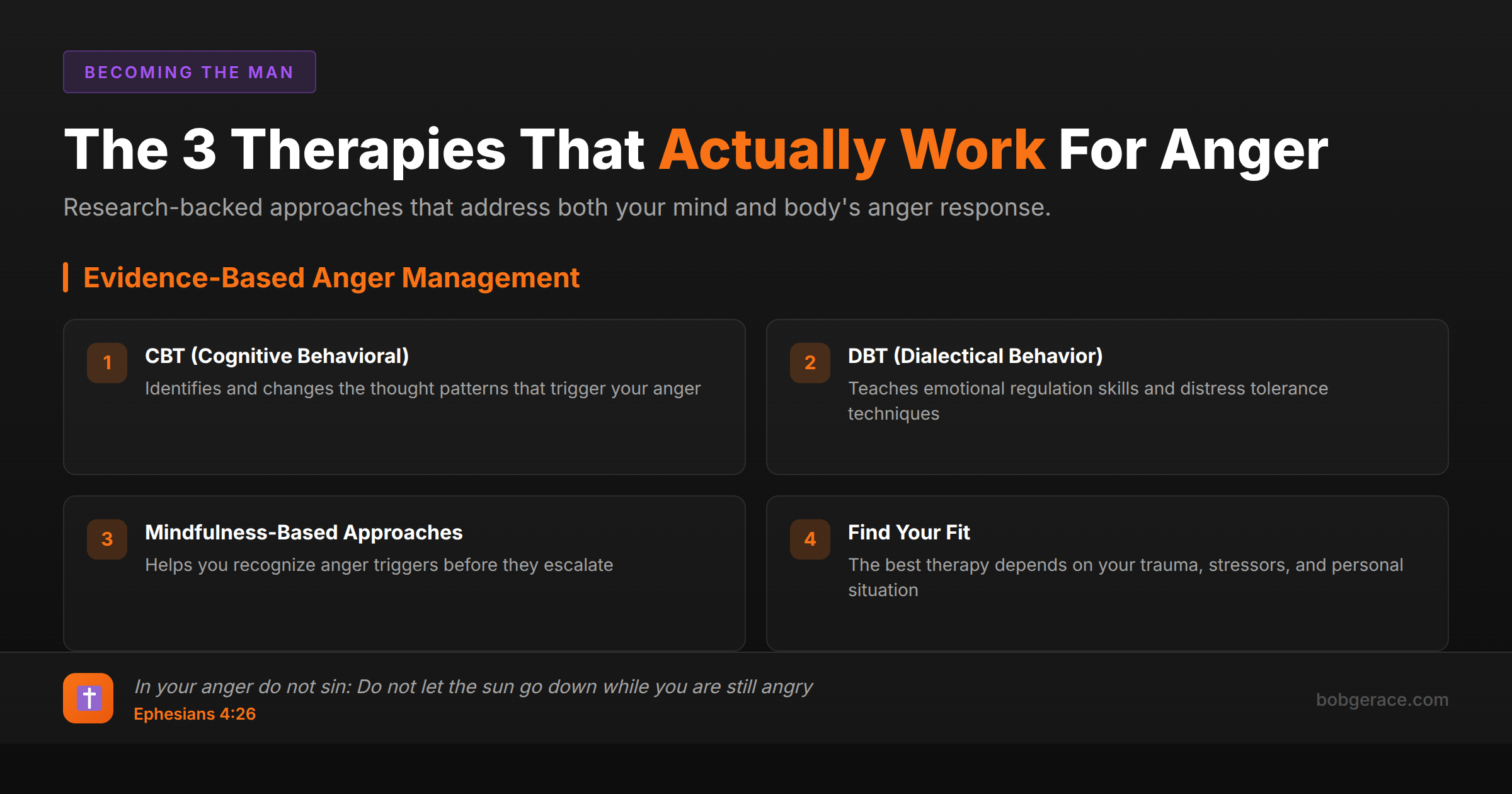
The most effective therapies for anger are Cognitive Behavioral Therapy (CBT), Dialectical Behavior Therapy (DBT), and mindfulness-based approaches. CBT helps you identify and change the thought patterns that trigger anger, while DBT teaches emotional regulation skills and distress tolerance. Mindfulness-based therapies help you become aware of anger triggers before they escalate. Research consistently shows these approaches work because they address both the cognitive and physiological aspects of anger. However, the 'best' therapy depends on your specific situation - childhood trauma, current stressors, and underlying mental health conditions all influence what will work for you. The key is finding a therapist who can integrate evidence-based techniques with your personal needs and values.
The Full Picture
Anger isn't just an emotion - it's a complex physiological and psychological response that affects your entire system. When you're dealing with chronic anger, your brain literally changes how it processes threats and emotions. This is why willpower alone rarely works for lasting change.
Cognitive Behavioral Therapy (CBT) is the gold standard for anger treatment. It works by helping you identify the thoughts that fuel your anger - often catastrophic thinking, blame, or unrealistic expectations. CBT teaches you to catch these thoughts early and replace them with more balanced perspectives. Success rates are high because it gives you practical tools you can use immediately.
Dialectical Behavior Therapy (DBT) is particularly effective if your anger comes with intense emotions or relationship conflicts. Originally developed for borderline personality disorder, DBT teaches four core skills: mindfulness, distress tolerance, emotion regulation, and interpersonal effectiveness. These skills help you manage anger without damaging relationships.
Mindfulness-Based Stress Reduction (MBSR) and similar approaches work by increasing your awareness of anger as it builds. Instead of exploding, you learn to notice the physical sensations, thoughts, and emotions that precede anger outbursts. This creates space between trigger and response.
Trauma-Informed Therapy is crucial if your anger stems from past wounds. Approaches like EMDR or somatic therapy address the underlying trauma that makes you hypervigilant to perceived threats. Sometimes anger is actually a protective response to unhealed pain.
The most effective treatment often combines multiple approaches. Your therapist might use CBT techniques for thought patterns, mindfulness for awareness, and trauma work for underlying wounds. What matters most is finding someone who understands that anger is often a secondary emotion covering hurt, fear, or shame.
What's Really Happening
From a clinical perspective, effective anger therapy must address three levels: the neurobiological, the cognitive, and the relational. Most people focus only on behavior modification, but that's like putting a band-aid on a broken bone.
Neurobiologically, chronic anger creates hyperactivity in the amygdala (your brain's alarm system) while suppressing prefrontal cortex function (your rational thinking center). This is why you might feel like you 'lose control' - you literally do, temporarily. Effective therapy helps rewire these neural pathways through consistent practice of new responses.
Cognitively, anger often serves as a protection against more vulnerable emotions like hurt or fear. Many of my clients discover their anger is actually grief over unmet needs or terror about losing control. CBT and DBT are effective because they help you identify these underlying emotions and develop healthier ways to address them.
Relationally, anger frequently develops as a learned communication pattern, often from childhood. If you grew up in a home where anger was the only emotion that got attention, your nervous system may default to anger even when other emotions would be more appropriate.
The therapies that work best - CBT, DBT, and trauma-informed approaches - address all three levels. They help regulate your nervous system, reframe unhelpful thoughts, and develop new relational patterns. However, lasting change requires practice outside the therapy room. This is why homework, between-session practice, and ongoing support are crucial for success.
What Scripture Says
Scripture doesn't condemn anger itself - even Jesus got angry. But it calls us to handle anger wisely and quickly, before it becomes destructive. God's design for anger management aligns perfectly with what effective therapy teaches.
Quick Resolution: *"In your anger do not sin: Do not let the sun go down while you are still angry"* (Ephesians 4:26). This isn't just good advice - it's neurobiologically sound. Ruminating on anger strengthens those neural pathways, making future anger more likely. Both Scripture and therapy emphasize dealing with anger promptly.
Self-Control: *"Better a patient person than a warrior, one with self-control than one who takes a city"* (Proverbs 16:32). The self-regulation skills taught in DBT mirror this biblical principle. True strength isn't in explosive anger, but in the ability to manage your emotions wisely.
Gentle Responses: *"A gentle answer turns away wrath, but a harsh word stirs up anger"* (Proverbs 15:1). This is exactly what CBT teaches about de-escalation. Your response can either fuel conflict or defuse it.
Understanding Root Causes: *"Above all else, guard your heart, for everything you do flows from it"* (Proverbs 4:23). Effective therapy helps you examine your heart - your deepest fears, hurts, and needs. Often anger is just the visible symptom of deeper wounds.
Transformation: *"Be transformed by the renewing of your mind"* (Romans 12:2). This perfectly describes the neuroplasticity that makes therapy effective. God designed your brain to be changeable throughout your life.
Community Support: *"Carry each other's burdens"* (Galatians 6:2). Professional therapy provides the skilled support community that helps you change destructive patterns and develop healthier ways of relating.
What To Do Right Now
-
1
Research therapists in your area who specialize in anger management using CBT or DBT approaches
-
2
Ask potential therapists about their experience with anger issues and their treatment approach
-
3
Start a daily check-in with yourself to notice anger triggers and physical sensations before they escalate
-
4
Practice the 'STOP' technique: Stop, Take a breath, Observe what you're feeling, Proceed mindfully
-
5
Begin journaling about situations that trigger anger to identify patterns in thoughts and circumstances
-
6
Schedule your first therapy appointment within the next two weeks - don't wait for the 'perfect' time
Related Questions
- What is 'amygdala hijack' and how do I interrupt it?
- What's happening in my brain when I rage?
- What is the 'rage circuit' and how do I rewire it?
- What role does cortisol play in my reactivity?
- What is 'window of tolerance' and how do I widen mine?
- How do I stop exploding?
- What is EMDR and could it help?
- What does trauma recovery look like?
- What is 'complex trauma' and do I have it?
- What are the stages of betrayal trauma recovery?
Also find Bob on
Subscribe for weekly videos on Christian marriage.
Bring Your Anger to a Coach
Knowing which therapy works is one thing. Figuring out what's driving your anger in your marriage—and how to actually change it—is another. A coach who knows your story can help you do that.
Talk to Bob →