What's the difference between knowing and doing neurologically?
6 min read
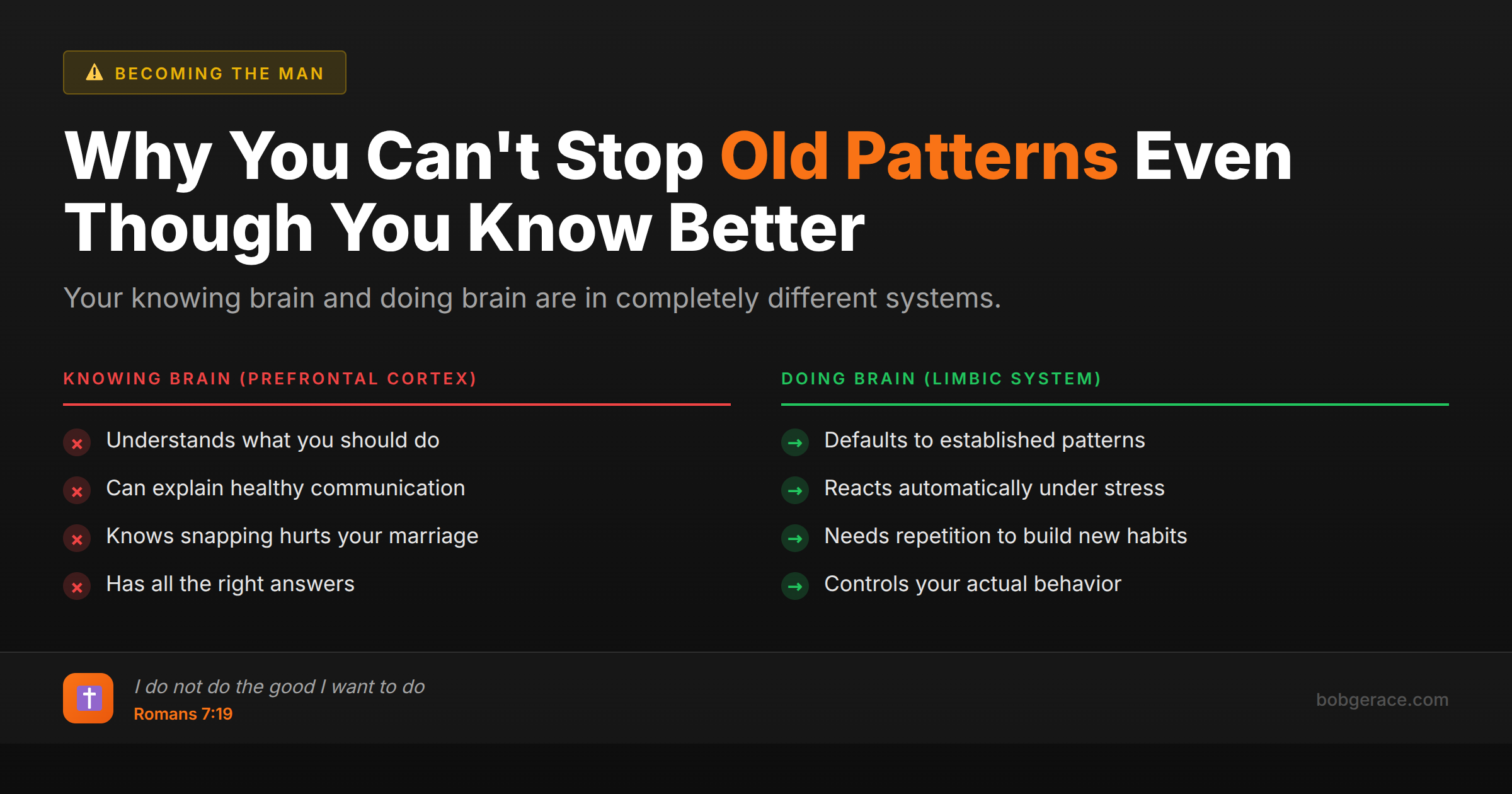
Neurologically, knowing and doing operate in completely different brain systems. Knowing happens in your prefrontal cortex - it's conscious, logical, and articulate. You can explain exactly what you should do differently in your marriage. Doing, however, involves deeper brain structures like the limbic system and requires established neural pathways built through repetition and practice. This is why you can know you shouldn't snap at your spouse, understand it hurts your relationship, even teach others about healthy communication - yet still find yourself doing it again. Your knowing brain is like having a map, but your doing brain is like having muscle memory. The map tells you where to go, but without the muscle memory, you'll default to old patterns under stress.
The Full Picture
Your brain has two primary operating systems when it comes to behavior, and they work very differently. The cognitive system handles knowing - it's where you process information, make logical connections, and form intentions. This system can rapidly acquire new information and insights. You can read a marriage book, attend a seminar, or have a breakthrough conversation and instantly *know* what needs to change.
The behavioral system handles doing - it operates through established neural pathways that have been carved deep through repetition. These pathways become your default responses, especially under stress or emotional intensity. When your spouse triggers you, your brain doesn't consult your cognitive knowledge first. It goes straight to the fastest, most familiar pathway.
This creates what neuroscientists call the "intention-action gap." You genuinely intend to respond differently, but your brain's automatic systems kick in faster than your conscious mind can intervene. It's not a character flaw or lack of commitment - it's basic neurology.
The knowing brain is like having a detailed GPS telling you exactly where to turn. The doing brain is like your hands automatically steering toward familiar routes even when you consciously want to go somewhere new. Under pressure, your hands often win.
The key insight: Closing this gap requires deliberately building new neural pathways through consistent practice, not just accumulating more knowledge. Your brain needs repetition to create new defaults that can compete with old patterns when emotions run high.
What's Really Happening
In my practice, I see couples frustrated by this gap constantly. A husband understands intellectually that interrupting his wife is disrespectful, but keeps doing it. A wife knows criticism damages intimacy, but the words come out anyway. They think something's wrong with them, but their brains are actually working exactly as designed.
Neuroplasticity research shows us that knowing activates different brain regions than doing. When you learn something new about relationships, your prefrontal cortex lights up - this is your executive function center. But when you're actually interacting with your spouse, especially during conflict, your limbic system takes over. This emotional brain operates much faster and relies on established patterns.
The pathway from knowing to doing requires what we call "embodied learning" - practicing new responses until they become automatic. This happens through repetition that literally rewires your brain. Each time you consciously choose a different response, you're strengthening new neural pathways while weakening old ones.
Stress hormones like cortisol actually make this gap wider by shutting down prefrontal cortex function and amplifying limbic responses. This is why you can have perfect clarity about how to handle situations when you're calm, but completely forget your insights when emotions escalate. The solution isn't more self-control - it's building stronger alternative pathways through practice during low-stress moments, so they're available when you need them most.
What Scripture Says
Scripture acknowledges this knowing-doing gap throughout, showing us God understands how we're wired. Paul captures this perfectly in Romans 7:18-19: *"For I know that good itself does not dwell in me, that is, in my sinful nature. For I have the desire to do what is good, but I cannot carry it out. For I do not do the good I want to do, but the evil I do not want to do—this I keep on doing."*
This isn't just spiritual truth - it's neurological reality. Paul knew what was right but struggled to consistently do it, just like we do in our marriages.
James 1:22 warns us: *"Do not merely listen to the word, and so deceive yourselves. Do what it says."* Knowledge without application creates a dangerous illusion of progress. Knowing Biblical principles about marriage means nothing if we don't practice them until they become our natural responses.
Philippians 4:9 shows the pathway forward: *"Whatever you have learned or received or heard from me, or seen in me—put it into practice. And the God of peace will be with you."* Notice the emphasis on practice, not just learning.
Hebrews 5:14 reveals the secret: *"But solid food is for the mature, who by constant use have trained themselves to distinguish good from evil."* The word "trained" here means repeated practice until something becomes automatic. Spiritual maturity isn't about knowing more - it's about training your responses through consistent practice.
Proverbs 27:17 reminds us: *"As iron sharpens iron, so one person sharpens another."* This sharpening happens through repeated interaction and practice, not just understanding principles. Your marriage is God's training ground for developing new neural pathways of love.
What To Do Right Now
-
1
Identify one specific pattern where you know better but keep doing the wrong thing in your marriage
-
2
Practice the alternative response during calm moments when your prefrontal cortex is engaged and stress is low
-
3
Create environmental cues that remind you to pause before defaulting to old patterns during interactions
-
4
Use the 6-second rule - intense emotions biochemically last 6 seconds, so count slowly before responding
-
5
Rehearse mentally by visualizing yourself responding differently in typical triggering scenarios with your spouse
-
6
Track your progress by noting when you catch yourself and choose differently, celebrating small wins as your brain rewires
Related Questions
Ready to Bridge Your Knowing-Doing Gap?
Don't let neurology work against your marriage. Let's create practical strategies to turn your insights into lasting change.
Work Together →