She says I killed her love over time
6 min read
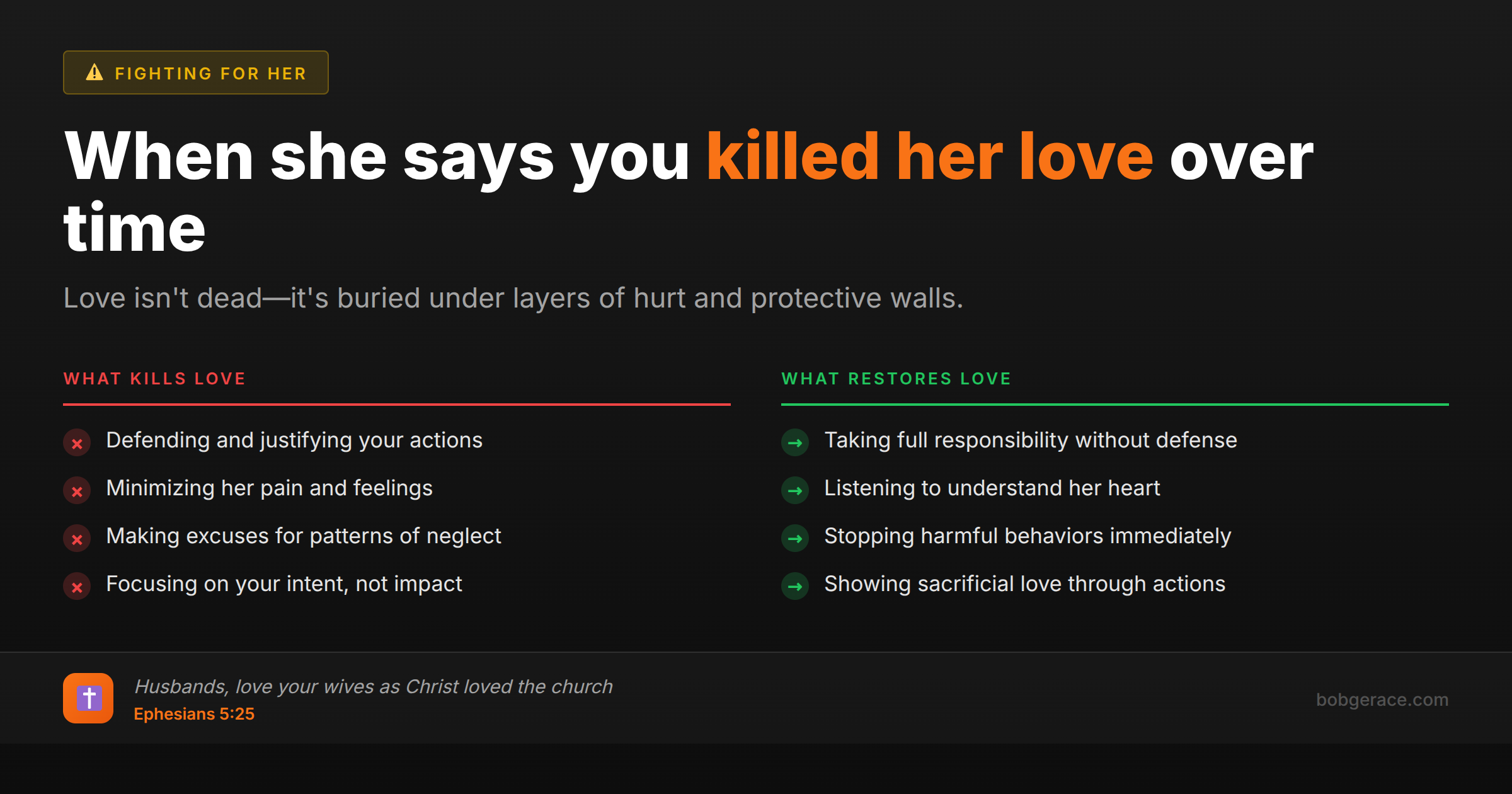
When your wife says you've killed her love, she's describing the cumulative effect of repeated disappointments, unmet needs, and emotional disconnection. This isn't about one catastrophic event—it's about the slow erosion of safety, trust, and emotional intimacy through patterns of neglect, criticism, or taking her for granted. The good news is that love isn't actually dead—it's buried under layers of hurt and protective walls. While this feels devastating to hear, it's actually her way of communicating that she once loved you deeply and is grieving that loss. Understanding this as a cry for change rather than a final verdict opens the door to genuine transformation and restoration.
The Full Picture
When a woman says you've "killed her love," she's not being dramatic—she's describing a very real psychological process. Love doesn't die overnight. It gets chipped away through a thousand small cuts: dismissive comments, emotional unavailability, broken promises, taking her for granted, or consistently prioritizing everything else above the marriage.
The Death of a Thousand Cuts
Most men hear this statement and think it's about one big mistake. But women experience love differently. They fall in love through accumulated positive experiences and fall out of love the same way—through accumulated negative ones. Every time you:
- Dismissed her concerns as "nagging" - Chose work, hobbies, or friends over quality time with her - Made her feel criticized or judged - Failed to show appreciation for what she does - Broke promises or commitments - Became defensive instead of listening
You made a small withdrawal from her emotional bank account. Over time, these withdrawals created an emotional deficit that felt insurmountable to her.
What She's Really Saying
When she says you killed her love, she's actually revealing something important: *she's grieving the love she once had for you*. This means the foundation existed. The capacity for deep love was there. She's mourning what you both lost, which is very different from saying it can never exist again.
She's also telling you that her heart has gone into protective mode. After being hurt repeatedly, she's built walls to shield herself from further disappointment. This self-protection mechanism is normal and healthy—it's her heart's way of surviving emotional neglect or mistreatment.
The key is recognizing that underneath those protective walls, there's often a woman who desperately wants to love and be loved again, but needs proof that it's safe to open her heart.
What's Really Happening
From a clinical perspective, what your wife is describing aligns with what we call "emotional numbing" or "protective detachment." This is a psychological defense mechanism that develops when someone experiences chronic relational stress or emotional neglect.
The Neuroscience of Emotional Shutdown
Repeated negative interactions actually rewire the brain's response patterns. When someone consistently experiences disappointment or emotional pain in a relationship, their brain begins to suppress the neurochemical responses associated with bonding and attachment. This isn't conscious—it's the mind's way of protecting itself from further harm.
Research shows that women, in particular, are highly sensitive to emotional attunement in relationships. When they consistently feel unheard, unvalued, or emotionally unsafe, their brains begin to disengage from the relationship as a survival mechanism.
The Gottman Institute's Research
Dr. John Gottman's research identifies four patterns that predict relationship failure: criticism, contempt, defensiveness, and stonewalling. When these patterns persist, they create what he calls "emotional flooding," where the nervous system becomes overwhelmed and shuts down emotionally.
However, Gottman's research also shows that relationships can recover from this state through consistent positive interactions, genuine repair attempts, and rebuilding emotional safety. The key is understanding that healing requires patience—it takes time to rebuild neural pathways associated with //blog.bobgerace.com/true-trust-in-god-when-marriage-failing/:trust and connection.
The Path Forward
Recovery requires what we call "earned security"—demonstrating through consistent actions over time that you're a safe person to love again. This involves radical accountability, emotional attunement, and persistent effort to understand and meet her emotional needs.
What Scripture Says
Scripture provides both sobering truth and redemptive hope for marriages where love has been damaged. God's Word speaks directly to the heart issues that create this kind of relational devastation.
The Call to Sacrificial Love
*"Husbands, love your wives as Christ loved the church and gave himself up for her"* (Ephesians 5:25). This isn't just about grand gestures—it's about daily dying to self. Christ's love for the church was demonstrated through consistent sacrifice, serving, and putting her needs above His own comfort.
*"In the same way husbands should love their wives as their own bodies. He who loves his wife loves himself"* (Ephesians 5:28). When we fail to love our wives well, we're actually harming ourselves and our own well-being.
The Consequences of Neglect
*"Likewise, husbands, live with your wives in an understanding way, showing honor to the woman as the weaker vessel, since they are heirs with you of the grace of life, so that your prayers may not be hindered"* (1 Peter 3:7). This verse reveals that how we treat our wives directly affects our relationship with God. Neglecting or dishonoring our wives creates a spiritual barrier.
The Power of Restoration
*"The Lord is close to the brokenhearted and saves those who are crushed in spirit"* (Psalm 34:18). God specializes in restoring what seems dead or beyond repair.
*"And I will give you a new heart, and a new spirit I will put within you. And I will remove the heart of stone from your flesh and give you a heart of flesh"* (Ezekiel 36:26). God can soften hearts that have become hardened by hurt and disappointment.
*"Therefore, if anyone is in Christ, he is a new creation. The old has passed away; behold, the new has come"* (2 Corinthians 5:17). Real transformation is possible through Christ, both for you as a husband and for your marriage as a whole.
What To Do Right Now
-
1
Take Full Responsibility - Don't defend, justify, or minimize. Say: "You're right. I have hurt you deeply through my actions and neglect. I take full responsibility for the damage I've caused."
-
2
Stop All Harmful Behaviors Immediately - Identify the specific patterns that hurt her (criticism, neglect, defensiveness) and commit to stopping them completely, starting today.
-
3
Listen to Understand, Not to Defend - Ask her to help you understand how your actions affected her. Listen without interrupting, defending, or trying to fix anything. Just receive her truth.
-
4
Demonstrate Change Through Actions - Words alone won't rebuild trust. Show through consistent daily actions that you're becoming the husband she needs you to be.
-
5
Seek Professional Help - Get individual counseling to address your own issues and consider marriage counseling if she's willing. Show her you're serious about change by investing in professional guidance.
-
6
Be Patient with Her Process - Don't pressure her to "get over it" or love you again quickly. Healing takes time, and pushing for forgiveness too soon will only create more walls between you.
Related Questions
- She brings up things from years ago
- How do I address years of built-up hurt?
- What is 'accumulated resentment'?
- What are 'attachment injuries' and how many did I cause?
- Her resentment runs deeper than I knew
- What does genuine repair look like for old wounds?
- She says she's 'fine' but she's not
- What does 'I love you but I'm not in love with you' really mean?
- What role did our relationship problems play?
Also find Bob on
Subscribe for weekly videos on Christian marriage.
Your Marriage Needs a Human in Your Corner
When she says you killed her love, the next 30 days matter. A coach who knows your specific story can help you see what she's actually asking for—and calibrate your response before you lose more ground.
Talk to Bob →