How do I address years of built-up hurt?
6 min read
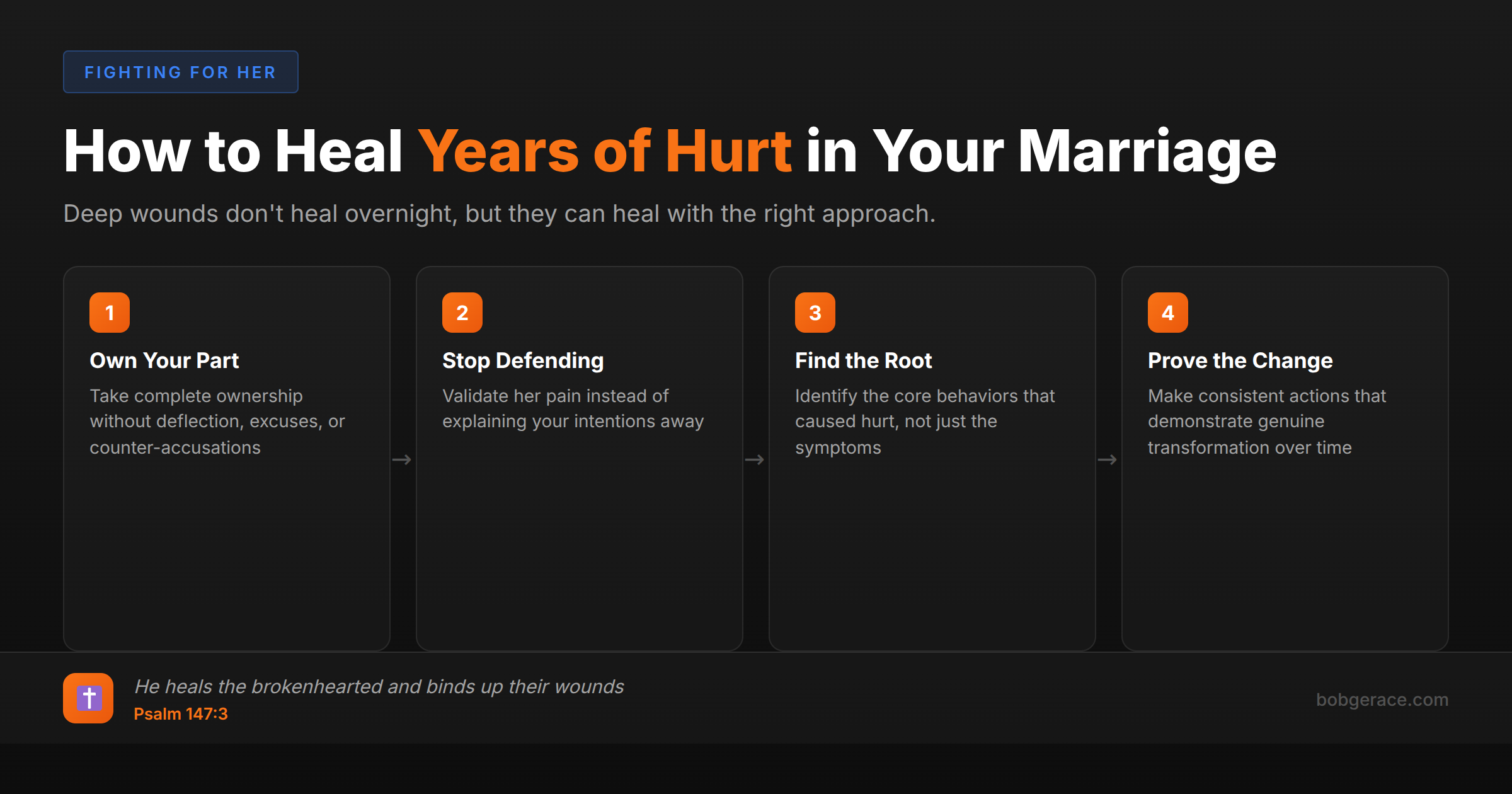
Years of built-up hurt don't heal overnight, but they can heal. The process starts with you taking full ownership of your part without deflection or excuses. You must genuinely acknowledge the specific ways you've hurt her and validate her pain without trying to explain it away. The healing happens in layers through consistent actions that prove you've changed, not just words that promise you will. This means addressing the root behaviors that caused the hurt, not just apologizing for the symptoms. You'll need patience—her heart has been protecting itself for years and won't open quickly. But with genuine repentance, consistent change, and God's grace, even the deepest wounds can heal.
The Full Picture
When a wife has years of built-up hurt, you're not dealing with individual incidents anymore—you're dealing with compound emotional trauma. Each unresolved hurt becomes a brick in a protective wall around her heart. What started as disappointment became frustration, then anger, then resentment, and finally emotional withdrawal.
Here's what most men don't understand: she remembers everything. Not because she's trying to punish you, but because unhealed wounds stay fresh. Every new incident gets added to the existing pile, making the total burden heavier than you realize.
The hurt isn't just about what you did—it's about what those actions communicated to her about how little she mattered to you. When you forgot anniversaries, chose work over family time, dismissed her concerns, or checked out emotionally, you were writing a story in her heart about her value to you.
Time alone doesn't heal this kind of hurt. In fact, time without genuine change often makes it worse. She's watched you make promises before and break them. She's seen you apologize and then repeat the same behaviors. Her heart has learned not to trust your words.
The good news is that God specializes in healing the brokenhearted. But healing requires more than an apology—it requires genuine repentance, which means turning away from the behaviors that caused the damage. It requires you to do the hard work of understanding not just what you did, but why you did it, and making real changes at that level.
This isn't about perfection—it's about direction. She needs to see that you're genuinely becoming a different man, not just trying to manage her feelings.
What's Really Happening
Years of accumulated hurt create what we call complex relational trauma. Her brain has literally rewired itself to expect disappointment from you. This isn't stubbornness—it's a protective mechanism that helped her survive emotional neglect or hurt.
The limbic system, which processes emotions and memories, doesn't distinguish between past and present threats. When you approach her now, even with good intentions, her brain may still be responding to years of previous hurts. This is why she might seem to "overreact" to small things—she's not just responding to the current situation, but to the accumulated weight of similar situations.
Healing requires consistent positive experiences that gradually retrain her nervous system to feel safe with you again. This process can take 18-24 months of consistent change, not just improved behavior. Her brain needs to build new neural pathways that associate you with safety and trust rather than disappointment and hurt.
The key is understanding that emotional healing isn't linear. She'll have good days and setbacks. Progress might look like two steps forward, one step back. This is normal and doesn't mean your efforts aren't working—it means her heart is slowly learning to trust again.
During this process, avoid the temptation to rush her healing or become frustrated with her pace. Pressure to "get over it" will only reinforce her sense that you don't truly understand the depth of her pain. Instead, focus on being consistently trustworthy, regardless of her response.
What Scripture Says
God's Word provides clear guidance for healing deep relational wounds. "He heals the brokenhearted and binds up their wounds" (Psalm 147:3). God cares deeply about the wounds in your marriage and wants to bring healing.
"Bear with each other and forgive one another if any of you has a grievance against someone. Forgive as the Lord forgave you" (Colossians 3:13). Healing requires both genuine repentance from you and forgiveness from her—but forgiveness is a process, not a one-time event.
"Husbands, love your wives just as Christ loved the church and gave himself up for her" (Ephesians 5:25). Christ's love was sacrificial and consistent. Healing years of hurt requires this same kind of self-sacrificing, persistent love that puts her wellbeing above your own comfort.
"Therefore, if you are offering your gift at the altar and there remember that your brother or sister has something against you, leave your gift there in front of the altar. First go and be reconciled to them; then come and offer your gift" (Matthew 5:23-24). God takes reconciliation seriously—more seriously than religious activity.
"Godly sorrow brings repentance that leads to salvation and leaves no regret, but worldly sorrow brings death" (2 Corinthians 7:10). True repentance isn't just feeling bad about getting caught or facing consequences—it's genuine grief over how your actions hurt her and affected your relationship.
"Love is patient, love is kind. It does not envy, it does not boast, it is not proud. It does not dishonor others, it is not self-seeking, it is not easily angered, it keeps no record of wrongs" (1 Corinthians 13:4-5). This is your roadmap for how to love her through the healing process.
What To Do Right Now
-
1
Take complete ownership without deflection, excuses, or counter-accusations. Acknowledge the specific ways you've hurt her.
-
2
Stop defending yourself and start validating her pain. Say "I understand why you feel that way" instead of explaining your intentions.
-
3
Identify the root behaviors that caused the hurt, not just the symptoms. Get help to understand why you acted the way you did.
-
4
Make specific, measurable changes in those root behaviors. Don't just promise to "do better"—show her exactly what you're changing.
-
5
Be patient with her healing timeline and don't pressure her to forgive or trust quickly. Focus on being trustworthy regardless of her response.
-
6
Get professional help if needed. Years of built-up hurt often require guidance from a qualified Christian counselor to navigate properly.
Related Questions
Ready to Do the Hard Work of Healing?
Years of hurt require more than good intentions—they require a clear strategy and professional guidance. Let me help you navigate this healing process the right way.
Get Help Now →