She can't seem to forgive the past
6 min read
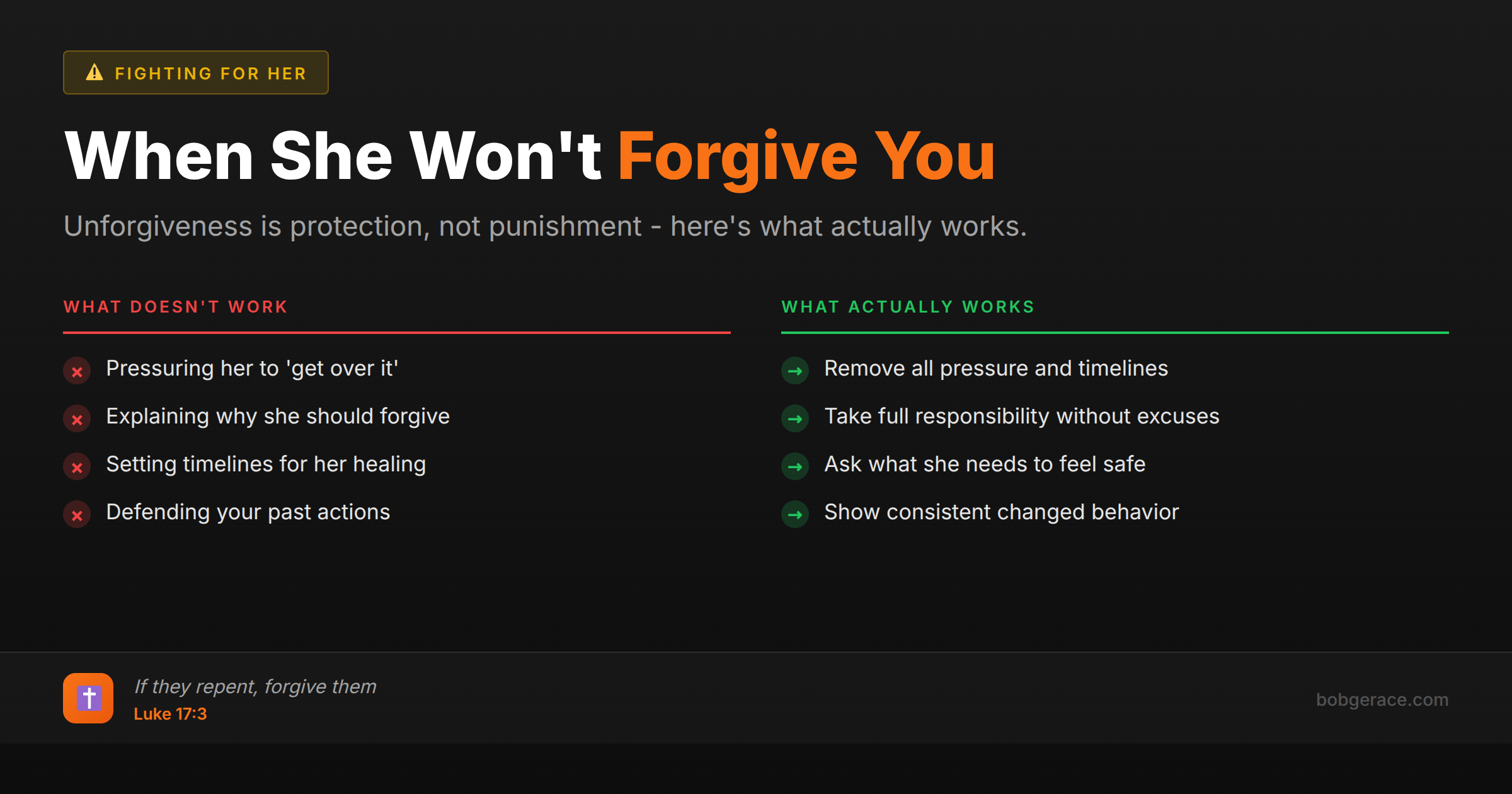
When your wife can't forgive the past, it's rarely about her being stubborn or unforgiving by nature. Unforgiveness is often a protective mechanism - her heart's way of guarding against being hurt again. She may feel that forgiving means minimizing the pain she experienced or opening herself up to repeated harm. True forgiveness requires safety, understanding, and genuine repair work. If she's holding onto past hurts, it usually means she doesn't feel truly heard, validated, or confident that things have actually changed. Forgiveness isn't something you can demand or rush - it's something that emerges when trust is rebuilt through consistent, changed behavior over time.
The Full Picture
Forgiveness is not the same as trust. Your wife may understand intellectually that she should forgive, but her heart remains guarded because forgiveness and trust operate on different timelines. Forgiveness can be a choice, but trust must be earned through consistent behavior change over months and years.
Her unforgiveness often stems from unresolved pain. When someone says they "can't forgive," they're usually communicating that the original wound hasn't been properly addressed. Maybe the hurt was minimized, excuses were made, or she was rushed to "get over it" before she felt truly heard and understood.
Safety is a prerequisite to forgiveness. If your wife doesn't feel emotionally or relationally safe, her nervous system will remain in protective mode. This isn't a conscious choice - it's how God designed us to protect ourselves from harm. Until she feels genuinely safe that the behavior won't be repeated, forgiveness will feel impossible or even dangerous to her.
The "forgive and forget" myth creates additional pressure. Many women feel guilty for not being able to "just forgive" because they've been taught that good Christians forgive quickly and completely. This shame actually makes forgiveness harder, not easier.
Your response to her struggle matters immensely. Getting frustrated with her inability to forgive, defending your past actions, or minimizing her pain will only deepen her protective stance. She needs to see that you understand why she's struggling and that you're committed to creating the safety necessary for healing to occur.
What's Really Happening
From a therapeutic perspective, inability to forgive is often rooted in incomplete processing of the original trauma or betrayal. When someone experiences deep hurt in a relationship, their brain's threat detection system becomes hypervigilant, scanning for signs that similar harm might occur again.
Forgiveness is neurologically complex - it requires both the rational brain (which can choose to forgive) and the emotional brain (which holds the hurt) to work together. When there's been significant betrayal or repeated harm, the emotional brain essentially 'vetoes' the rational brain's attempts to forgive because it perceives ongoing danger.
We often see that women who 'can't forgive' are actually demonstrating healthy self-protection. They intuitively understand that premature forgiveness without genuine change would leave them vulnerable to repeated harm. Their resistance to forgiveness is their psyche's way of saying 'we're not safe yet.'
//blog.bobgerace.com/true-trust-in-god-when-marriage-failing/:True forgiveness becomes possible when three conditions are met: genuine acknowledgment of the harm caused, observable behavior change over time, and restoration of emotional safety in the relationship. Without these elements, pushing for forgiveness actually re-traumatizes and can damage the relationship further.
The goal isn't to convince her to forgive - it's to create conditions where forgiveness can naturally emerge as safety and trust are rebuilt through consistent, loving actions over time.
What Scripture Says
Scripture has much to say about forgiveness, but it's important to understand forgiveness within the context of justice, repentance, and restoration.
Forgiveness requires genuine repentance: "If your brother or sister sins against you, rebuke them; and if they repent, forgive them" (Luke 17:3). Biblical forgiveness isn't unconditional - it's tied to genuine acknowledgment of wrongdoing and change of heart.
God models patience with our struggles: "The Lord is not slow in keeping his promise, as some understand slowness. Instead he is patient with you, not wanting anyone to perish, but everyone to come to repentance" (2 Peter 3:9). If God is patient with our process of turning to Him, we must be patient with our spouse's process of healing.
Trust must be rebuilt over time: "Above all else, guard your heart, for everything you do flows from it" (Proverbs 4:23). Scripture actually commands us to guard our hearts wisely, not to give trust carelessly or prematurely.
Love includes accountability: "Faithful are the wounds of a friend" (Proverbs 27:6). Sometimes the most loving thing is to maintain appropriate boundaries until genuine change occurs.
God desires justice alongside mercy: "He has shown you, O mortal, what is good. And what does the Lord require of you? To act justly and to love mercy and to walk humbly with your God" (Micah 6:8). Biblical reconciliation includes both justice (acknowledging wrong) and mercy (extending grace).
Restoration is the goal: "Brothers and sisters, if someone is caught in a sin, you who live by the Spirit should restore that person gently" (Galatians 6:1). The goal isn't just forgiveness, but full restoration of relationship through gentle, patient work.
What To Do Right Now
-
1
Stop pressuring her to forgive - Remove all timeline expectations and verbal pressure. Your impatience is actually preventing forgiveness from occurring naturally.
-
2
Take full responsibility for your past actions - No explanations, justifications, or "but you did..." statements. Own your part completely without minimizing the impact.
-
3
Ask what she needs to feel safe - Instead of defending the past, focus on understanding what would help her feel emotionally secure moving forward.
-
4
Demonstrate consistent change over months - Forgiveness follows behavioral evidence, not promises. Show through daily actions that you've genuinely changed.
-
5
Validate her struggle without fixing - Say things like 'I understand why this is hard for you' and 'Your caution makes sense given what happened' instead of trying to convince her to feel differently.
-
6
Consider professional help together - A skilled counselor can help facilitate the restoration process and give both of you tools for rebuilding trust and safety.
Related Questions
- She brings up things from years ago
- She has a list of everything I did wrong
- She says I killed her love over time
- How do I address years of built-up hurt?
- Her resentment runs deeper than I knew
- What does genuine repair look like for old wounds?
- What is 'accumulated resentment'?
- How do I make amends for years of failure?
- Can I forgive without trusting?
- What does real forgiveness look like?
Also find Bob on
Subscribe for weekly videos on Christian marriage.
Stuck on her unforgiveness? Bring it to Bob.
A coach who knows your marriage can see what's blocking her trust—and what you're missing. You don't have to keep guessing what she needs to feel safe.
Talk to Bob →