She brings up things from years ago
6 min read
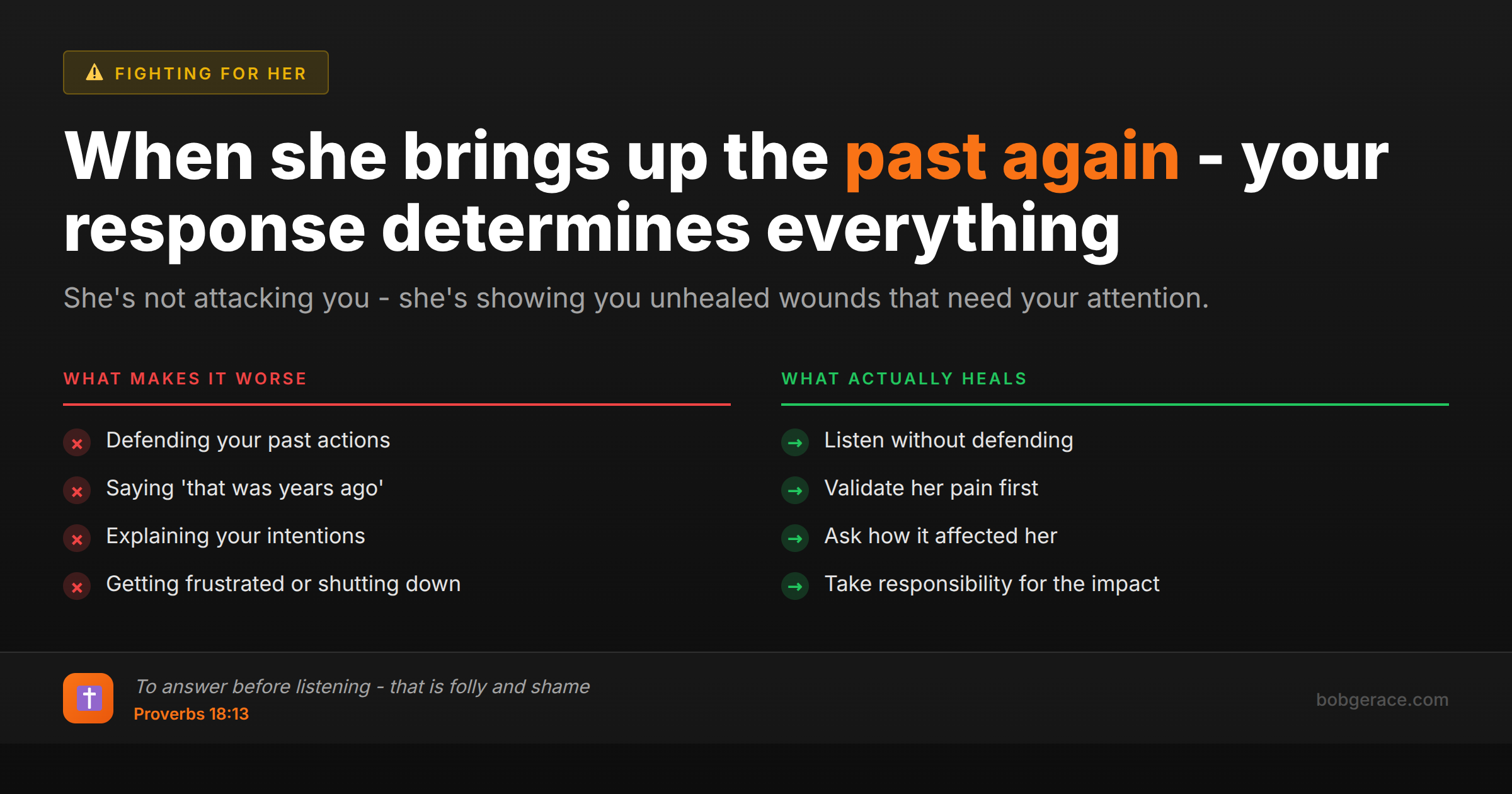
When your wife brings up things from years ago, she's telling you those wounds never properly healed. This isn't about her being vindictive or having a bad memory - it's about unresolved pain that keeps surfacing because it was never fully addressed. Every time she mentions that thing from three years ago, she's essentially saying 'this still hurts, and I don't feel like you understand how much it affected me.' The good news is this behavior is actually a cry for connection and healing, not just an attack on you. She's giving you opportunities to finally address these wounds properly, though it probably doesn't feel like a gift right now.
The Full Picture
Here's what's really going on when your wife keeps bringing up past incidents: she doesn't feel heard or validated about those experiences. When something hurtful happens in marriage and it gets swept under the rug, minimized, or 'resolved' without the hurt party feeling truly understood, that pain doesn't disappear - it goes underground.
Think of it like this: imagine you had a deep cut that someone slapped a band-aid on without cleaning it first. The wound might close on the surface, but underneath, it's infected and festering. That's what happens with emotional wounds in marriage. When your wife brings up 'that time you chose your friends over our anniversary dinner' from 2019, she's not trying to punish you - she's showing you an infected wound that never properly healed.
The pattern usually looks like this: Something hurtful happens → You apologize or explain your side → She seems to accept it → Life moves on → But the wound wasn't actually healed, just covered up → Stress, conflict, or similar situations cause that old wound to resurface.
Most men make the mistake of getting frustrated and saying things like 'Why can't you just let it go?' or 'I already apologized for that!' But this response actually makes the problem worse because it invalidates her pain all over again. Every time you dismiss her bringing up the past, you're essentially re-wounding her.
The truth is, your wife wants to move forward more than you do. Nobody enjoys carrying around old pain. When she mentions these things, she's unconsciously giving you another opportunity to help her heal from them. The key is learning how to respond in a way that actually addresses the underlying wound instead of just defending yourself against the 'attack.'
What's Really Happening
From a psychological perspective, when someone repeatedly brings up past hurts, they're experiencing what we call 'unresolved emotional injury.' The brain's primary job is to keep us safe, and when we've been hurt in a relationship, it creates what I call 'emotional scar tissue' - hypersensitivity around similar situations or themes.
When your wife mentions past incidents, her nervous system is essentially saying 'remember this hurt so we can protect ourselves from it happening again.' This is actually a normal trauma response, even in everyday marriage conflicts. The emotional brain doesn't distinguish between 'big' and 'small' hurts - it just knows something caused pain and wants to prevent it from happening again.
What many couples don't understand is that true healing requires the hurt person to feel genuinely seen, heard, and validated in their pain. This is different from just getting an apology. An apology addresses the action, but validation addresses the impact. When someone feels truly understood in their hurt, the brain can finally file that experience as 'resolved' instead of keeping it in the active 'threat detection' file.
The reason these old issues keep resurfacing is because your wife's emotional system is still trying to get those needs met. Each time she brings up the past, she's unconsciously hoping this time you'll respond differently - with curiosity instead of defensiveness, with empathy instead of justification. When partners learn to have 'healing //blog.bobgerace.com/combat-conversations-fight-for-marriage/:conversations' about old wounds, the compulsion to bring them up typically disappears naturally because the underlying emotional need has finally been met.
What Scripture Says
Scripture gives us profound wisdom about dealing with past hurts and the process of true reconciliation. Ephesians 4:26 tells us 'In your anger do not sin: Do not let the sun go down while you are still angry.' This doesn't mean we should rush through conflict resolution - it means we shouldn't let wounds fester unaddressed.
Proverbs 18:13 warns us: 'To answer before listening - that is folly and shame.' When your wife brings up past hurts, your first response should be to listen and understand, not defend or explain. God designed us to feel heard and understood as part of the healing process.
Matthew 5:23-24 gives us the biblical model for true reconciliation: 'First go and be reconciled to them; then come and offer your gift.' Biblical reconciliation isn't just about saying 'sorry' - it's about restoring the relationship to wholeness. This requires understanding the full impact of our actions on our spouse.
1 Peter 3:7 specifically instructs husbands to 'be considerate as you live with your wives, and treat them with respect as the weaker partner and as heirs with you of the gracious gift of life, so that nothing will hinder your prayers.' Being considerate means taking the time to truly understand how your past actions affected her heart.
Galatians 6:2 reminds us to 'carry each other's burdens.' When your wife brings up old pain, she's giving you an opportunity to help carry the burden of that hurt with her. Colossians 3:13 calls us to 'bear with each other and forgive one another if any of you has a grievance against someone.' True forgiveness often requires multiple conversations as healing unfolds over time.
What To Do Right Now
-
1
Stop defending and start listening - when she brings up something from the past, resist the urge to justify or explain and instead say 'Tell me more about how that affected you.'
-
2
Validate her experience first - acknowledge the impact your actions had on her before discussing your intentions: 'I can see that really hurt you, and I'm sorry for causing you that pain.'
-
3
Ask deeper questions - 'What did that situation communicate to you about your importance to me?' or 'What did you need from me in that moment that you didn't get?'
-
4
Take full responsibility - own your part completely without adding 'but' or explanations: 'I was wrong to prioritize work over our date night. That must have felt like I didn't value our time together.'
-
5
Make it right going forward - ask 'What would help you feel secure about this not happening again?' and then follow through consistently with changed behavior.
-
6
Create healing conversations - schedule regular check-ins where you ask 'Are there any old hurts you'd like to talk through so we can heal them together?'
Related Questions
- She has a list of everything I did wrong
- She can't seem to forgive the past
- She says I killed her love over time
- How do I address years of built-up hurt?
- What is 'accumulated resentment'?
- What are 'attachment injuries' and how many did I cause?
- Why does she remember everything differently than I do?
- What is 'resentment inventory' and does she have one?
- What does real forgiveness look like?
- How do I make amends for years of failure?
Also find Bob on
Subscribe for weekly videos on Christian marriage.
Bring Your Specific History to Bob
Every marriage has its own pattern of old wounds. A coach who knows your story can help you finally close those loops—not with a script, but with what actually fits your wife and your history.
Talk to Bob →