Can neural bonding pathways reopen?
6 min read
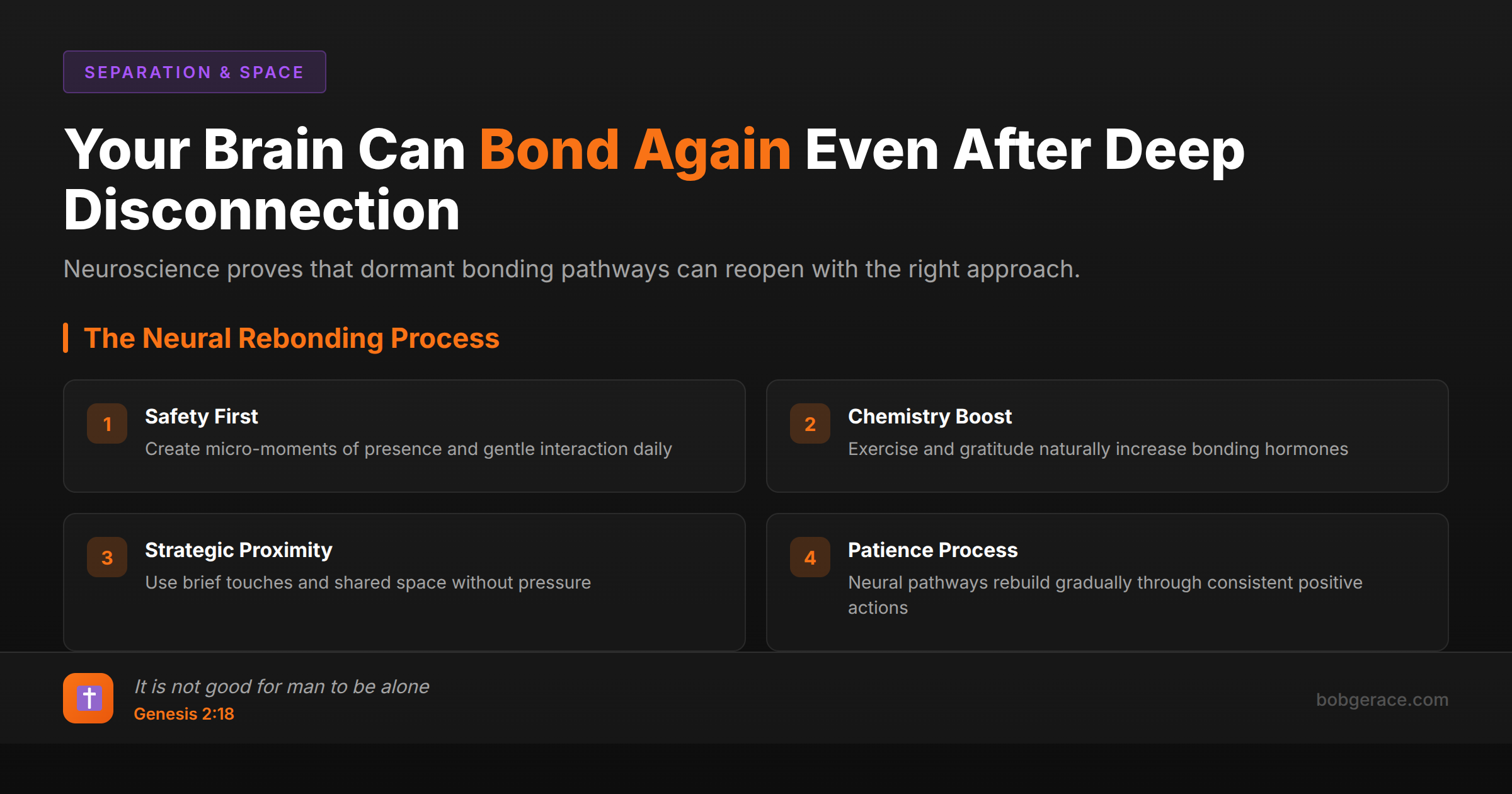
Yes, neural bonding pathways can absolutely reopen, even after significant disconnection. The brain's remarkable capacity for neuroplasticity means that new neural connections can form and dormant pathways can be reactivated throughout our lives. When couples experience emotional disconnection, the neural pathways associated with bonding, trust, and intimacy don't disappear permanently – they become dormant or weakened. The key is consistent, intentional actions that stimulate oxytocin and dopamine production while creating new positive associations. Through repeated positive interactions, physical touch, emotional attunement, and shared experiences, the brain begins rebuilding these crucial bonding networks. This process requires patience and persistence, as neural change happens gradually, but the science is clear: your brain can learn to bond again.
The Full Picture
When your wife has emotionally checked out, it can feel like the connection you once shared is gone forever. But here's what the neuroscience tells us: your brains are designed to bond, and that capacity never fully disappears.
Think of neural bonding pathways like hiking trails. When a trail gets regular use, it stays clear and easy to navigate. But when it's abandoned, weeds grow over it, branches fall across the path, and it becomes harder to see. The trail isn't gone – it's just overgrown. With intentional effort, you can clear that path again.
In marriage, bonding pathways develop through thousands of small positive interactions: moments of eye contact, gentle touch, shared laughter, feeling understood and valued. These experiences trigger the release of oxytocin (the bonding hormone) and dopamine (the reward chemical), literally rewiring your brains to seek each other out and feel good together.
When disconnection happens – through conflict, neglect, betrayal, or gradual drift – these pathways don't get their usual reinforcement. The brain, always efficient, begins to prune unused connections. But here's the hope: neuroplasticity means new pathways can form at any age.
Research shows that even couples in severe distress can rebuild neural bonding through specific interventions. The process involves creating new positive experiences that gradually override negative patterns, rebuilding trust through consistent actions, and literally training your brains to associate each other with safety and pleasure again.
The timeline varies – some couples see shifts in weeks, others need months or years. But the capacity is always there, waiting to be reactivated.
What's Really Happening
From a clinical neuropsychology perspective, what we're dealing with when bonding pathways shut down is essentially a protective mechanism gone wrong. The brain's primary job is survival, and when a relationship becomes associated with threat rather than safety, neural pathways shift resources away from bonding systems toward self-protection.
When I work with couples experiencing this disconnection, I'm looking at several key neural systems: the attachment system (governed by oxytocin and vasopressin), the reward system (dopamine pathways), and the threat detection system (amygdala activation). In disconnected couples, we typically see hyperactivation of threat detection and suppression of bonding chemistry.
The good news is that targeted interventions can literally rewire these systems. Techniques like synchronized breathing, sustained eye contact, and specific touch exercises activate the parasympathetic nervous system and stimulate oxytocin release. Even something as simple as eating together or listening to music can begin reactivating dormant bonding pathways.
What's crucial to understand is that this rewiring requires safety first. If the relationship still feels threatening, bonding pathways will remain suppressed regardless of effort. This is why addressing underlying issues – betrayal, emotional abuse, chronic conflict – is essential before neural bonding can fully reopen.
I've seen remarkable transformations when couples commit to this process. Brain scans of couples who've successfully rebuilt their bond show increased activity in areas associated with empathy, reward, and emotional regulation. The neural capacity for deep connection can be restored.
What Scripture Says
Scripture reveals that God designed us for connection from the very beginning. When God said, "It is not good for man to be alone" (Genesis 2:18), He was describing a fundamental truth about how we're wired – we are created for relationship.
The biblical concept of becoming "one flesh" (Genesis 2:24) speaks to something deeper than just physical union. It describes a neural and spiritual bonding that mirrors how God relates to us. Just as "His mercies are new every morning" (Lamentations 3:22-23), our capacity for renewed connection is built into our design.
Paul's instruction to "be renewed in the spirit of your minds" (Ephesians 4:23) aligns perfectly with what neuroscience tells us about neuroplasticity. God has given us brains that can literally be renewed and transformed. When Scripture says we can "be transformed by the renewing of your mind" (Romans 12:2), it's describing a process that modern science confirms is possible.
The patience required for neural rebuilding reflects God's own character. "Love is patient, love is kind" (1 Corinthians 13:4) isn't just a nice sentiment – it's describing the kind of consistent, gentle approach that allows bonding pathways to safely reopen.
Most powerfully, God's promise that "I will give you a new heart and put a new spirit within you" (Ezekiel 36:26) speaks to His ability to restore what seems permanently broken. If God can give new hearts, He can certainly reopen the neural pathways that allow those hearts to connect with each other.
What To Do Right Now
-
1
Create micro-moments of safety - Start with 30-second interactions where you're fully present, make eye contact, and speak gently. Do this daily without expecting anything back.
-
2
Activate your own bonding chemistry - Exercise regularly, practice gratitude, and engage in activities that naturally boost your oxytocin and dopamine levels.
-
3
Use strategic physical proximity - Sit near each other during TV time, offer brief shoulder touches, or simply be in the same room more often without pressure.
-
4
Practice synchronized activities - Walk together, breathe together for 2 minutes, or listen to music simultaneously. Synchrony naturally activates bonding pathways.
-
5
Address safety barriers first - If there are unresolved betrayals, ongoing conflicts, or behaviors that trigger her threat response, these must be addressed before bonding can occur.
-
6
Commit to the timeline - Neural change takes 3-6 months minimum. Mark your calendar for 90 days of consistent effort before evaluating progress.
Related Questions
- What is 'deactivation' and has she done it?
- When does a wife's attachment system shut off completely?
- What would help her nervous system feel safe again?
- What have I done that made connection feel unsafe?
- How do I become a safe person again?
- What would make her want to risk opening up?
- Can old attachment injuries be healed?
- What does healing from sexual disconnection look like?
- How do I become emotionally intelligent?
- What does real transformation look like?
Also find Bob on
Subscribe for weekly videos on Christian marriage.
Your Marriage Isn't a Textbook Case
Rebuilding bonding pathways in your specific relationship requires more than understanding the science—it requires someone who knows your story and can calibrate the work to where you actually are.
Talk to Bob →