Does adultery justify divorce?
6 min read
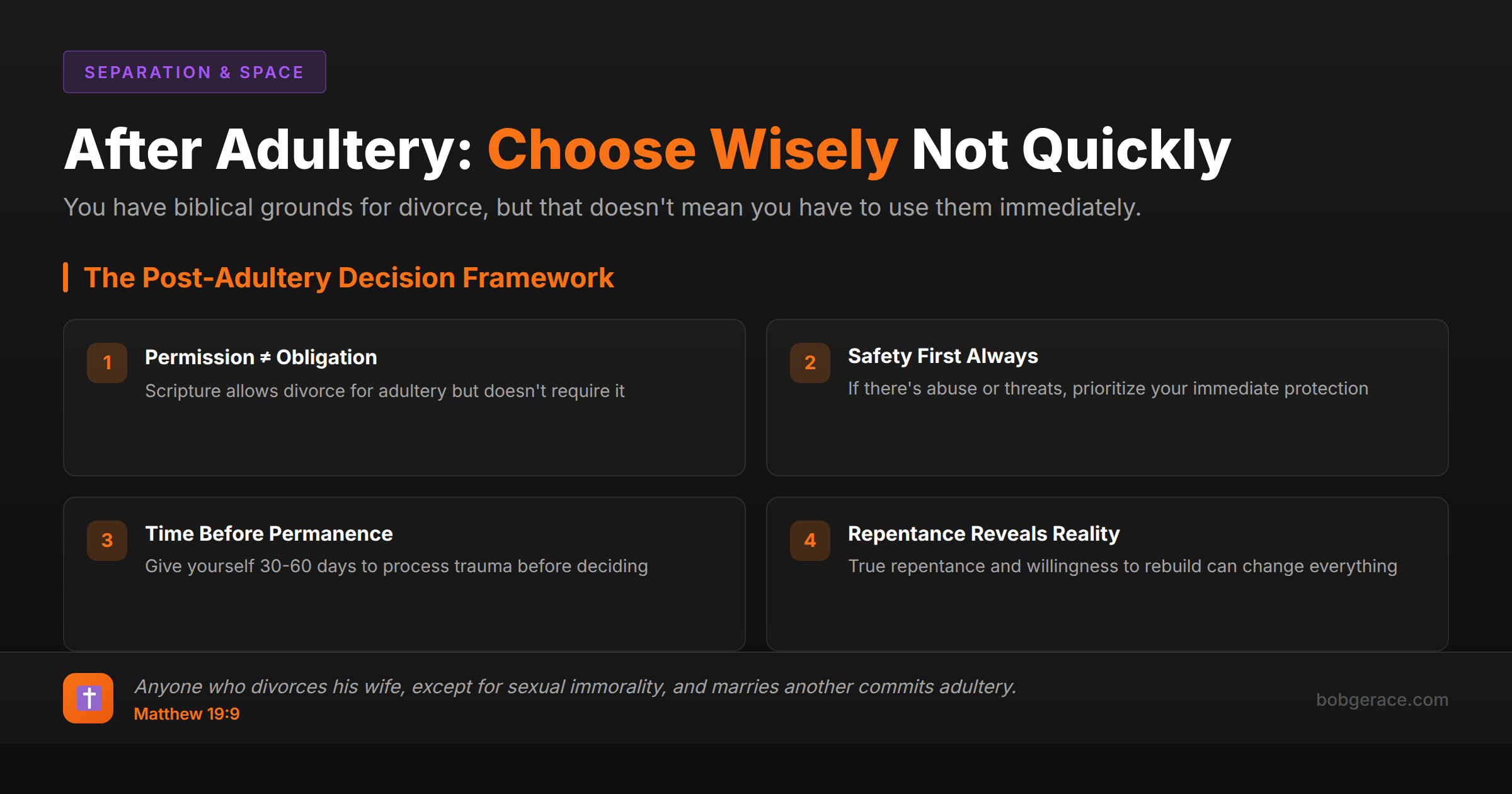
Yes, according to Scripture, adultery does provide biblical grounds for divorce. Jesus explicitly states in Matthew 19:9 that sexual immorality (porneia in Greek) is an exception to His teaching against divorce. However, justification doesn't mean obligation - you're not required to divorce because of adultery. This is one of the most painful decisions you'll ever face. While Scripture permits divorce in cases of adultery, it also calls us toward forgiveness and restoration when possible. Many marriages have been rebuilt after infidelity through genuine repentance, professional help, and God's healing power. The question isn't just whether you can divorce, but whether your spouse is truly repentant and willing to do the hard work of rebuilding trust.
The Full Picture
When adultery enters a marriage, it creates what theologians call a "fundamental breach" of the marriage covenant. The Hebrew word for marriage covenant (berith) implies exclusive faithfulness - adultery violates this core promise.
The Biblical Position Scripture provides two clear grounds for divorce: adultery (Matthew 19:9) and abandonment by an unbelieving spouse (1 Corinthians 7:15). These aren't commands to divorce, but permissions when the marriage covenant has been fundamentally broken.
The Heart Behind the Law God hates divorce (Malachi 3:16) not because He's legalistic, but because He knows the pain it causes. However, He also recognizes that sometimes sin makes marriage restoration impossible or unsafe. The exception for adultery acknowledges that some actions so violate the marriage covenant that the innocent party shouldn't be trapped.
Your Real Options You have three biblical paths forward: Restoration through genuine repentance and rebuilding; Separation while pursuing healing and counseling; or Divorce when restoration isn't possible. Each requires wisdom, prayer, and often professional guidance.
The Restoration Path Many couples emerge stronger after infidelity - but only when there's genuine repentance, complete transparency, professional help, and time to rebuild trust. This isn't quick or easy, but it's often worth pursuing when both spouses are committed.
When Divorce May Be Necessary If there's ongoing deception, unrepentant behavior, or patterns of abuse, divorce may be the wisest choice. God doesn't call you to enable sin or endure ongoing betrayal.
What's Really Happening
Adultery creates what we call 'betrayal trauma' - symptoms similar to PTSD including intrusive thoughts, hypervigilance, and emotional numbness. Your brain is trying to process a fundamental threat to your security and identity.
The decision about divorce often gets complicated by trauma responses. Some people want to flee immediately (fight-or-flight), while others become paralyzed by indecision. Neither response is wrong - they're normal reactions to betrayal.
Research shows that marriages can survive adultery, but several factors are crucial: The unfaithful spouse must take full responsibility without blame-shifting, demonstrate genuine remorse through actions not just words, and commit to complete transparency. The betrayed spouse needs time to process trauma before making permanent decisions.
I often tell couples: 'Don't make permanent decisions based on temporary emotions.' The first 6-12 months after discovery are typically marked by emotional chaos. While some situations require immediate action for safety, most benefit from professional support before deciding on divorce.
The neurological impact of betrayal trauma means your decision-making capacity is compromised initially. Working with a qualified therapist helps you process the trauma while exploring your options. Remember: choosing to work on the marriage doesn't mean you're weak, and choosing divorce doesn't mean you've failed.
What Scripture Says
Scripture addresses adultery and divorce with both justice and mercy, providing clear guidance while acknowledging the complexity of broken relationships.
Jesus' Clear Exception *"I tell you that anyone who divorces his wife, except for sexual immorality, and marries another woman commits adultery."* - Matthew 19:9
Jesus explicitly permits divorce in cases of sexual immorality (porneia), which includes adultery. This isn't a command but a recognition that adultery fundamentally breaks the marriage covenant.
Marriage as Sacred Covenant *"Has not the one God made you? You belong to him in body and spirit. And what does the one God seek? Godly offspring. So be on your guard, and do not be unfaithful to the wife of your youth."* - Malachi 2:15
God designed marriage as an exclusive covenant. Adultery violates this sacred bond, which is why it provides grounds for divorce.
The Call to Forgiveness *"Be kind and compassionate to one another, forgiving each other, just as in Christ God forgave you."* - Ephesians 4:32
While divorce may be justified, Scripture also calls us toward forgiveness when there's genuine repentance. This doesn't mean automatic reconciliation, but releasing bitterness.
Abandonment Also Permitted *"But if the unbeliever leaves, let it be so. The brother or the sister is not bound in such circumstances; God has called us to live in peace."* - 1 Corinthians 7:15
Paul addresses another situation where divorce is permitted, showing God's concern for those trapped in broken covenants.
Wisdom in Decision-Making *"Plans fail for lack of counsel, but with many advisers they succeed."* - Proverbs 15:22
This decision requires godly counsel, prayer, and wisdom - not just emotional reaction.
What To Do Right Now
-
1
Ensure Your Safety - If there's any pattern of abuse or threatening behavior, prioritize your physical and emotional safety first
-
2
Don't Make Immediate Permanent Decisions - Unless safety is at risk, give yourself 30-60 days to process the initial trauma before deciding on divorce
-
3
Gather Your Support Team - Connect with a qualified Christian counselor, trusted pastor, and close friends who can provide wisdom and support
-
4
Establish Clear Boundaries - If staying in the home, set non-negotiable boundaries about transparency, accountability, and rebuilding trust
-
5
Seek Professional Help - Both individual therapy for trauma processing and couples counseling if your spouse is genuinely repentant and willing
-
6
Pray for Wisdom and Healing - Ask God to guide your decisions and begin healing your heart, regardless of whether the marriage survives
Related Questions
- What does Scripture say about divorce?
- Is divorce a sin?
- What did Jesus say about divorce?
- What's the exception clause?
- If I divorce, can I remarry?
- What is 'porneia' and what does it include?
- Should I forgive adultery?
- Does the Bible require me to stay after an affair?
- What does biblical forgiveness require of me?
- What's the difference between forgiveness and reconciliation?
Also find Bob on
Subscribe for weekly videos on Christian marriage.
This Decision Needs a Human in Your Corner
Adultery changes everything, and your situation has details no article can address. A coach who knows your story can help you see what's actually happening in your marriage and what your real options are.
Talk to Bob →