What about addiction as grounds?
6 min read
Addiction itself isn't explicitly listed in Scripture as grounds for divorce, but the destructive behaviors that often accompany addiction—adultery, abandonment, abuse—can constitute biblical grounds. The real question isn't whether addiction gives you a 'pass' to divorce, but whether the addicted spouse is actively breaking the marriage covenant through their choices. Scripture calls us to pursue restoration first, but it doesn't require you to enable destructive behavior or remain in unsafe situations. Many marriages have been restored through proper boundaries, treatment, and genuine repentance, but this requires the addicted spouse's willingness to fight for recovery and the marriage.
The Full Picture
Here's what I need you to understand: addiction is a symptom, not the root issue. The Bible doesn't give us a checklist of acceptable reasons to divorce—it gives us principles about covenant, faithfulness, and restoration.
When we're dealing with addiction in marriage, we're really dealing with covenant-breaking behavior. The addiction itself might not be grounds, but what often comes with it can be: adultery (including emotional affairs or sexual sin), abandonment (choosing substances over family responsibilities), or abuse (verbal, emotional, or physical).
The critical distinction is this: Is your spouse fighting their addiction or feeding it? Are they pursuing recovery or making excuses? Are they protecting the marriage or destroying it through their choices?
I've seen marriages where addiction brought couples to their knees—and that's where they found God and fought their way back to wholeness. I've also seen marriages where one spouse enabled the addiction by removing all consequences, thinking they were being loving when they were actually being harmful.
Scripture calls us to restoration first. This means intervention, boundaries, treatment, accountability—whatever it takes to create an environment where recovery can happen. But—and this is crucial—restoration requires two people. You can't save a marriage alone.
If your spouse chooses their addiction over recovery, over you, over the family, they're choosing to break covenant. That's not the addiction making the choice—that's them making the choice. The substance doesn't file for divorce or have affairs or disappear for days. People do.
What's Really Happening
From a clinical perspective, addiction creates what we call a 'competing attachment.' The addicted individual develops a primary relationship with their substance or behavior that often supersedes their marital bond. This isn't just about physical dependency—it's about emotional and psychological priority.
What's particularly damaging to marriages is that addiction rewrites the brain's reward system. The spouse and family, who should be primary sources of connection and joy, become secondary to the addictive substance. This creates a profound sense of betrayal and abandonment in the non-addicted spouse that goes beyond typical marital struggles.
However, we also see that addiction recovery can actually strengthen marriages when both spouses commit to the process. The recovering spouse learns accountability, honesty, and emotional regulation skills they may have never developed. The non-addicted spouse learns boundaries, self-care, and how to love without enabling.
The key clinical marker I look for is whether the addicted spouse acknowledges the impact of their addiction on the marriage and takes concrete steps toward recovery. Without this acknowledgment and action, the marriage becomes a treatment-resistant environment where the addiction continues to thrive. Recovery requires disruption of the current system, which often means significant consequences and changes that the addicted individual must be willing to accept.
What Scripture Says
Scripture doesn't specifically address modern addictions, but it gives us clear principles about covenant faithfulness and the behaviors that break it.
On covenant faithfulness: *'Therefore what God has joined together, let no one separate'* (Matthew 19:6). God's heart is always for restoration and healing of the marriage covenant.
On destructive behavior: *'Above all else, guard your heart, for everything you do flows from it'* (Proverbs 4:23). When someone chooses addiction over their spouse, they're failing to guard their heart and allowing destruction to flow into their marriage.
On enabling vs. loving confrontation: *'Brothers and sisters, if someone is caught in a sin, you who live by the Spirit should restore that person gently. But watch yourselves, or you also may be tempted'* (Galatians 6:1). Love confronts destructive behavior—it doesn't enable it.
On abandonment: *'But if the unbeliever leaves, let it be so. The brother or the sister is not bound in such circumstances'* (1 Corinthians 7:15). When someone chooses their addiction over their marriage responsibilities, they're functionally abandoning their spouse.
On safety and wisdom: *'The simple believe anything, but the prudent give thought to their steps'* (Proverbs 14:15). You're not required to remain in situations where addiction has created danger or ongoing covenant violation.
Scripture calls us to pursue restoration aggressively, but it doesn't call us to enable destruction indefinitely.
What To Do Right Now
-
1
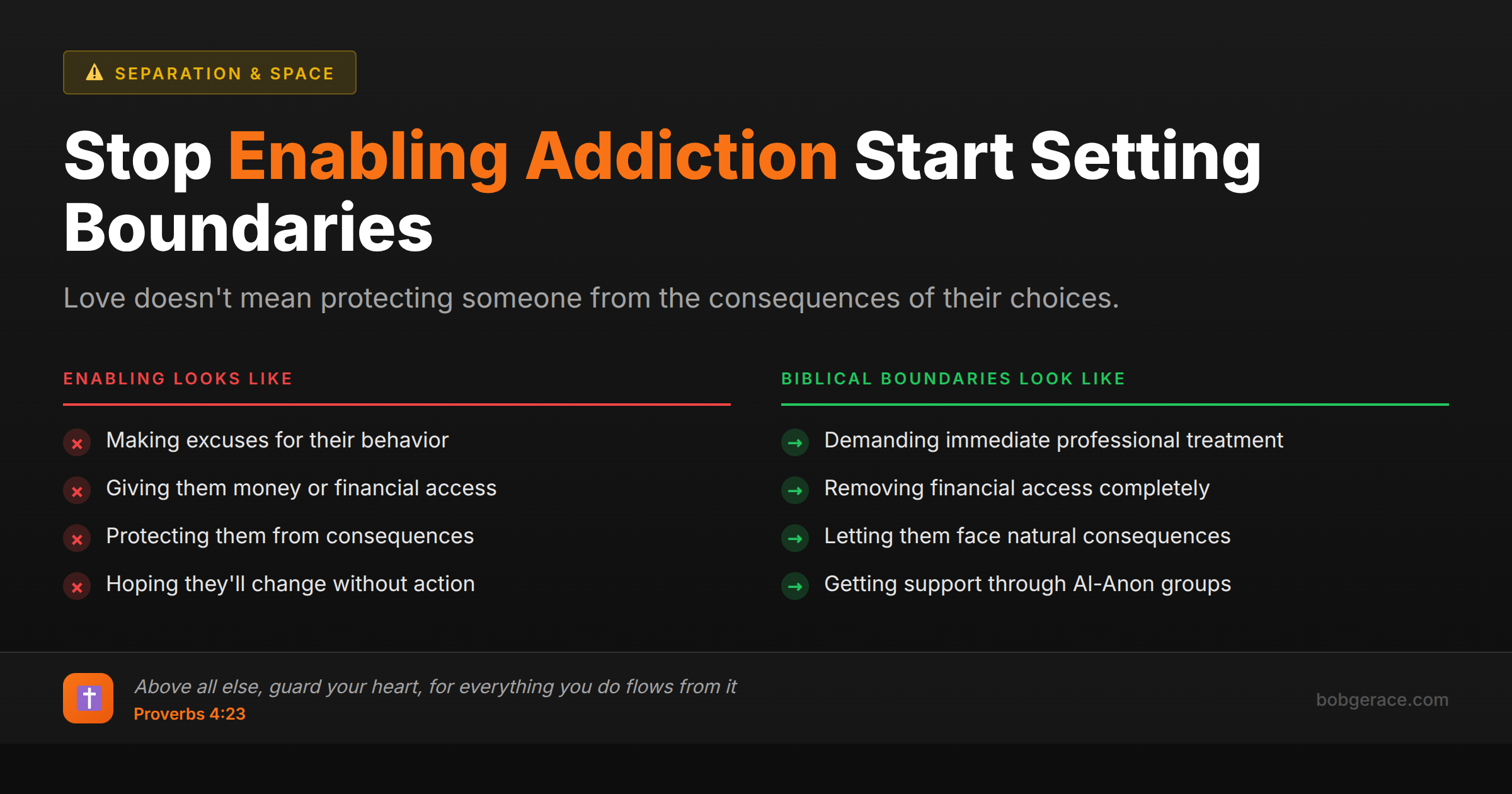
Stop enabling immediately—remove financial access, stop making excuses for their behavior, and stop protecting them from consequences
-
2
Set clear, specific boundaries with consequences you're prepared to enforce if they continue using or refuse treatment
-
3
Insist on immediate professional addiction treatment and ongoing accountability as non-negotiable terms for staying in the marriage
-
4
Get yourself into Al-Anon or similar support group to learn healthy responses and stop codependent patterns
-
5
Document incidents of covenant-breaking behavior (abandonment, adultery, abuse) that may result from the addiction
-
6
Seek pastoral counseling to help you discern between biblical restoration efforts and enabling destructive behavior
Related Questions
- What does Scripture say about divorce?
- What about emotional abuse as grounds?
- What about perpetual unfaithfulness?
- Does adultery justify divorce?
- What is 'porneia' and what does it include?
- How do I discern what's right for me?
- Should I be on medication?
- What boundaries should I set?
- What does biblical forgiveness require of me?
- How do I protect myself emotionally?
Also find Bob on
Subscribe for weekly videos on Christian marriage.
Your Marriage Needs More Than Theory
Addiction changes daily. A coach who knows your story can help you set boundaries that actually hold and decide what comes next when the crisis shifts.
Talk to Bob →