What are the main evangelical positions on divorce?
6 min read
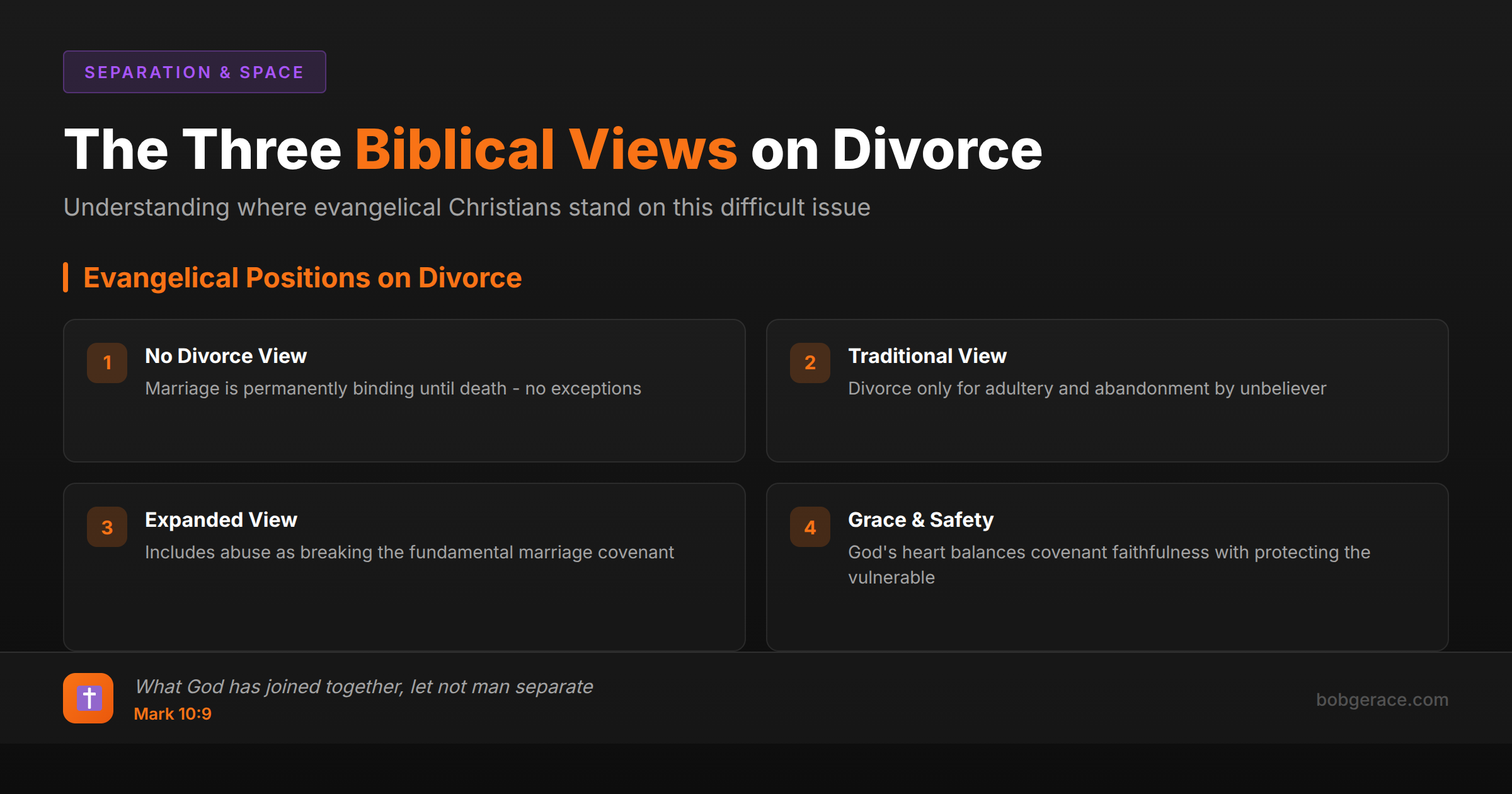
Evangelical Christians hold three primary positions on divorce, each based on different interpretations of Scripture. The strictest view permits no divorce for any reason, viewing marriage as permanently binding until death. The moderate position allows divorce only for adultery (Matthew 19:9) and abandonment by an unbelieving spouse (1 Corinthians 7:15). The expanded view includes additional grounds like abuse, recognizing that some situations represent a fundamental breaking of the marriage covenant. Each position seeks to honor Scripture while grappling with real-world complexities. The key isn't finding loopholes but understanding God's heart for marriage—covenant faithfulness balanced with protection for the vulnerable. Most evangelical scholars agree that divorce, while sometimes necessary, is never God's ideal and should be approached with careful prayer, biblical counsel, and genuine efforts toward reconciliation when safely possible.
The Full Picture
The evangelical community has wrestled with divorce theology for generations, and for good reason—Scripture presents what appears to be tension between Jesus's strong statements about marriage permanence and practical realities of broken relationships.
Position 1: No Divorce (Permanent Bond View) This strictest interpretation holds that marriage creates an indissoluble bond that only death can break. Advocates point to Mark 10:9 ("What God has joined together, let no one separate") and argue that Jesus's exception clauses refer to betrothal periods, not marriage. They permit legal separation for safety but prohibit remarriage while the former spouse lives.
Position 2: Divorce for Biblical Grounds Only The majority evangelical position recognizes two clear biblical grounds: adultery (Matthew 19:9) and abandonment by an unbelieving spouse (1 Corinthians 7:15). This view sees these as "exception clauses" that release the innocent party from the marriage covenant, permitting remarriage.
Position 3: Expanded Biblical Grounds This position includes additional grounds like physical abuse, extreme emotional abuse, and other covenant-breaking behaviors. Proponents argue that abuse represents a form of abandonment and that God's character wouldn't trap someone in destructive situations.
The Common Ground Despite differences, all three positions agree: marriage is sacred, divorce causes pain, reconciliation should be pursued when possible, and the church must show both truth and grace to hurting families.
What's Really Happening
From my practice, I see how these theological positions play out in real marriages. Couples often come seeking "permission" to divorce, but what they really need is clarity about covenant, safety, and hope.
The strictest position can provide strong motivation for working through difficulties, but I've seen it trap people in genuinely dangerous situations. Abused spouses sometimes remain in harmful environments because they've been taught any divorce is sin. This misapplies Scripture's protective intent.
The moderate position offers biblical boundaries while recognizing human brokenness. However, couples sometimes focus more on whether they "qualify" for divorce than on what restoration might look like.
The expanded position acknowledges complex realities but requires careful discernment. Not every difficult season constitutes covenant-breaking behavior.
What matters most isn't which camp you're in, but how you apply your convictions. I've seen marriages survive infidelity when both spouses committed to healing. I've also seen necessary divorces proceed with grace and mutual respect.
The healthiest approach combines theological conviction with practical wisdom, prioritizing safety while genuinely pursuing reconciliation where possible. Churches must create space for both truth and mercy, supporting restoration while protecting the vulnerable.
What Scripture Says
Scripture provides the foundation for all evangelical positions, though interpretation varies:
Marriage as Covenant Design *"Therefore a man shall leave his father and mother and hold fast to his wife, and they shall become one flesh."* - Genesis 2:24
Jesus on Marriage Permanence *"What therefore God has joined together, let not man separate."* - Mark 10:9
The Adultery Exception *"And I say to you: whoever divorces his wife, except for sexual immorality, and marries another, commits adultery."* - Matthew 19:9
Paul on Abandonment *"But if the unbelieving partner separates, let it be so. In such cases the brother or sister is not enslaved. God has called you to peace."* - 1 Corinthians 7:15
God's Heart Toward Divorce *"'For I hate divorce,' says the Lord, the God of Israel... So guard yourselves in your spirit, and do not be faithless.'"* - Malachi 2:16
Grace for the Broken *"The Lord is near to the brokenhearted and saves the crushed in spirit."* - Psalm 34:18
Scripture reveals both God's design for permanent marriage and His compassion for those in broken situations. The tension isn't contradiction but rather the reality of living in a fallen world where covenant ideals meet human failure.
What To Do Right Now
-
1
Study the biblical texts yourself with prayer and honest heart examination
-
2
Seek counsel from mature believers who know Scripture and your situation well
-
3
Prioritize safety first—no theological position requires staying in genuinely dangerous situations
-
4
Exhaust biblical reconciliation efforts before considering divorce as an option
-
5
If divorce becomes necessary, pursue it with integrity and respect for your spouse
-
6
Remember that God's grace covers failure and His plans include restoration and hope
Related Questions
- What does Scripture say about divorce?
- Does adultery justify divorce?
- What is 'porneia' and what does it include?
- Does the exception clause allow divorce or require it?
- What is Paul's teaching in 1 Corinthians 7?
- How have these texts been interpreted historically?
- What does biblical forgiveness require of me?
- What's the difference between forgiveness and reconciliation?
- Does God want me to stay in this marriage?
Also find Bob on
Subscribe for weekly videos on Christian marriage.
Your Marriage Isn't a Doctrine Question
You're not debating theology—you're living a specific story with a specific woman. A coach who knows your situation can help you see what applies to you.
Talk to Bob →